









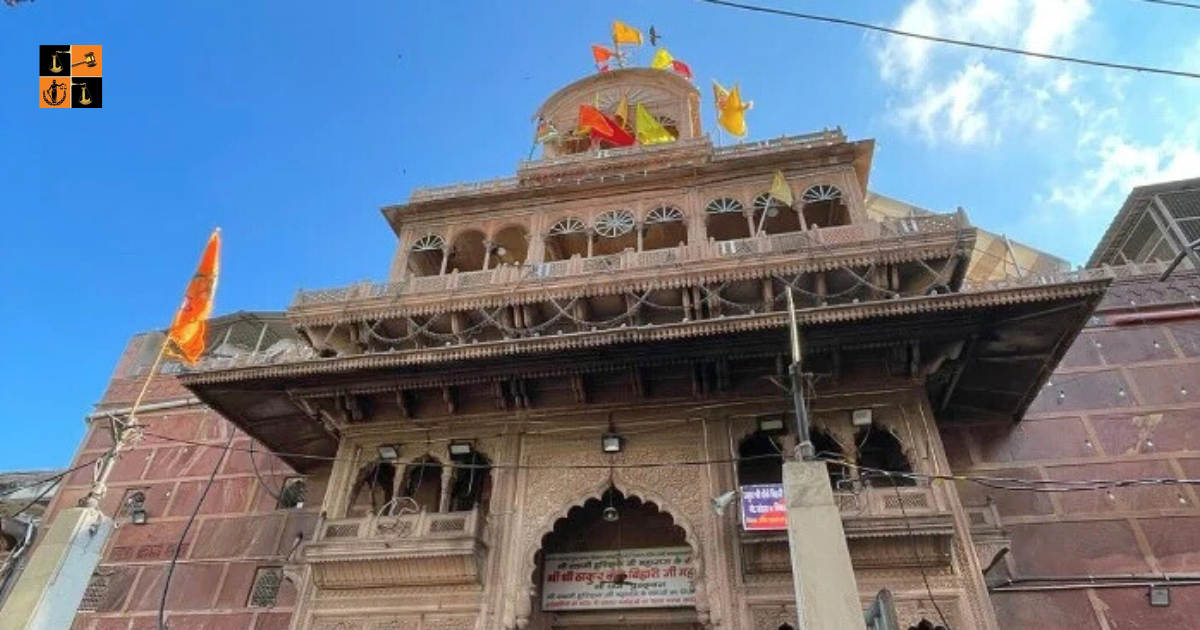
The Supreme Court indicated that it will suspend the operation of the Committee formed under the Uttar Pradesh Shri Bankey Bihari Ji Temple Trust Ordinance, 2025, a body vested with control over the iconic Bankey Bihari Temple in Vrindavan, Mathura. The bench stated that petitioners would be at liberty to challenge the constitutional validity of the Ordinance before the High Court, and until such adjudication, the statutory Committee’s functioning will remain on hold.
The controversy stems from the State’s recent promulgation of the 2025 Ordinance, which seeks to place the temple’s administration under a statutory trust, ‘Shri Banke Bihari Ji Mandir Nyas’ , comprising 11 trustees, including up to 7 ex-officio members. This move followed the Supreme Court’s May 15, 2024 modification of an Allahabad High Court order, allowing the State to utilise temple funds for a redevelopment corridor, subject to the acquired land being registered in the deity’s name. Historically, the temple has been managed privately by around 360 sewayats, descendants of Swami Haridas Ji, with internal disputes between two sects occasionally surfacing.
A bench of Justice Surya Kant and Justice Joymalya Bagchi, while reserving its final order for publication, clarified that, “The constitution of the Committee as per the Ordinance will be kept in abeyance so that the Ordinance is not given effect till the matter is decided by the High Court… In the interregnum, we will constitute a Committee headed by a former judge of the High Court… We will infuse some officials in the Committee. Some of you also… We will authorise the Chairman of the Committee to have some Goswamis also… The Committee will see to developmental activities in the area".
The Court further indicated that this interim panel will comprise a retired High Court judge as Chairperson, certain government officials, and representatives of the Goswamis, the temple’s traditional caretakers, to ensure smooth functioning and developmental oversight.
In addition to restraining the Ordinance Committee, the bench also decided to recall earlier directions from the May 15 judgment that permitted the State to utilise temple funds for the redevelopment project. Moreover, the Supreme Court stayed proceedings in a writ petition pending before a single judge of the Allahabad High Court on the same Ordinance, and requested the Chief Justice to assign the matter to a Division Bench in view of the constitutional issues involved.
The matter had earlier drawn judicial disapproval when, on August 4, the Court questioned the “tearing hurry” with which the UP government promulgated the Ordinance, remarking on the “clandestine manner” in which permission was secured through the May judgment, in proceedings where the temple management itself was not a party. On August 5, the State maintained that the Ordinance did not aim to interfere with religious rights and would be placed before the Legislative Assembly for ratification.
Picture Source :




















