









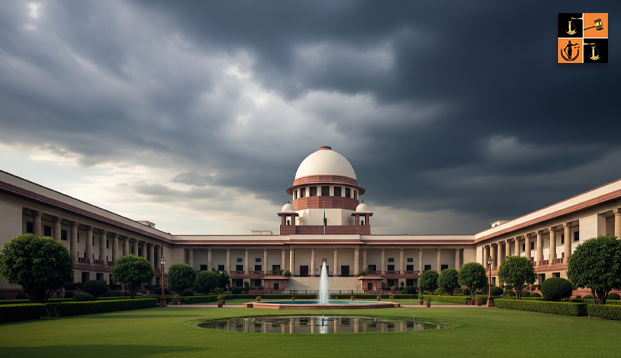
On Tuesday, the Supreme Court engaged with a set of proposals aimed at addressing longstanding concerns surrounding organ transplantation, particularly the challenges faced by economically weaker patients. The discussion brought to the forefront issues of transparency, availability, and the troubling patterns that have emerged in donation practices across the country.
The matter reached the Supreme Court through a petition drawing attention to the significant inequalities in India’s organ transplant ecosystem. The petitioner argued that most transplant-capable centres, nearly 90% operate in the private sector, placing life-saving procedures out of reach for the poor and marginalised. During the hearing before a Bench comprising the Chief Justice of India B.R. Gavai and Justice K. Vinod Chandran, senior advocate K. Parameshwar highlighted the absence of any unified, accessible mechanism for patients to know their status in the transplant queue. He stressed the necessity of a nationwide database and state-wise recipient waitlists for transparency.
The Petitioner also pointed to a skewed gender pattern in organ donation, noting that women form a disproportionately high share of donors, whereas men are more often the recipients, raising concerns of systemic pressure and social dynamics influencing “voluntary” donations.
Appearing for the Petitioner, Parameshwar submitted that the existing framework practically ensures that only the affluent can access transplant procedures, given the dominance of private institutions. He urged the Court to direct the Centre and states to establish at least one government hospital in every state and Union Territory capable of performing such surgeries at affordable rates.
He further contended that the lack of clarity in organ availability, allocation, and the waitlist position leaves most prospective recipients, especially the poor, uninformed and helpless. The introduction of a centralised organ availability grid, he argued, would promote fairness and accountability.
Supporting parts of the petition, Solicitor General Tushar Mehta agreed to several suggestions but proposed that different regulatory approaches would be necessary for two categories: voluntary donors and cases involving organs harvested from accident victims.
Justice Chandran expressed concern over disturbing incidents reported in southern states, where “motivated accidents” were allegedly engineered to facilitate organ harvesting for specific recipients. He remarked that such instances had even inspired a Malayalam film, written by a serving police officer familiar with these operations, an indication that the issue may be more than mere speculation.
The Solicitor General described such episodes as chilling and akin to murder, underscoring the urgent need for safeguards. The bench, led by the CJI, acknowledged the gravity of these revelations and emphasised the importance of creating a coherent, unified framework that addresses these gaps while protecting vulnerable individuals.
The Court directed Solicitor General Tushar Mehta, Additional Solicitor General Archana D. Pathak, and senior advocate Parameshwar to jointly prepare a consolidated list of points and suggestions. The Bench asked that these be placed before it on Wednesday, paving the way for further deliberation through establishing a stronger, more transparent organ transplant regime.
Disclaimer: This news/ article includes information received via a syndicated news feed. The original rights remain with the respective publisher.
Picture Source :




















