









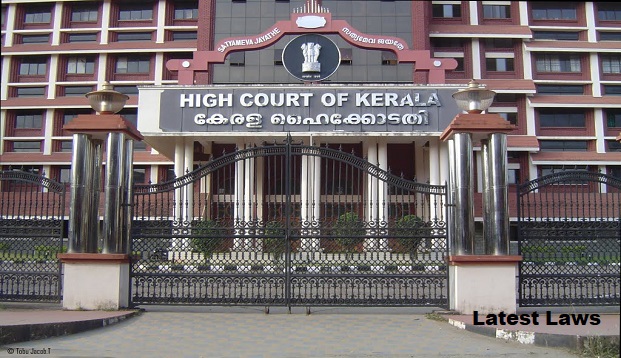
The State and its authorities could not act in a Shylockian manner and squeeze money from its citizens. The Kerala High Court on 19.01.2021(Tuesday) comprising of a bench of Justice N. Nagaresh made this remark on observing State’s failure to return the money paid twice for a certain due by the Petitioners.(M/s. Seahorse Ship Agencies Pvt. Ltd. Vs. Union of India & Ors.)
Facts of the Case
The brief facts of the case are that the Petitioner i.e. a shipping agent seeking an intervention from the Court in order to obtain a refund for a payment made twice by them for certain ‘light dues’ to the Director General of Lighthouses and Lightships (DGLL). The agent contended that they made an online payment on the first attempt, but the web portal failed to generate a receipt and so the petitioner believed that the first payment made was not successful. The Petitioner manually paid the amount in the second attempt believing that the first online payment was not successful. On the following day the Petitioner received a receipt confirming the online payment. The Petitioner had made duplicate payments in 2016 but efforts to recover the same were made in 2018 and so the DGLL refused to refund the amount as it was beyond the period of limitation. Hence the Petition filed a writ petition to recover the amount paid twice by them.
Contention of the Parties
The petitioner submitted that the Commissioner of Customs had failed to return to the petitioner the duplicate payment of 6,33,144 rupees they had made by mistake.
The petitioner further elucidated that they had erred in making the payment to the Director General of Lighthouses and Lightships (DGLL). The agent had made a manual payment after what they thought was a failed attempt at online payment.
The respondents argued that they petitioners had made an excess payment and that they were barred by the law of limitation from asking for a refund of their money.
Courts Observation & Judgment
The Court distinguished an excess payment from a double payment of light dues. Light dues, the Court explained, were collected from shipping companies/agents when ships entered a certain port for the maintenance of lighthouses along the coast. The dues paid related to the tonnage of the ship, which shipping companies/agents were expected to accurately measure.
The bench stated,“Excess payment can occur when payment of Light Dues is made disproportionately disregarding the tonnage of the ship.”.
Expounding on this theme, The Bench emphasized that the petitioner’s payment was only a dual or duplicate payment, a result of the web portal’s failure to generate a receipt when the payment was paid online. Therefore, it could not be subject to the limitation for applying for the recovery of excess payments.
The Court stated further that the amount towards light dues was properly remitted by the petitioner, and the only reason for the duplicate payment was a system failure. Therefore, the State could not hold on to the amount, the Court concluded.
Highlighting that the State could not hold on to erroneous, forced or inadvertent payments by bringing in the defence of limitation, the petition was allowed.
Read Judgment @Latestlaws.com
Share this Document :Picture Source :




















