









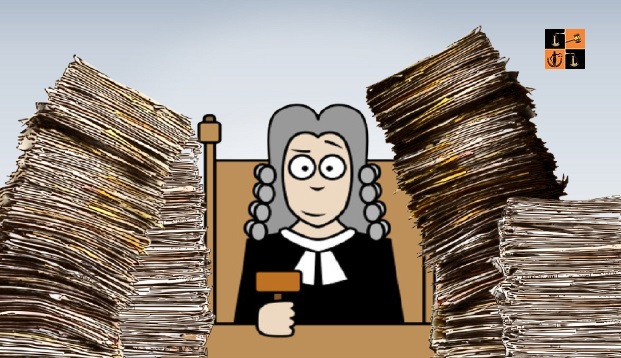
The Delhi High Court recently comprising of a bench of Justice Purushaindra Kumar Kaurav, observed that while exercising jurisdiction under Section 227 of the Criminal Procedure Code (Cr.P.C.) the judge cannot act merely as the post office or a mouth piece of the prosecution but has to consider the broad probabilities of the case, the total effect of the evidence and the documents produced before the court. (Smt. Shipali Sharma V. State & Anr.)
The Court went on to note that a judge should not make a roving inquiry into the pros and cons of the matter and weigh evidence as if he was conducting a trial.
Facts of the case
The petition was filed under Section 482 of the Cr.P.C. against order passed by Additional Sessions Judge (ASJ) whereby revision petition against the discharge of respondent no. 2 came to be dismissed. Petitioner had lodged a First Information Report (FIR) against her husband and other family members including respondent no. 2 (brother-in-law) under Sections 498A/34 of the Indian Penal Code.
The metropolitan magistrate did not find any prima facie case made out against respondent no. 2 and therefore discharged him. The petitioner preferred a revision petition under Section 397 of the Cr.P.C. whereby the ASJ held that the alleged act of the respondent no. 2 did not amount to cruelty.
Contention of the parties
The learned counsel appearing on behalf of the petitioner submitted that both the courts have gravely erred in not considering the allegations made in the FIR which clearly constitute an offence under Section 498A of IPC. He has referred to various paragraphs of the FIR to demonstrate that specific allegations have been made against the in-laws of the petitioner. According to him, when it is mentioned that the in-laws were subjecting the petitioner to harassment, it is not, therefore, necessary to make a specific allegation against each of the in-laws’ and that, in-laws would include all, including the Respondent No.2.
The learned counsel appearing on behalf of respondent No.2 opposed the prayer and submitted that this court should not interfere with the well-reasoned order passed by the learned revisional court. The allegations in the FIR are not specific and, therefore, the learned Metropolitan Magistrate has rightly discharged respondent No.2 and no illegality has been committed by the revisional court in dismissing the revision petition.
Courts observation & Judgment
The bench at the very outset observed, “It is a settled law that a judge, while considering the question of framing of charges, is certainly empowered to weigh the evidence for the limited purpose of finding out whether or not a prima facie case against the accused has been made out. Where the material placed before the court discloses great suspicion against the accused, which has not been properly explained, the court will be fully justified in farming the charge and proceeding with the trial. However, if two views are equally possible and the judge is satisfied that the evidence produced before him gave rise to some suspicion but not grave suspicion against the accused, the judge will be fully justified to discharge the accused.
The bench dismissing the petition remarked, In exercise of jurisdiction under Section 227 of Cr.P.C., the judge cannot act merely as the post office or a mouthpiece of the prosecution but has to consider the broad probabilities of the case, the total effect of the evidence and the documents produced before the court and should not make a roving inquiry into the pros and cons of the matter and weigh the evidence as if he was conducting a trial [Prafulla Kumar Samal and Anr. (supra)].
Taking into consideration the overall facts of the present case and in the absence of any specific allegation or role attributed to respondent No.2, this court does not find any justification to take a different view than the one which has already been taken by the learned Metropolitan Magistrate and affirmed by the learned revisional court. In view of the aforesaid, the instant petition stands dismissed.”
Read Judgment @Latestlaws.com
Picture Source :




















