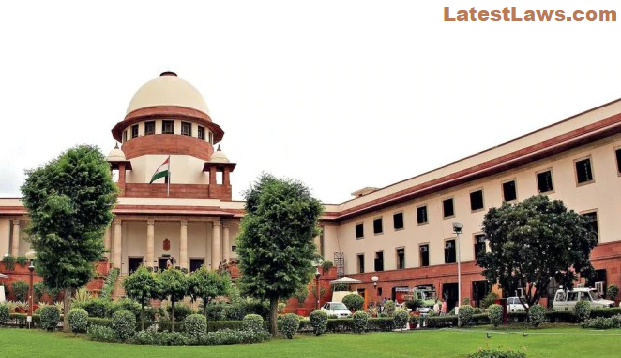
On 2 Nov 2020, The Supreme Court in the case of M/S. Imperia Structures Ltd. v. Anil Patni & Another comprising of double Judge Bench Justice Uday Umesh Lalit and Vineet Saran held that the other remedies including those made available under any special statutes; and that the availability of an alternate remedy is no bar in entertaining a complaint under the CP Act and further held that the Date of Flat Buyer Agreement relevant for reckoning time, not its RERA enrolment.
Factual Background of the case
These appeals* under Section 23 of the Consumer Protection Act, 1986 are directed against the common judgement and order passed by the National Consumer Disputes Redressal Commission, New Delhi in Consumer Case Nos.3011, 3012, 3013, 3014, 3015, 3016, 3017, 3018, 3019 and 3020 of 2017. The relevant facts leading to the filing of the aforesaid Consumer Cases are almost identical and for the present purposes the facts leading to the filing of Consumer Case are set out in detail and the appeal arising therefrom is taken as the lead appeal. The connected appeal* seeks to challenge the judgment and order passed by the Commission in Consumer Case and raises same issues of fact and law. Delay in filing these appeals is condoned.
Submissions by the Appellant
The Appellant in its submissions submits before the Court that the Complainants were not “Consumers” within the meaning of the CP Act as the apartments were booked merely for-profit motive. Further, he submits that “Once the RERA Act came into force, all questions concerning the Project including issues relating to construction and completion thereof, would be under the exclusive control and jurisdiction of the authorities under the RERA Act. The Commission, therefore, ought not to have entertained the Consumer Cases”.
Submissions by the Respondent
The Respondent in its submissions submits before the Court that “All the Complainants had purchased only one residential apartment each for self-use. They had taken home loans, except the Complainant in Consumer Case who after his retirement as Group Captain from the Indian Air Force had used all his retirement dues to book the apartment. Therefore, the issue of whether the Complainants satisfied the requirements of being “Consumers” under the provisions of the CP Act was rightly decided in favor of the Complainants.”
Issues before the Court
Factual issues. It was concluded by the Commission that;
- all the Complainants were ‘Consumers’ within the meaning of the Act and that;
- there was a delay on part of the Appellant in completing the construction within time. The stand taken by the Appellant at various stages, acknowledged that there was a delay but the Appellant tried to rely on certain events as mentioned in the ground.
Court Analysis
The Court in its analysis stated that:-
“It has consistently been held by the Supreme Court that the remedies available under the provisions of the CP Act are additional remedies over and above the other remedies including those made available under any special statutes; and that the availability of an alternate remedy is no bar in entertaining a complaint under the CP Act.”
It is, therefore, required to be considered whether the remedy so provided under the RERA Act to an allottee is the only and exclusive modality to raise a grievance and whether the provisions of the RERA Act bar consideration of the grievance of an allottee by other.
The Court in its Analysis further referred the Section 79 of the RERA Act.
“Section 79 of the RERA Act bars the jurisdiction of a Civil Court to entertain any suit or proceeding in respect of any matter which the Authority or the adjudicating officer or the Appellate Tribunal is empowered under the RERA Act to determine. Section 88 specifies that the provisions of the RERA Act would be in addition to and not in derogation of the provisions of any other law, while in terms of Section 89, the provisions of the RERA Act shall have effect notwithstanding anything inconsistent contained in any other law for the time being in force.”
The Court further stated that the:-
“In the present case the apartments were booked by the Complainants in 2011-2012 and the Builder Buyer Agreements were entered into in November, 2013. As promised, the construction should have been completed in 42 months. The period had expired well before the Project was registered under the provisions of the RERA Act. Merely because the registration under the RERA Act is valid till 31.12.2020 does not mean that the entitlement of the concerned allottees to maintain an action stands deferred. It is relevant to note that even for the purposes of Section 18, the period has to be reckoned in terms of the agreement and not the registration.”
Judgment
The Court in its judgment stated that “the appeals are accordingly dismissed affirming the view taken by the Commission. We quantify the costs at Rs.50,000/- (Rupees Fifty Thousand only) to be paid by the Appellant in respect of each of the Consumer Cases, over and above the amounts directed to be made over to the Complainants and shall form part of the amount payable by the Appellant to the Complainants.”
All the Complainants are entitled to execute the orders passed by the Commission in their favour, in accordance with law.
Read Judgment @Latestlaws.com