









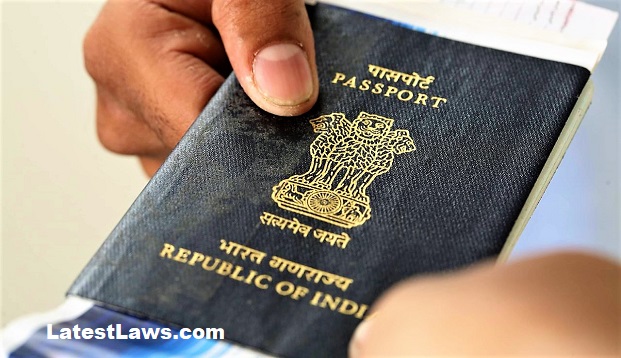
The Andhra Pradesh High Court has ordered the Superintendent of Police and the Inspector of Police to return the passport of Telugu Desam Party member Yesasvi Boddulluri after the court found that the required procedures under Sections 91 and 102 of the Criminal Procedure Code were not adhered to.
Brief Facts:
The petitioner, an NRI and software engineer in the USA, is a member of the Telugu Desam Party (T.D.P) and a critic of the Andhra Pradesh State Government. He posted critical videos on social media platforms, leading to several cases against him in Andhra Pradesh. Upon visiting India to see his ill mother, his passport was seized by CB-CID. He needs his passport for visa stamping; without it, he risks missing the appointment and being unable to return abroad for work obligations. The instant writ petition has been preferred to declare the action of CB-CID as contrary to Articles 19 and 21 of the Indian Constitution and pass an order to return the passport.
Contentions of the Petitioner:
The petitioner's counsel argued that the passport's seizure was unlawful, not following the due process outlined in Sections 91 and 102 of the Cr.P.C. They also mentioned that despite the registration of a case (Crime No.2 of 2023, dated 20.02.2023) under Sections 153A, 505(2), 120B of the IPC at the Cyber Crimes Police Station, CID2, these sections were not applicable. This was because, historically, it has been established that simply criticizing government policies does not equate to committing an offence under these sections.
The counsel for the petitioner further submitted that his statements were made in the public interest to promote awareness.
Contentions of the Respondent:
The respondent’s counsel argued that the petitioner consistently engaged in disruptive behaviour on social media, aiming to defame the government. In 2022, he was implicated in two FIRs under sections 153A, 505(3), 120(b) of the IPC, and section 66-C of the Information Technology Act. Following the issuance of notices under section 41-A of the CrPC, the petitioner, instead of refraining, held press conferences the very next day where he reiterated the same statements for which he was charged.
The learned counsel requested the imposition of specific conditions on the petitioner to prevent him from repeating these offences, particularly in light of the notices served under section 41-A of the CrPC.of offence by taking advantage of service of notices under Section 41-A of Cr. P.C
Observations of the Court:
The Court observed that the petitioner's right to hold a passport, a fundamental right, cannot be taken away without following the legally established procedure.
The bench noted that the passport seizure lacked authorization and did not adhere to the process outlined in Sections 91 and 102 of the Cr.P.C., making its continued retention by respondents No. 3 and 4 legally untenable.
Recognizing the petitioner's need for the passport for an imminent visa renewal appointment, the Court stated that any infringement of issued notices could be addressed by the respondents through relevant legal means. Consequently, the Court saw no necessity to impose conditions on the petitioner, ordering the passport's release without any additional stipulations.
The decision of the Court:
In this case, considering all the observations made and the overall context of this case, the court allowed the writ petition and the respondents were directed to return the passport.
Case Title: X vs Y
Coram: Hon’ble Ms. Justice B.S Bhanumathi
Case No.: W.P. 33241 of 2023
Advocate for the Applicant: Umesh Chandra P V G
Advocate for the Respondent: Special Public Prosecutor for CB-CID, G.P. for Home.
Read Judgment @LatestLaws.com
Picture Source :




















