









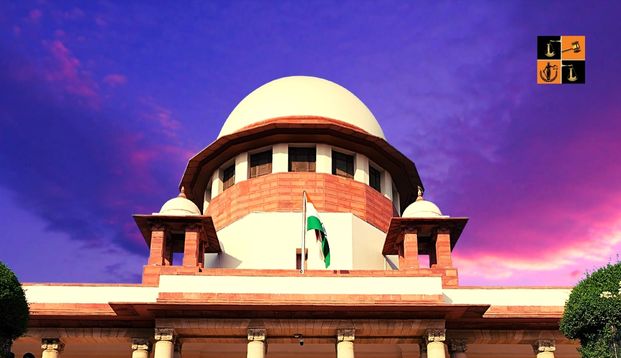
In a massive shake-up in the higher judiciary, the Supreme Court collegium has recommended transfers of at least 24 high court judges for “better administration of justice”. This is perhaps the highest number of transfers to be recommended by the Supreme Court collegium in one go.
At a meeting on Thursday, the collegium, headed by Chief Justice of India (CJI) Dhananjaya Y Chandrachud and comprising four senior-most judges, proposed the transfer of judges from various high courts, including Punjab & Haryana, Telangana, Gujarat, Allahabad, Bombay, Andhra Pradesh and Patna.
The collegium, comprising justices Sanjay Kishan Kaul, Sanjiv Khanna, BR Gavai and Surya Kant, took into account the inputs received from the consultee judges. Consultee judges are those in the top court who have earlier served in the high courts where the judges being considered for elevation or transfer are currently posted.
According to people aware of the details, the proposal for a major reshuffle in high courts was in the pipeline for a few weeks, and all inputs were verified before making the recommendations. All the high court judges proposed to be transferred have also been sent letters seeking their views. According to the convention, judges to be shifted out are asked for their views though the final decision rests with the collegium if someone seeks a reconsideration.
Article 222 of the Constitution makes provisions for the transfer of a judge, including the chief justice, from one high court to another. The memorandum of procedure (MoP), which guides the appointments and posting of the constitutional court judges, lays down that “all transfers are to be made in public interest i.e. for promoting better administration of justice throughout the country”.
MoP provides that after the recommendation of a transfer is received from the Chief Justice of India, the Union law minister submits the recommendation along with relevant papers to the Prime Minister, who then advises the President on the transfer of the judge concerned. On July 13, the Union government notified the transfer of three high court judges after sitting over the collegium’s recommendations for over seven months.
The delay in notifying the transfers of judges was viewed seriously by the Supreme Court during its proceedings in January and February, when it took up a contempt plea against delays by the Union government in appointing judges.
At the time, a bench led by justice Sanjay Kishan Kaul took strong exception to the government sitting over almost a dozen recommendations pertaining to the transfer of high court judges, making it clear that “any delay in transfers may result in administrative and judicial actions which may not be palatable”.
Warning the government against “any third-party interference in the transfer cases”, the bench at that time told attorney general R Venkataramani that the judicial work of the judges – proposed to be transferred – could be withdrawn if the recommendations are not implemented soon. It added that lack of consistency in the time taken by the Centre to notify the recommendations was creating “issues of faith” between the judiciary and the executive.
The top court’s comments came at a time when the judiciary and the executive were locked in a tussle over judicial appointments. Then law minister Kiren Rijiju issued a series of statements, criticising the manner in which the collegium functioned and questioning the division of powers between the two organs.
Between December and February, the top court, in a series of judicial proceedings, responded with reminders to the government that the collegium system is the law of the land that must be followed by the government “to a T”, while saying that the Centre had delayed a number of decisions without giving adequate reasons.
Picture Source :




















