









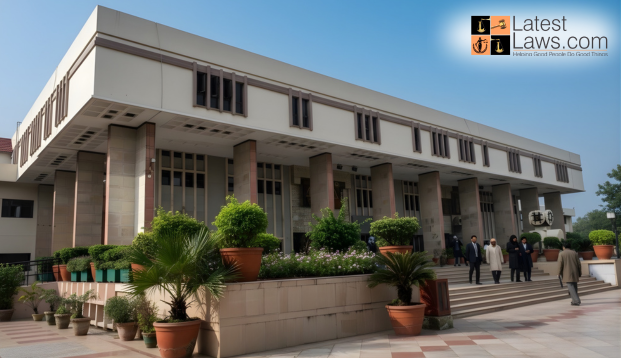
Recently, the Delhi High Court held that an accused cannot be convicted for the completed offence of aggravated sexual assault under the Protection of Children from Sexual Offences Act, 2012, when the charge framed against him was only for attempt to commit the offence. The Court partly allowed the appeal and modified both the conviction and sentence, while observing that a conviction cannot extend beyond the specific charge framed against an accused during trial.
Brief facts:
The case arose from allegations that a minor child aged about four and a half years had gone to a nearby shop when the accused allegedly took her inside the premises, removed her undergarments, made physical contact with her and committed acts alleged to have been done with sexual intent. Following a complaint lodged by the child’s mother, an FIR was registered invoking provisions under the Indian Penal Code and the POCSO Act. After investigation, a chargesheet was filed alleging offences under Sections 511, 354, and 376 of the IPC along with Section 10 of the POCSO Act. Subsequently, the trial court framed charges under Section 9(m) read with Sections 10 and 18 of the POCSO Act relating specifically to attempt to commit aggravated sexual assault. During the trial, the prosecution examined multiple witnesses, including the child victim and her parents. The trial court eventually convicted the accused of the substantive offence under Section 9(m), punishable under Section 10 of the POCSO Act and sentenced him to rigorous imprisonment for five years, leading to the present appeal before the High Court.
Contentions of the Appellant:
The Appellant argued that the prosecution's case suffered from material infirmities and inconsistencies. The Counsel contended that there were no injuries or medical findings supporting the allegations and no material indicating any act amounting to penetration. The defence further submitted that the accused had been falsely implicated because of a financial dispute between the families. The Appellant also argued that the testimony of the child witness required careful scrutiny, considering her tender age. Most importantly, the Appellant contended that the trial court had framed charges only for attempt to commit aggravated sexual assault under Section 18 of the POCSO Act and never amended the charge to one involving commission of the completed offence. Therefore, according to the Appellant, a conviction for the substantive offence under Section 9(m) was legally unsustainable.
Contentions of the Respondent:
The prosecution and counsel representing the victim supported the trial court’s findings and argued that the testimonies of the child victim and her parents consistently established the prosecution case. The Counsel submitted that the evidence on record clearly disclosed acts falling within the definition of sexual assault under Section 7 of the POCSO Act. The prosecution further argued that since the victim was below twelve years of age, the offence automatically assumed the character of aggravated sexual assault under Section 9(m). The Counsel further contended that the trial court had correctly appreciated the evidence and that no interference with the conviction was warranted.
Observation of the Court:
Justice Chandrasekharan Sudha observed, “But the accused has been charged only for an attempt to commit the offence of aggravated sexual assault and not for commission of the offence under Section 9(m). The Charge was never amended by the trial court from attempt to commit aggravated sexual assault to commission of aggravated sexual assault. Therefore, the trial court apparently went wrong in convicting him for committing the offence of aggravated sexual assault, as he was never Charged for the same. Though the materials does make out a case of aggravated sexual assault, the accused cannot be convicted for the same as he has been Charged only for an attempt to commit aggravated sexual assault on PW12.”
The Court observed that the testimony of the child witness remained consistent throughout the proceedings and stood sufficiently corroborated by the evidence of her parents. The Bench noted that the child had immediately disclosed the incident after returning home, and there were no material contradictions capable of discrediting the prosecution's version. Rejecting the defence theory regarding an alleged financial dispute between the families, the Court held that no reliable material had been produced to probabilise false implication. Referring to Ganesan v. State, the Court further emphasised that the sole testimony of a victim, if found credible and trustworthy, is sufficient to sustain a conviction even without independent corroboration.
The Bench held that the absence of injuries or medical findings did not weaken the prosecution's case because the allegations did not involve penetrative assault. The Court observed that the conduct attributed to the accused, including taking the child inside the premises, removing her undergarments, and engaging in physical contact with sexual intent, clearly attracted the ingredients of “sexual assault” under Section 7 of the POCSO Act and, considering the age of the victim, amounted to aggravated sexual assault under Section 9(m) of the POCSO Act. However, the Court clarified that the accused had been charged only for attempt under Section 18 of the POCSO Act, and the charge was never amended to one involving the commission of the substantive offence. The Bench therefore held that conviction for the completed offence could not legally be sustained in the absence of a specific charge framed against the accused.
The decision of the Court:
In light of the foregoing discussion, the Court partly allowed the appeal and modified the conviction to one under Section 18 read with Section 9(m) of the POCSO Act for attempt to commit aggravated sexual assault. The sentence was reduced from five years rigorous imprisonment to rigorous imprisonment for three and a half years.
Case Title: Sudarshan Vs. State
Coram: Hon’ble Mr. Justice Chandrasekharan Sudha
Case No.: CRL.A. 1144/2016
Advocates for the Appellant: Adv. Manika Tripathy, Adv. Aakash M., Adv. Raman Khan, Adv. Nandini Goel, Adv. Saksham Singh
Advocates for the Respondent: APP Utkarsh, SI Komal, Adv. Raghavendra Mohan Bajaj, Adv. Shagun Agarwal, Adv. Pritesh Raj
Read Judgment @Latestlaws.com
Picture Source :




















