









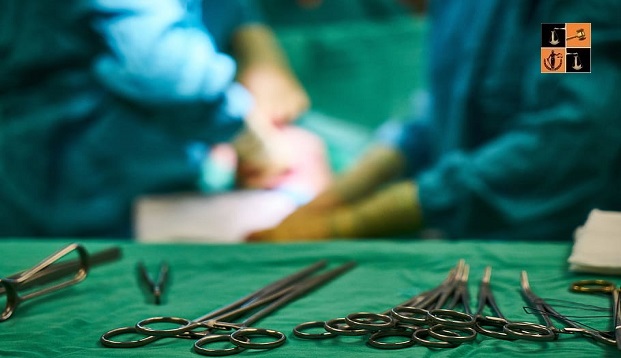
Recently, the Supreme Court addressed a Public Interest Litigation (PIL) challenging the live demonstration of medical surgeries at conferences and for training purposes. The Court noted the issue’s gravity and its implications on state policy, emphasizing that even if the petitioners’ standing (locus) is in question, the Court would still address the matter due to its significance.
A bench comprising Justice Surya Kant and Justice Ujjal Bhuyan was presented with the argument that over 38 live surgeries had been conducted in the past month alone, with the audience actively engaging in medical conferences. The petitioners argued that live surgery broadcasts (LSB) could compromise informed consent, especially among economically disadvantaged patients. They alleged that surgeries broadcasted for large audiences might divide surgeons’ attention, heightening risks. Further, the petitioners highlighted a 2015 case where a patient died during a live broadcasted surgery.
Justice Surya Kant noted the significant impact of live surgery broadcasts on patient safety and policy, remarking, “This has a very serious impact… and pertains to state policy.” Addressing a respondent’s argument challenging the petitioners' locus, Justice Kant stated, “For serious cause, we don't care about the locus”. The Apex Court acknowledged the need for comprehensive guidelines and expressed concern over the lack of representation from the Union of India and the National Medical Commission (NMC). Emphasizing the importance of their involvement, the bench instructed the Registry to notify the NMC and the Attorney General’s office.
Additionally, the Court permitted the Medico-Legal Society of India to intervene in the matter, allowing them to provide assistance. The Court’s remarks underscored the potential need for the NMC to monitor and regulate live surgery demonstrations, ensuring that such practices adhere to patient safety and ethical standards.
Picture Source :




















