









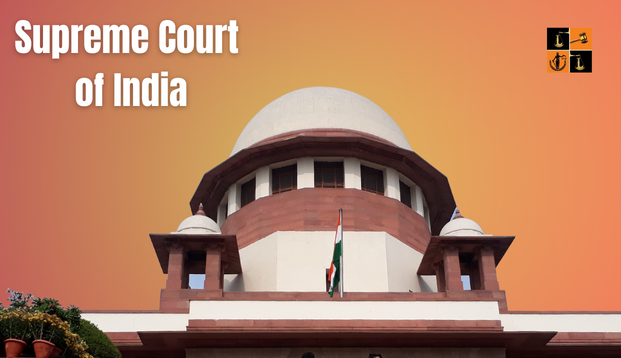
Recently, the Supreme Court dealt with a dispute arising out of worsening waterlogging and drainage issues in Delhi’s Green Park Extension, where questions were raised over the extent to which constitutional courts can intervene in matters involving civic infrastructure and urban administration. The case highlighted the growing difficulties faced by residents of overcrowded colonies with inadequate drainage facilities, especially ahead of the monsoon season.
The matter arose from an interim order passed by the Delhi High Court in a pending writ petition concerning drainage and sewer problems in Green Park Extension and nearby colonies. Through the interim directions, the High Court had taken steps relating to the design and laying of a sewer line from Green Park Extension to Aurobindo Marg and issued directions to the Delhi Jal Board (DJB), Municipal Corporation of Delhi (MCD), and AIIMS.
Aggrieved by the interim order, AIIMS approached the Supreme Court contending that the High Court had effectively assumed the role of an administrative authority by itself attempting to devise and supervise infrastructural solutions. It argued that matters concerning urban planning, sewer infrastructure and civic administration fall within the executive domain and should be addressed by the concerned statutory authorities.
During the course of proceedings, the Union of India, Government of NCT of Delhi, Delhi Metro Rail Corporation and other civic bodies were also involved in discussions concerning possible solutions to the drainage crisis being faced by residents of the area.
The Supreme Court acknowledged that residents of Green Park, Green Park Extension and adjoining areas were indeed facing serious drainage problems and recurring waterlogging because the existing infrastructure was insufficient to cater to the increasing population in these colonies. The Court also noted that such deficiencies could become more severe during the monsoon season and may even create health hazards.
However, the Bench observed that constitutional courts cannot step into the shoes of executive or municipal authorities to directly administer civic projects or formulate infrastructural measures. The Court emphasized that while courts can examine legality and ensure accountability, the actual responsibility of identifying problems, consulting stakeholders and implementing workable solutions lies with the competent authorities.
The Court observed that “Neither a High Court exercising jurisdiction under Article 226 of the Constitution of India nor this Court, exercising power under Article 136 of the Constitution, ought to step into the shoes of administrative bodies so as to resolve the problems faced by those living in overcrowded colonies with inadequate infrastructural facilities by coming up with remedial measures.”
The Bench further stated that the authorities concerned must collectively examine all aspects of the issue, take stakeholders into confidence and devise feasible measures in accordance with law to effectively address the grievances of the residents.
Accordingly, the Supreme Court set aside the Delhi High Court’s interim order . At the same time, it directed all concerned authorities to urgently formulate a concrete plan and place a report before the High Court on 20 July 2026 detailing the proposed and implemented measures. The High Court was also permitted to monitor the progress of implementation thereafter.
Case Title: All India Institute of Medical Sciences v. Shailendra Bhatnagar & Ors.
Case No.: Civil Appeal No. ___ of 2026 arising out of SLP(C) No. 29481/2025
Coram: Hon’ble Mr. Justice Sanjay Kumar and Hon’ble Mr. Justice K. Vinod Chandran
Advocate for the Appellant: Mr. Satya Ranjan Swain, Adv.; Mr. Vishnu Kant, Adv.; Ms. Shaveta Mahajan, AOR
Advocate for the Respondent: Mr. Yugansh Mittal, AOR; Mr. Shailender Bhatnagar, Adv.; Mr. Pulkit Panchal, Adv.; Mr. Animesh Gautam, Adv.; Mr. Rudra Pratap Singh, Adv.; Mr. Sunil Mittal, Adv.; Mr. Harsh Mittal, Adv.; Mr. Praveen Swarup, AOR; Mr. Tushar Sannu, Adv.; Mr. Rohit Swarup, Adv.; Ms. Mini Gangadharan, Adv.; Mr. Sukhamrit Singh, Adv.; Mr. Rohan Garg, Adv.; Ms. Kanika Gupta, Adv.; Mr. Devesh Maurya, Adv.; Ms. Ashu Tomar, Adv.; Mr. Sandeepan Pathak, AOR; Ms. Akansha Vidyarthi, Adv.; Mr. Rahul Gupta, Adv.; Mr. Srinivasan Ramaswamy, AOR; Mr. Udit Dedhiya, Adv.; Mr. V.N. Raghupathy, AOR; Ms. Apurva Sachdev, Adv.; Mr. Venkata Raghu Mannepalli, Adv.; Mr. Ramprasad H. Alva B, Adv.; Mr. Dillip Kumar Mohanty, Adv.; Ms. Swati Ghildiyal, AOR; Mr. Nimesh Bhatt, Adv.; Ms. Archana Pathak Dave, A.S.G.; Miss Madhulika Upadhyay, AOR; Mr. Kamal Digpaul, Adv.; Mr. Parmod Kumar Vishnoi, Adv.; Mr. Shashsnk Bajpai, Adv.
Read Judgment @Latestlaws.com
Picture Source :




















