









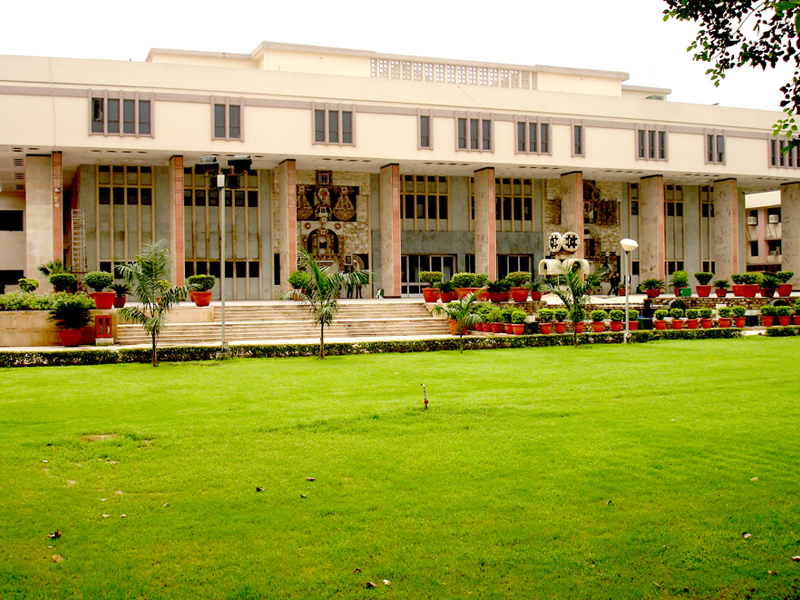
The Delhi High Court recently comprising of a bench of Justices Manmohan & Asha Menon observed that writ actions cannot be invoked after undue delay and latches. Accordingly, the court held that the petitioner cannot challenge his APAR grading after a gap of more than ten years. (Anupam Kumar V. Director General, Border Security Force & Anr)
Facts of the case
The Petitioner has filed the writ petition seeking “Non-Functional Grade Selection” along with the consequential benefits like back wages. Petitioner has also prayed for a direction to Respondent to modify the promotion granted to the Petitioner to the rank of “Second-in-Commands” as being effective from a prior date and grant all the consequential benefits such as back wages w.e.f from the same date.
Contention of the Parties
Learned Counsel for the Petitioner contended Petitioner was not promoted due to his low ACR grading for the year 2010-2011 to the rank “Second-in-Commands” in 2016. The denial of promotion was arbitrary, illegal, and affected the seniority position of the Petitioner. The loss of seniority was coupled with a pay scale that was much lower than what was paid to his counterparts. The low grading received by him in the year 2010-11 was because of the biased view of the then I.O for which, he had filed a detailed representation dated to the DG.
Courts Observation & Judgment
The court in order to discuss the maintainability of the petition relied on the case of Chairman/Managing Director, U.P. Power Corporation Ltd. & Ors. Vs. Ram Gopal., wherein the Court had observed that,
“Whilst it is true that limitation does not strictly apply to proceedings under Articles 32 or 226 of the Constitution of India, nevertheless, such rights cannot be enforced after an unreasonable lapse of time. Consideration of unexplained delays and inordinate laches would always be relevant in writ actions, and writ courts naturally ought to be reluctant in exercising their discretionary jurisdiction to protect those who have slept over wrongs and allowed illegalities to fester. Fence-sitters cannot be allowed to barge into courts and cry for their rights at their convenience, and vigilant citizens ought not to be treated alike with mere opportunists. On multiple occasions, it has been restated that there are implicit limitations of time within which writ remedies can be enforced.”
The court also referred to the judgment of the Apex court in Vijay Kumar Kaul v. Union of India., wherein it was held that, “…It becomes an obligation to take into consideration the balance of justice or injustice in entertaining the petition or declining it on the ground of delay and laches. It is a matter of great significance that at one point of time equity that existed in favor of one melts into total insignificance and paves the path of extinction with the passage of time.”
The Court while dismissing the petition observed, “Accordingly, this Court is of the view that the petitioner cannot challenge his APAR grading after a gap of more than ten years. As far as the Division Bench judgment in Vidya Shankar Tiwari Vs. Union of India & Ors, relied upon by learned counsel for the petitioner, is concerned, this Court finds that the same does not constitute a binding precedent as the issue of delay and laches was neither urged nor discussed in the said judgment. The Supreme Court in MCD Vs. Gurnam Kaur,. (1989) 1 SCC 101, has held that precedents sub silentio and without argument are of no moment.
Accordingly, the said judgment is not a precedent on the issue of delay and laches. Consequently, the present writ petition is barred by delay and laches. In view of the above, the present writ petition along with pending application is dismissed.”
Read Judgment @Latestlaws.com
Share this Document :Picture Source :




















