









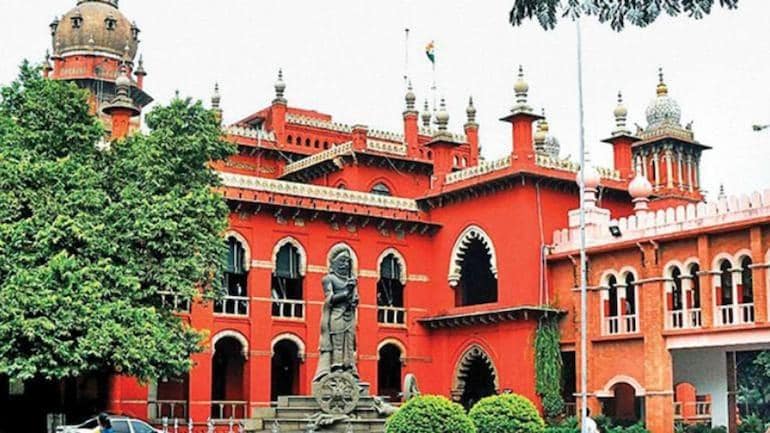
The Madras High Court this week, while dismissing a petition seeking reservation for women in the designation of Senior Advocate, held that designating an Advocate as a Senior Advocate is a matter of honour and privilege conferred upon a Member of the Bar. Such privilege and honour cannot be based on reservation. It must be purely based on the merit cum ability and successful career of the Member of the Bar irrespective of the gender of the Member at the Bar.
Brief Facts:
This Writ Petition was filed by the writ petitioner seeking equal numbers or 30% reservation for women advocates in the conferment of designation of Senior Advocates from the lists of candidates published vide notifications dated 31.10.2020 and 04.08.2022 being Notification No.1/2020/Permanent Secretariat for Designation of Senior Advocate and Notification No.2/2022/SSA respectively.
Contentions of the Petitioner:
Learned counsel submitted that he is not challenging the decision of Permanent Committee, he submitted that the total number of persons who are going to be selected should be set out first even when applications are invited. Of the candidates who are going to be selected, if a candidate is recommended by a High Court Judge, he is placed in higher pedestal, is learned counsel's say. It is further stated that the candidate requires to submit judgments in the preceding five years from the date of notification but there is a time gap of two years between the first notification and the second notification. Learned counsel relying on Indira Jaising Vs. Supreme Court of India reported in (2017) 9 SCC 766 (hereinafter referred to as ‘Indira Jaising case’), submitted that the guidelines issued by Hon'ble Supreme Court have to be revisited.
Contentions of the Respondents:
Learned counsel for respondents 1 to 3 submitted that the captioned writ petition is not maintainable. Writ Petitioner has no locus to file the present writ petition. Writ Petitioner is neither a woman nor an applicant who applied for designation of Senior Advocate. Learned counsel stressed / emphasised that the writ petitioner has not filed Public Interest Litigation. Learned counsel further submitted that 30% reservation in Senior Advocate designation is practically not possible in the case on hand as only 9 women candidates have applied for Senior Advocate designation. Respondents 1 to 3 have strictly adhered to said Rules and followed the procedures in accordance with said Rules in the process of selection qua conferment of Senior Advocates designation and the entire exercise of selection has been done in a transparent manner. Learned counsel submitted that the intervenor has widened the scope of the writ petition. There is no violation of the decision of Hon'ble Supreme Court in Indira Jaising case, is learned counsel's further say.
Observations of the Court:
The bench observed that submissions made by the intervenor were completely outside the scope of the main writ petition and locus of writ petitioner was completely absent as he is neither a woman nor an applicant. This by itself drops the curtains on the captioned matter however, the judges decided to deal with the matter further. It was acknowledged that conferring the status of Senior Advocate on an Advocate qua Section 16 of 'The Advocates Act, 1961 (25 of 1961)' (hereinafter 'said Act' for the sake of convenience and clarity) is clearly a privilege and not a post. Therefore, any prayer for reservation is misplaced. The bench referred to an order authored by Hon'ble Mr. Justice V. Ramasubramanian (as His Lordship then was) in W.A.(MD)No.1260 of 2014 vide order dated 12.01.2016 speaking for Division Bench of this Court, where the distinction between post and privilege was highlighted.
Indira Jaising case, which is the substratum of said Rules also does not suggest any reservation and this by itself takes the wind out of the sails qua reservation argument.
Justice Kumar further added that it is relevant to note that designating an Advocate as a Senior Advocate is a matter of honour and privilege conferred upon a Member of the Bar. The Court was of the view that such privilege and honour cannot be based on reservation. It must be purely based on the merit cum ability and successful career of the Member of the Bar irrespective of the gender of the Member at the Bar. Section 16(2) of the Advocates Act clearly emphasises, firstly, that it is a distinction conferred and not something that comes about automatically upon achieving known or predetermined standards. It is a privilege based upon the opinion of the Court considering ability, standing at the Bar or special knowledge or experience in law. Thus, it is a subjective decision though based on objective considerations.
Decision:
The judges pronounced orders dismissing the captioned main writ petition and writ miscellaneous petition.
Case Title: S. Lawrence Vimalraj vs The Registrar (Judicial) and 4 others
Coram: Hon'ble Mr. Justice M. Sundar and Hon'ble Mr. Justice N. Sathish Kumar
Citation/Case No.: W.P.(MD)No.27523 of 2022 and W.M.P.(MD)No.21615 of 2022 in W.P.(MD)No.27523 Of 2022
Pronounced on: 23.12.2022
Advocates for the Petitioner: Mr. B. Ravi Raja for Mr. R.R. Kannan and Mr. M. Sivakumar
Advocates for the Respondents: Mr. M. Santhanaraman, Panel Counsel for Madras High Court for RR 1, 2 and 3
Read Judgment @LatestLaws.com
Picture Source : https://akm-img-a-in.tosshub.com/indiatoday/images/story/202009/cover_pic_6_1200x768.jpeg?1vJXVlbHWXYU4wxJOML_a7L1IMWk3.vm&size=770:433




















