









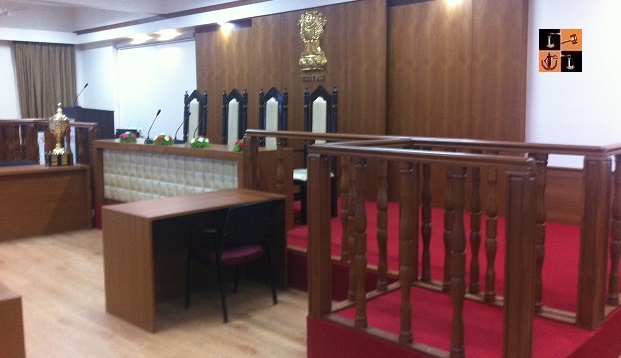
The Bombay High Court set aside the order passed by the Deputy Commissioner of Police, where the Petitioner was ordered to be externed from the Amravati City as well as the Amravati District for two years. A single judge bench of this Court comprising Hon’ble Justice G.A. Sanap held that Respondent no.1 had relied on the statements of the confidential witnesses without personally verifying them, which raised a serious dent to the subjective satisfaction recorded in the impugned order.
Brief Facts:
Respondent No.1 initiated the proceeding for the externment of the Petitioner from Amravati District by invoking the provisions of Section 56(1)(b) of the Maharashtra Police Act, 1951 (“the Act of 1951”). Respondent No.1, after recording his subjective satisfaction based on the material collected, passed the order of externment on 5th April, 2022. In this criminal writ petition, the Petitioner challenged the order passed by Respondent No.1 dated 5th April, 2022, which was confirmed by the order dated 28th September 2022.
Contentions of the Petitioner:
The learned Counsel for the Petitioner submitted that out of five crimes registered against the Petitioner, he was acquitted in four crimes before the issuance of show cause notice dated 4th March 2022. He further submitted that four crimes registered against the Petitioner at Frezarpura Police Station were for a commission of offences under Section 65(e) of the Maharashtra Prohibition Act, 1949 (“the Prohibition Act”). The Counsel had placed reliance on the decision in the case of Dhananjay Manohar Sapkal Vs. State of Maharashtra and Another [2005(2) Mh.L.J. 384 to argue that for passing an externment order under Section 56(1)(b), the offences under the Prohibition Act cannot be taken into consideration.
The reference had also been made to the in-camera statements of the confidential witnesses. By drawing attention to the show cause notice dated 4th March 2022, the learned Counsel submitted that there was no mention of these statements in the show cause notice. Therefore, it was submitted that the order passed by Respondent No.1 and confirmed by Respondent No.3 suffers from the virus of excessiveness.
Contentions of the Respondent:
The learned Counsel for the Respondent submitted that after passing the order of externment, the Petitioner indulged in the commission of similar crimes. Also, the Petitioner did not file the reply to the show cause notice; therefore, respondent No.1 had no opportunity to know that he was acquitted in four crimes. Further, the learned Counsel submitted that the statements of the confidential witnesses are sufficient to reflect upon the dangerous nature of the Petitioner and the overall threat to public peace and tranquillity.
Observations of the Court:
After the perusal of Section 56(1) Clauses (a) and (b) of the Act of 1951 and the decision of this Court in the Dhananjay Manohar Sapkal, this Court was of the opinion that the subjective satisfaction for passing externment order cannot be recorded on the basis of the offences registered under the Prohibition Act.
The next important point with regard to the consideration of the crimes in which the Petitioner was acquitted to record the subjective satisfaction, this Court held that Respondent no.1 was required to make a thorough inquiry and that too by perusing the bail orders in those matters. The reliance upon those crimes by the Respondent indicates that the inquiry was flawed.
In regard to the reliance placed on the statements of the confidential witnesses, this Court noticed that the statements were not recorded by Respondent No.1. Therefore, Respondent No.1 was required to verify those statements. Further, statements had been relied upon to form subjective satisfaction without personally verifying those statements by securing the presence of the witnesses. Therefore, this was considered one more ground to cause a serious dent in the subjective satisfaction recorded in the impugned order.
After considering all the grounds which cause a serious dent to the subjective satisfaction recorded in the impugned order, this Court concluded that the order passed by Respondent No.1 and confirmed by the Respondent No.3 suffers from the virus of excessiveness.
The decision of the Court:
The Bombay High Court allowed the writ petition and set aside the order dated 5th April, 2022 and 28th September, 2022.
Case Title: Harikesh vs Deputy Police Commissioner
Coram: Hon’ble Justice G.A. Sanap
Case no.: CRIMINAL WRIT PETITION NO. 908 OF 2022
Advocate for the Petitioner: Mr. S.I. Ghatte
Advocate for the Respondents: Mr. S.A. Ashirgade
Read Judgment @LatestLaws.com
Picture Source :




















