









The Authors are Dr Arya A. Kumar, Assistant Professor (SS) at the Indian Law Institute, and Priyatam Bhardwaj, Research Scholar at the Indian Law Institute.
In a groundbreaking verdict, the Bombay High Court has advanced the protection of artists' and singers' personality rights against the unauthorized replication of their voices by Artificial Intelligence (AI) tools. This ruling establishes a significant precedent for how the law may confront the emerging issue of voice and character imitation through AI.
The decision delves into the intricate legal challenges surrounding AI-driven voice cloning in India. The proliferation of character replication has surged with technological advancements, making it increasingly common to emulate the personas of individuals, especially those of renowned figures. Online Content creators[2] of social media are using the characters of famous personalities in their content without prior consent.
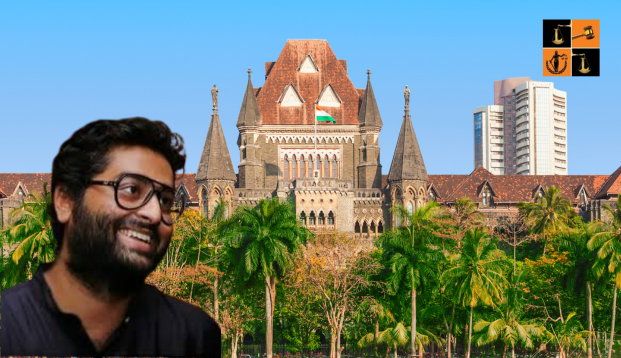
The present case revolves around the protection of the personality rights of renowned singer Arijit Singh. He seeks to safeguard his personality and publicity rights from unauthorized cloning. The issue arises from an AI-driven tool that generates artificial sound recordings and mimics the personality traits of celebrities, including the plaintiff, allowing users to benefit from the established reputation and goodwill of the selected individuals. The defendant utilized a Real Voice cloning method, an AI tool capable of converting any speech, voice recording, or audio file into the voice of the selected individuals, including the plaintiff, without obtaining prior consent.
The defendants in this case include AI platforms, their owners, and operators who employed advanced algorithms for this purpose. The court examined the personality rights issue from two key parameters. It framed these parameters into issues for adjudication: first, whether the defendant violated the plaintiff’s personality rights by using his voice, images, and other personality traits without prior consent or proper authorization; and second, whether such unauthorized use of personality rights impacts the plaintiff’s right to livelihood.
The settled proposition of law is that in an action for protecting personality rights and right to publicity, establishing the celebrity status of the plaintiff is the only the primary ingredient. Additionally, it must be established that the plaintiff is identifiable from the defendant’s unauthorised use and that such use by the defendant is for commercial gain. All these is done without authorisation of plaintiff. Making AI tools available that enable the conversion of any voice into that of a celebrity without his/her permission constitutes a violation of the celebrity’s personality rights. Such tool facilitate unauthorised appropriation and manipulation of a celebrity voice, which is a key component of their personal identity and public persona. This form of technological exploitation not only infringes upon the individual’s right to control and protect their ability to prevent commercial and deceptive uses of identity. Court observed that it shocks its conscience in the manner in which celebrities are vulnerable to being targeted by unauthorized generative AI content such as that of some of the defendants herein.
The court recognised that the plaintiff is a celebrity and being a celebrity is entitled to protection of the facets of their personality such as their name, images, likeness, voice, signature etc. On the basis of precedent set out in Karan Johar (also known as Rahul Kumar Johar) v. Indian Pride Advisory Pvt Ltd & Ors. court has declared that personality and publicity rights are vested in celebrities and the unauthorised use of the name or other persona attributes of celebrities would amount to violation of their valuable personality rights and right to publicity. The court citing Anil Kapoor v simply Life India, 2023 SCC OnLine Del 6914, remarked that, the celebrity’s right of endorsement would in fact be a major source of livelihood for the celebrity which cannot be destroyed completely by permitting unlawful dissemination and sale of merchandise such as T-shirt, magnets, key chains etc bearing the face and attributes of their persona on it without their lawful authorisation. The court upon examining the arguments of the plaintiff and drawing on precedents such as Amitabh Bachan v. Rajput Nagi, Anil Kapoor v. Simply Life India, DM Entertainment v. Baby Gift House etc,. has duly recognized the fact that the defendants were engaged in unauthorized use of plaintiff’s personality trait like his name, image, and likeness. The court also acknowledged the fact that their synthesized voice was used for personal as well as for commercial purposes and it would amount to infringement of the plaintiff’s established personality right. The defendants were commercially exploiting the plaintiff’s artistic works using Artificial Intelligence.
The court remarked on the heightened vulnerability of celebrities to unauthorized AI-generated content, which is often used to derive monetary benefits at the expense of their personality rights. In the case of the plaintiff, such actions were seen as an abuse of these rights, threatening the careers of individuals like him. While the freedom of speech and expression protects critique and commentary, it does not extend to the exploitation of a celebrity’s persona for commercial gain. The court, therefore, took on the responsibility of safeguarding the plaintiff against any wrongful exploitation of his personality and publicity rights.
Considering these concerns, the Court issued an ex-parte ad interim order, imposing stringent restrictions on the defendant and any third parties from using personal attributes such as the voice, images, signatures, or any other aspect of Arijit Singh's persona. This injunction aims to protect his personality rights across all forms of media, including physical, digital, and the metaverse. The order goes beyond simply addressing deepfakes, extending its reach to online media platforms, publications, and AI-driven technologies that enable voice conversion, synthesized voices, digital avatars, caricatures, deepfakes, face morphing, and GIFs.
A comparative analysis within the context of Indian law highlights the significance of this ruling. It underscores the delicate balance between protecting individual rights and allowing creative expression, particularly in the realm of AI technology. While Indian law supports the right to freedom of expression, this decision reinforces the idea that such rights do not permit the commercial exploitation of another’s persona without consent. This ruling could serve as a critical reference point in the ongoing development of legal frameworks to address the challenges posed by AI in the digital age.Open access to AI-driven technologies of voice cloning has indisputably caused a ruckus, across almost all jurisdictions as its improper use of this access is evident in politics to entertainment world. With this AI-driven technology, one can mimic the voices of another person accurately enough to deceive other people. Recently, an increase in the misappropriation of the voices of famous personalities has been witnessed across the globe. If we look at outside jurisdictions, another notable instance is when famous rapper Jay-Z’s Company Roc Nation has filed a case to take down Jay-Z’s deepfake videos depicting him rap billy Joel’s “We didn’t start the fire” and Hamlets' “To be or not to be” soliloquy. In China, The Beijing Internet Court delivered the country’s first ruling on AI-generated voice rights in June 2024, finding that a software company infringed on an individual’s right to likeness over their voice by using AI-powered tool to mimic their voice without consent[3]. In the words of the Bombay High Court, ‘personality rights’ were infringed by the defendant.
In US, court in Milder v. Ford Motor Co[4], establishes that unauthorized use of a person’s voice can be actionable. Tom Waits won a $2.5 million verdict[5] against Frito-Lay in 1990 over a Doritos ad that had an impersonator rumbling in Waits’ recognizable style. Also, recently a bill named “No Fake Act[6]”, has been introduced in US to protect the actors and Singers from unauthorized use of their personalities vide AI-driven tools. It would prevent the “production of a digital replica without consent of the applicable individual or rights holder” unless part of a news, public affairs, sports broadcast, documentary, or biographical work. Just like copyright laws, these rights would apply throughout a person’s lifetime and, for their estate, 70 years after their death.
There are ongoing debates concerning the copyright ramifications of AI-generated videos, such as those replicating Jay-Z performances or mimicking Arijit Singh’s voice. Jurisprudence is gradually evolving as courts around the world grapple with the challenges posed by AI-driven technologies that enable deceit and impersonation. Currently, most restraining orders target well-known celebrities. This AI-driven cloning has wreaked havoc in society, becoming a tool for fraud and deception. There is an urgent need for comprehensive legislation to curb these activities.
However, the rights of AI-driven content creators cannot be disregarded. Imposing a blanket ban on such activities could potentially infringe upon the freedom of speech and expression, as well as the right to utilize publicly available content for creative purposes. In the present case, the Hon’ble court acknowledged this concern by refraining from issuing a blanket ban or removing all content from the specified web page or domain. The diligent efforts of content creators who craft innovative works from existing content should be recognized. A carefully crafted law could effectively address the growing challenges posed by AI-driven tools that clone the voices or personalities of individuals.
Read Judgment @LatestLaws.com:
[1] COM IPR SUIT (L) No. 23443 of 2024 (Bom High Court)
[2] The lastest Government of India in draft bill of Broadcasting Services (Regulation) Bill 2024, referred the online vedio creators as “digital news broadcaster”.
[3] Jeremy Teo, Sher Hann Chua, et al, “(Court) actions speak louder than words: China’s first court judgement on AI-generated voice rights infringement”, Linklaters (last visited: 29-08-2024) Available at: https://techinsights.linklaters.com/post/102jay6/court-actions-speak-louder-than-words-chinas-first-court-judgment-on-ai-gener#:~:text=In%20its%20ruling%2C%20the%20Court,distributing%20it%20to%20other%20platforms.
[4] 849 F 2d 460th (9th Cir. 1988)
[5] Paul Feldman, Tom Waits Wins $2 1/2 Million in Voice-Theft Suit”
The Los Angeles Times, (Last Visited: 29-08-2024), Available at: https://www.latimes.com/archives/la-xpm-1990-05-09-me-238-story.html
[6] Nurture Originals, Foster Art, and Keep Entertainment Safe Act of 2023
Picture Source :




















