









The Author, Jaanvee Sawant, is a 1st-year, BBA.LLB student at Kirit.P Mehta School of Law, NMIMS. She is currently interning with LatestLaws.com.
- What is the Armed Forces Tribunal?
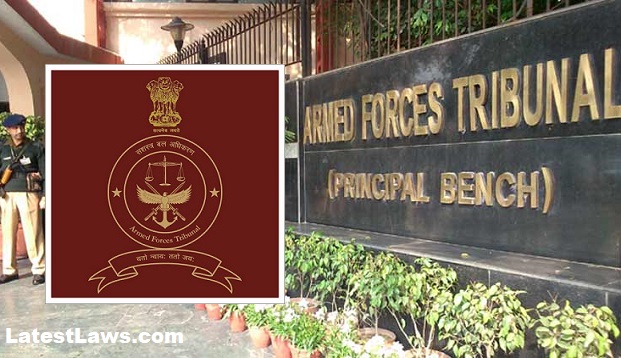
The Armed Forces Tribunal is a military tribunal in India, governed by the Armed Forces Tribunal Act, 2007. The Armed Forces Tribunal is a quasi-judicial organ structured to handle service and disciplinary matters, especially for the Indian Army, the Indian Air Force and the Indian Navy, each governed by a particular oriented Act, in compliance with which the Tribunal operates and passes judgements and orders.
- What are the matters handled by the Armed Forces Tribunal?
The trial or adjudication by the Armed Forces Tribunal of complaints and disputes with respect to service matters, related to the individuals subjected to the Army Act, 1950, the Air Force Act 1950, the Navy Act, 1957. The matters include-
- commission, enrolment, appointment, confirmation, probation, seniority, promotion, training, premature retirement, reversion, penal deductions, superannuation, and termination of service (tenure)
- summary trials and disposal where the reprimand of release is awarded;
- or discretionary matters
The Tribunal is also provided with the authority to hear appeals which arise from sentences, findings, or orders of a court-martial.
- Does the Supreme Court possess overriding powers over the Armed Forces Tribunal?
The constitutional provisions that dictate the high court to employ “supervisory” jurisdiction over any tribunals or courts explicitly exclude the armed forces. The Supreme Court, too, cannot sit in appeal over decisions of any tribunal or court in relation to the armed forces unless there arises a point of law of general importance. Although, the Supreme Court and the High Courts possess the authority of judicial review over court martial proceedings, which have resulted in a jurisdictional error or a refutation of fundamental rights. As a result, the defence ministry contends, high courts do not have the authority to pass judgment over merits of the Armed Forces Tribunal’s deliberations, except as provided in the Act itself.
- What is the composition of the Armed Forces Tribunal?
The Tribunal consist of a Chairperson, and a number of judicial and administrative members decided by the Central Government, subject to the other provisions of this Act. The authority, power and jurisdiction of the Tribunal may be exercised by the aforementioned Benches.
- What are the qualifications required to hold the position of a Chairperson of the Armed Forces Tribunal?
One shall be qualified for the position of a Chairperson if, he/she is a retired Chief Justice of a High Court or a retired judge of the Supreme Court.
- Who is the current chairperson of the Armed Forces Tribunal?
The current Chairperson of the Armed Forces Tribunal is Chief Justice is Rajendra Menon.
- Does the Armed Forces Tribunal provide for the office of a Vice-Chairperson?
The President may appoint either one or several members of the Armed Forces Tribunal as the Vice-Chairperson or Vice-chairpersons as aforementioned.
- What are the qualifications required to hold the position of an administrative and a judicial member of the Armed Forces Tribunal?
In order to qualify as a judicial member of the Armed Forces Tribunal: -
- He/she is/has currently/been a judge of the High Court.
In order to qualify as an administrative member of the Armed Forces Tribunal: -
- He/she has been maintaining the rank of a Major General or higher for a tenure of not less than 3 years in the army OR an analogous rank in the Air Force or the Navy.
- He/she has served for at least one year as a Judge Advocate General in the Air Force, Army or the Navy.
- He/she hold a higher rank than that of a Air Commodore, Major General or Commodore.
A person, who is currently serving when appointed as an administrative member, should have retired from his/her service before assuming such an appointment.
- How are the members as well as the Chairman of the Armed Forces Tribunal appointed?
The members of the Tribunal as well as the Chairman are appointed by the President of India, only if the appointment made under the sub-section of the Armed Forces Tribunal Act is carried out after consultation with the Chief Justice of India.
- What is the tenure of the office of the Chairperson and the other members of the Armed Forces Tribunal?
The Chairperson along with the rest of the members of the Armed Forces Tribunal can hold office for duration of 4 years from the date of commencement and can be eligible for re-appointment. However, the Chairperson cannot hold office if he has attained the age of 65 years as the Chief Justice of a High Court or he has attained the age of 70 years as a Judge of the Supreme Court. Furthermore, neither can any member of the Armed Forces Tribunal hold office if he has attained the age of 65 years.
- What is the process of resignation of the Chairperson and the other members of the Armed Forces Tribunal?
The Chairperson or a member can issue a written notice addressed to the President in view of resignation of the office. Provided that he maintains the office until a successor takes over or until the expiry of his tenure.
- Impact of the Armed Forces Tribunal on the aspect of accountability?
A key impact of the Tribunal, by virtue of its speedy disposal, is the accountability of individuals for inappropriate interpretation, reprehensible implementation or disingenuous non-compliance of orders thereby refuting individuals their entitlements. The cumbersome duration between the cause and final disposal by the courts implied that the individuals responsible had escaped and could not be held accountable, contrary to the contemporary time when the delinquent individuals will be held liable and accountable.
- What was the purpose of the enactment of the Armed Forces Act, 2007?
The Armed Forces Tribunal Act was enacted with the purpose of securing a prompt trial of disputes and complaints along with a speedy adjudication in relation to matter such as enrolment, appointment, commission and also the terms of the service for the individuals subject to the Air Force Act 1950, Navy Act, 1957 and the Army Act, 1950 by the Armed Forces Tribunal.
- Who does the Armed Forces Tribunal Act, 2007 apply to?
The provisions of this Act apply to all the individuals within the ambit of the Air Force Act, 1950, the Army Act 1950 and the Navy Act, 1957. It also applies to the retired individuals within the ambit of the Air Force Act, 1950, the Army Act 1950 and the Navy Act, 1957, which include their successors, dependants and heirs, as far as it is in relation to service matters.
- Who decides the salaries and allowances for the Chairperson and other members of the Armed Forces Tribunal?
The salaries and allowances payable to, and the terms and conditions of service (including gratuity, pension among other retirement benefits) of, the Chairperson and other Members is prescribed by the Central Government. Although, it should be ensured that neither the salary and allowances nor the other terms and conditions of service of the Chairperson and other Members should be altered to their disadvantage subsequent to their appointment.
- What benefits are conferred upon ex-servicemen’s wives?
The provisions of gratuity, pension and retirement benefits along with certain allowances extend to the family, successors, heirs and dependants as far as it is in relation to service matters.
- What recourse should one undertake when the system has failed to take a constructive action for a complaint filed against a senior army officer?
If the appeal arises from sentences, findings or orders of a court-martial held under the Armed Forces Tribunal (Procedure) Rules, 2008, which is a part of Section 41 of the Armed Forces Tribunal Act, 2007; a compliant can be drafted an filed with the Armed Forces Tribunal regarding the issue against the officers in question.
- Can a person be re-tried?
Barring the way, it is provided by this Act, if the conviction of a person by court martial for an offence has been quashed, he shall not be liable to be tried once more for that wrong by a court martial or by some other Court. However, in certain circumstances the Tribunal shall have the authority of quashing a conviction, to summon the appellant to be retried by court martial. This power can however, only be exercised when the appeal against conviction is allowed by reasons only of evidence received or available to be received under this Act, by the Tribunal, and the Tribunal believes that the interests of justice require that an order under this section should be made. On condition that an appellant is not be retried under this section for an wrong other than-
- If he was convicted by the original court martial
- If he could have been convicted at the original court martial on a charge of the first-mentioned offence;
- If the court martial recorded no finding in consequence of convicting him of the first-mentioned offence.
- What is the punishment meted out for contempt of court?
An individual who is guilty of contempt of the Tribunal either by making use of threatening or defaming language, or by causing any disturbance or disruption in the proceedings of the Tribunal shall, on conviction, be liable to suffer imprisonment for a term which may extend to three years.
- Is the Armed Forces Tribunal bound to act according to the Code of Civil Procedure, 1908?
The Tribunal shall not be bound by the procedure as stated in the Code of Civil Procedure, 1908. However, it shall be guided by the principles of natural justice and subject to the other provisions of this Act. It shall have the authority to lay down and regulate its own procedure, which include, deciding the time and place of its inquiry or whether to hold a session in camera or publicly.
- Can a person seek the help of a legal practitioner or the Government to appoint as counsel?
A person preparing an application or appealing to the Tribunal can either contest himself or take the assistance of a legal practitioner of his choice to present his case before the Tribunal.
- Can an application be filed after being disposed by the Tribunal?
The order of the Tribunal disposing of an application is final and should not be called in question in any Court and such order shall be executed consequently.
- Can the Central Government make rules for carrying out the provisions of the Act?
The Central Government may, by notification, make rules for the purposes of carrying out the provisions of this Act, in the following cases:
- Investigation of misdemeanour or incapacity of a member or Chairperson.
- Salaries, allowances and terms and conditions of service of any member of Chairperson.
- Administrative and financial powers exercised by the Chairperson over the Tribunal.
- Matter of application
- The form and manner in which an appeal is filed, the fee payable as well as the time within which such appeal may be filed.
- A competent authority who may authorise legal practitioners to act as counsel.
- Other matters prescribed or in lieu with which rules are expected to be made by the Central Government.
Picture Source :




















