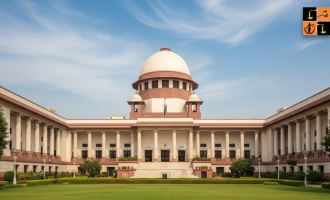
On 16th October 2020 the Supreme Court of India in the case of Umesh Kumar Sharma V. State of Uttarakhand & Ors. comprising of a single Bench judge of Justice Hrishikesh Roy, held that the observations in this judgment is only for disposal of these petitions and should have no bearing for any other purpose.
Factual Background
The present petitions are filed under Section 406 of the Code of Criminal Procedure, 1973 (for short “the CrPC”) read with Order XXXIX of the Supreme Court Rules seeking transfer of three criminal cases pending before different courts in Dehradun to competent courts in Delhi or some other courts outside the State of Uttarakhand.
Submissions on behalf of the Appellant
The learned Senior Counsel submits that the petitioner apprehends threat to his life and will be prejudiced in conducting his defense in the courts at Dehradun. The basic premise for such apprehension is that on account of his work as an investigative journalist against the Ruling dispensation, the State is targeting the petitioner for vindictive prosecution. It is pointed out that as a journalist the petitioner has conducted sting operations against the Chief Minister, his relatives, and associates in the State of Uttarakhand and therefore he is being targeted for malicious prosecution within the State. Moreover, besides the three cases for which transfer is sought, many false cases are foisted against the petitioner. As such, the petitioner has a genuine and justifiable apprehension that justice will not be done if the trials are conducted in the courts within the State of Uttarakhand. Therefore, those cases are transferred either to the courts in Delhi or to any other competent courts, out of Uttarakhand.
Submissions on behalf of the respondent
The learned counsel for the State of Uttarakhand, however, submits that the petitioner has failed to demonstrate how and in what manner, he will be prejudiced if the trials continue in the courts at Dehradun. According to her, the effort of the petitioner is filed only to delay the proceedings. Since investigation in all three cases are concluded and the charge sheet has been filed, the apprehension of interference in the cases by the State administration is contended to be wholly unfounded. The government counsel then refers to a large number of witnesses in the cases to point out that all of them are residents of the State of Uttarakhand and therefore it will be wholly irrational to transfer the trials only on the basis of unsubstantiated apprehension by the accused. Rebutting the contention that the petitioner’s life is endangered within the State of Uttarakhand, Ms. Ruchira Gupta, the learned government counsel submits that these petitions are confined to only three cases whereas the petitioner is accused in several other cases pending in the State. Moreover, he has filed five PILs in the year 2020 itself in the High Court of Uttarakhand and this demonstrates that the petitioner is conducting his affairs without any impediment. The government advocate then submits that the transfer of criminal cases should be rare and exception since it impacts the credibility of the Courts in Uttarakhand. Ms. Gupta submits that some of the criminal cases against the petitioner have been closed and the charges of extortion have been dropped. This according to the learned government counsel would clearly demonstrate the unbiased approach of the State Government and the incorrect and bald allegation made by the petitioner.
Court Analysis
When the nature of the three cases are examined, it is seen that two of the cases are property and Will related matters. One of these cases is pending for the last over a decade. Therefore, this court finds it difficult to accept that the cases are on account of the journalistic activities of the petitioner. In fact, the credibility of the journalistic activity of the petitioner is itself questioned, by a member of his sting operation team, in the third case.
The bench referred to the list of cases pending against the petitioner. Out of those cases, 17 cases relate to the State of Uttarakhand, 4 cases are from the State of Uttar Pradesh, 5 cases relate to the State of West Bengal, 2 cases are from Delhi out of which one is under investigation of the CBI, and another one at Ranchi, Jharkhand. The bench noted Whether those cases are without merit or otherwise, can be determined only through trial. However, the numbers do suggest that the petitioner is not an ordinary person.
Justice Roy also stated that it is also important to note that the State has withdrawn prosecution in many cases filed against the petitioner. The bench also noticed that one of the FIR that is being sought to be transferred i.e. FIR was filed long back in 2007, when the present ruling dispensation in the State of Uttarakhand, was nowhere in the picture. The contents of the allegations in the FIR relates to a property dispute involving the Will, of a family member of the petitioner.
The next FIR relates to forcible land grabbing attempts, on the basis of purportedly fake of documents.
The bench noted Perhaps only the FIR is relatable to a journalistic activity where the allegation of a core member of the investigative journalism team is that the petitioner in the guise of sting operation (by video recording activities of powerful elements), does not air them and the concerned footages are utilized for extraneous purposes.
The bench also reflected that the charge sheet is already filed and the case is scheduled to go for trial in the Dehradun Court. Therefore, the role of the State will now be limited to prove the prosecution case before the Trial Court. In such Court controlled proceeding, the prosecution will have to marshal their evidence which is to be evaluated by the Presiding Officer of the concerned Court. The bench said "Therefore, the apprehension of malicious prosecution because of the steps taken by the public prosecutor against the petitioner in 2018, is not acceptable. I may also add that our courts are capable of deciding cases on the merits of the evidence".
Appreciating several authorities in this context, the bench reiterated that transfer power under section 406 of the Code is to be invoked sparingly- " Only when fair justice is in peril, a plea for transfer might be considered. The court however will have to be fully satisfied that an impartial trial is not possible. Equally important is to verify that the apprehension of not getting a level playing field, is based on some credible material and not just conjectures and surmises.
Judgment
The transfer of trials from one state to another would inevitably reflect on the credibility of the State’s judiciary and but for compelling factors and a clear situation of deprivation of fair justice, the transfer power should not be invoked.
In view of the foregoing, these Transfer Petitions were dismissed. However, it was made clear that the observations in this judgment is only for the disposal of these petitions and should have no bearing for any other purpose.
Read Judgment @Latestlaws.com