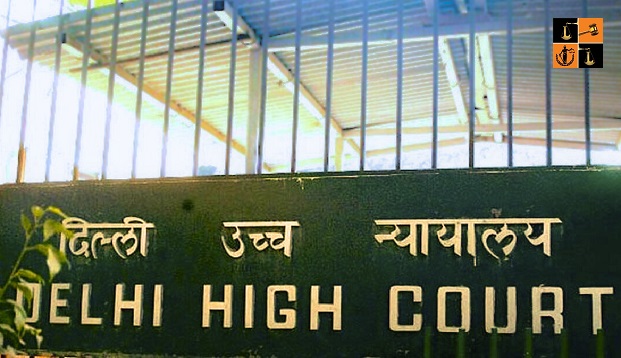
The Delhi High Court has notified the Electronic Evidence and Video Conferencing Rules, 2025, establishing a comprehensive legal regime that consolidates and standardises procedures for electronic hearings, evidence recording, and virtual appearances under the Bharatiya Nagarik Suraksha Sanhita (BNSS), Bharatiya Sakshya Adhiniyam (BSA), Code of Civil Procedure (CPC), and other applicable statutes. The notification, dated July 4, 2025, was published in the Delhi Gazette (Extraordinary), Part II, Section I, No. 25 (NCTD No. 118).
The new rules, which come into effect upon their publication, apply to all proceedings before the High Court, District Courts, tribunals, and quasi-judicial bodies within its supervisory jurisdiction. They also extend to judicial, departmental, and mediation proceedings in pending cases.
The rules have been framed in exercise of powers under Articles 225 and 227 of the Constitution, Section 7 of the Delhi High Court Act, 1966, and relevant provisions of the Bharatiya Nagarik Suraksha Sanhita, 2023 (BNSS), Bharatiya Sakshya Adhiniyam, 2023 (BSA), Code of Civil Procedure, 1908, Commercial Courts Act, 2015, and the Information Technology Act, 2000.
Section 530 of the BNSS enables trials, inquiries, and proceedings to be conducted in electronic mode. The new rules give procedural effect to that statutory mandate, outlining the scope and manner in which virtual hearings and electronic evidence may be administered across criminal and civil jurisdictions.
The rules encompass a broad spectrum of judicial functions, including the examination of witnesses, complainants, and accused persons; recording and preservation of evidence; framing of charges and pronouncement of judgments; conduct of appellate proceedings; as well as procedures related to plea bargaining and custodial remands.
Virtual appearances are now legally recognised for accused persons (except at first appearance), public servants, expert witnesses, and advocates, with safeguards for privacy, data security, and procedural fairness.
The rules introduce several key features aimed at institutionalising the use of technology in court proceedings. All courtrooms, jails, police stations, forensic laboratories, and relevant offices are required to establish designated video conferencing facilities with secure, high-speed infrastructure. Only platforms approved by the Delhi High Court will be permitted for use. These must include end-to-end encryption, data localisation, breakout room capabilities, whiteboards, audit trails, and support for at least 500 concurrent users, all hosted on Indian servers with disaster recovery mechanisms.
To ensure procedural integrity, coordinators are to be appointed at all court and remote points. Their responsibilities include verifying identities, supervising the conduct of proceedings, and ensuring compliance with safeguards, particularly during custodial examinations and evidence collection. The rules also prescribe mandatory decorum, advocates must appear in professional attire from designated locations, and all participants are expected to maintain courtroom discipline. Unauthorised recordings or breaches of protocol may result in immediate removal from the virtual session.
While recognising the need for inclusivity, the rules require that interpreters, translators, special educators, or readers be provided where necessary to assist persons with disabilities. Further, to uphold the principle of open court, proceedings, except those held in-camera, must be accessible to the public through links provided by the Court.
Lastly, the 2021 Video Conferencing Rules stand repealed, although matters initiated under those rules will continue to be governed by them to the extent that they are not inconsistent with the 2025 Rules.