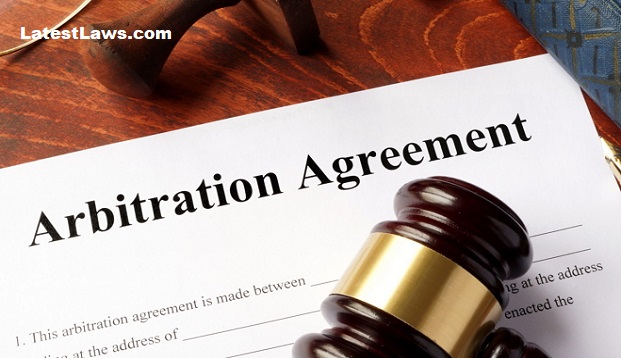
The Supreme Court of India has overruled a judgement in United India Insurance Company Limited (supra) that held that appointment of an arbitrator is a judicial power and is not a mere administrative function leaving some degree of judicial intervention; when it comes to the question to examine the existence of a prima facie arbitration agreement, it is always necessary to ensure that the dispute resolution process does not become unnecessarily protracted.
The Apex Court enunciated that after the introduction of Section 11(6A) to the Arbitration and Conciliation Act, the jurisdiction of the Supreme Court/High Court while considering a petition to appoint arbitrator, is confined to the examination of the existence of an arbitration agreement
Section 11 (6A) was added by the Amendment Act of 2015 and states as follows:
“11. (6A) The Supreme Court or, as the case may be, the High Court, while considering any application under sub-section (4) or sub-section (5) or sub-section (6), shall, notwithstanding any judgment, decree or order of any Court, confine to the examination of the existence of an arbitration agreement.”
Learned Counsel Mr. Mukul Rohatgi pointed out that by an Amendment Act of 2019, which has since been passed, this sub-section has now been omitted. Section 3 of the amendment Act of 2019 insofar as it pertains to this omission has not yet been brought into force. The omission is pursuant to a High-Level Committee Review regarding the institutionalization of arbitration in India, headed by Justice B. N. Srikrishna. The Report given by this Committee is dated 30th July, 2017. The omission of 3 the sub-section is not so as to resuscitate the law that was prevailing prior to the amendment Act of 2015.
The reason for the omission of S. 11(6A) is given in the Report as follows:
“Thus, the 2015 amendments to section 11 are geared towards facilitating speedy disposal of section 11 applications by: (a) enabling the designation of any person or institution as an appointing authority for arbitrators in addition to the High Court or Supreme Court under section 11; (b) limiting challenges to the decision made by the appointing authority; and (c) requiring the expeditious disposal of section 11 applications, preferably within the prescribed 60-day time period.
While these amendments no doubt facilitate the speedy disposal of section 11 applications to a large extent, they do not go all the way in limiting court interference. Pursuant to the amendments, the appointment of arbitrators under section 11 may be done: (a) by the Supreme Court or the High Court; or (b) by a person or institution designated by such court in the exercise of an administrative power following section 11(6B). In either case, the amendments still require the Supreme Court / the High Court to examine whether an arbitration agreement exists, which can lead to delays in the arbitral process as extensive evidence and arguments may be led on the same.
The Committee notes that the default procedure for appointment of arbitrators in other jurisdictions do not require extensive court involvement as in India. For instance, in Singapore, the relevant provision of the IAA provides that where the parties fail to agree on the appointment of the third arbitrator, within 30 days of the receipt of the first request by either party to appoint the arbitrator, the appointment shall be made by the appointing authority (the President of the SIAC) by the request of the parties. (See section 9A(2) read 4 with sections 2(1) and 8(2), IAA) The arbitration legislation of Hong Kong incorporates Article 11 of the UNCITRAL Model Law relating to the appointment of arbitrators. Like in the case of Singapore where the SIAC is the appointing authority for arbitrators, the default appointment of arbitrator(s) is done by the HKIAC. (Section 13(2) read with section 24, AO) In the United Kingdom, in the case of default of one party to appoint an arbitrator, the other party may appoint his arbitrator as the sole arbitrator after giving notice of 7 clear days to the former of his intention to do so. (Section 17, AA) The defaulting party may apply to the court to set aside the appointment. (Section 17(3), AA) In case of a failure of the appointment procedure, any party may apply to the court to make the appointment or give directions regarding the making of an appointment. (Section 18(2), AA)
The Committee recommends the adoption of the practice followed in Singapore and Hong Kong in the Indian scenario — apart from avoiding delays at court level, it may also give impetus to institutional arbitration. xxx xxx Recommendations 1. In order to ensure speedy appointment of arbitrators, section 11 may be amended to provide that the appointment of arbitrator(s) under the section shall only be done by arbitral institution(s) designated by the Supreme Court (in case of international commercial arbitrations) or the High Court (in case of all other arbitrations) for such purpose, without the Supreme Court or High Courts being required to determine the existence of an arbitration agreement.”
Thus, The Top Court stated that after the amendment Act of 2019, Section 11(6A) has been omitted because appointment of arbitrators is to be done institutionally, in which case the Supreme Court or the High Court under the old statutory regime are no longer required to appoint arbitrators and consequently to determine whether an arbitration agreement exists.
It further stated, "This being the position, it is clear that the law prior to the 2015 Amendment that has been laid down by this Court, which would have included going into whether accord and satisfaction has taken place, has now been legislatively overruled. This being the position, it is difficult to agree with the reasoning contained in the aforesaid judgment as Section 11(6A) is confined to the 15 examination of the existence of an arbitration agreement and is to be understood in the narrow sense as has been laid down in the judgment Duro Felguera, S.A. (supra) – see paras 48 & 59."
The Judgement has been delivered by Justice ROHINTON FALI NARIMAN, Justice R. SUBHASH REDDY, Justice SURYA KANT on 05-09-2019.
Read Judgement Here: