Recently, the Delhi High Court quashed criminal proceedings arising out of cheque dishonour complaints, holding that Section 138 of the Negotiable Instruments Act (NI Act) cannot be invoked when bank accounts are blocked due to insolvency proceedings. The Court delivered a clear message that criminal liability cannot survive where payment is barred by operation of law rather than financial default.
Brief facts:
The case arose from three criminal complaints filed under Section 138 of the NI Act, alleging dishonour of cheques issued by Sumeru Processors Pvt. Ltd. and its directors towards repayment of friendly loans and rental dues. The cheques, issued for amounts running into several lakhs and over a crore, were returned unpaid with the endorsement “ACCOUNT BLOCKED,” following which prosecution was initiated and summons were issued by the trial court.
Challenging these proceedings under Section 482 of the Code of Criminal Procedure, the accused directors contended that insolvency resolution and subsequent liquidation under the Insolvency and Bankruptcy Code, 2016 (IBC) had already commenced, resulting in control of the company’s bank accounts vesting in the Interim Resolution Professional and later the Liquidator, thereby divesting the directors of authority to operate the accounts at the relevant time.
Contentions of the Petitioner:
The Petitioner argued that the essential ingredients of Section 138 of the NI Act were wholly absent. Counsel submitted that once the insolvency moratorium under Section 14 of the IBC came into force, followed by liquidation, the directors ceased to have control over the company’s bank accounts under Section 17 and Section 18 of the IBC. As a result, any cheque allegedly issued thereafter could not be said to have been drawn on an account “maintained” by them. It was further contended that dishonour due to “account blocked” is legally distinct from dishonour due to insufficiency of funds and cannot attract criminal liability.
Contentions of the Respondent:
Opposing the petitions, the Respondents contended that the cheques had been duly signed and issued towards legally enforceable liabilities and that insolvency proceedings were deliberately concealed. It was argued that the directors could not evade prosecution merely by citing insolvency, and that disputed factual issues ought to be tested at trial rather than at the quashing stage.
Observation of the Court:
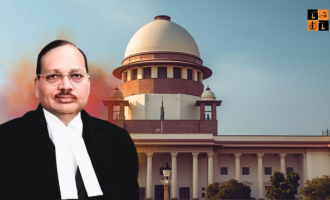
Justice Neena Bansal Krishna held that Section 138 of the NI Act is attracted only when a cheque is dishonoured due to insufficiency of funds, and not when payment is legally prohibited. Noting that the cheques in question were returned with the remark “ACCOUNT BLOCKED,” the Court observed that “the dishonour occurred not due to insufficiency of funds, but due to statutory prohibition on payments during winding-up proceedings and appointment of the IRP.”
The Court categorically observed that “the dishonour occurred not due to insufficiency of funds, but due to statutory prohibition on payments during winding-up proceedings and appointment of IRP.” The Court emphasised that once insolvency proceedings commence, directors lose control over the company’s bank accounts, and criminal liability cannot be fastened in the absence of such control. It held that this situation “falls squarely outside the ambit of Section 138, as the essential ingredient of dishonour due to inadequate funds remains unestablished.”
The Court clarified that cheque dishonour liability arises only when the drawer maintains and controls the account at the relevant time, a condition that was clearly negated once insolvency proceedings came into force.
The decision of the Court:
In light of the foregoing discussion, the Court allowed the petitions and quashed all three cheque dishonour complaints along with the summoning orders.
Case Title: Farhad Suri and Anr. vs. Praveen Choudhary & Ors.
Case No.: CRL.M.C. 1347/2021
Coram: Hon’ble Ms. Justice Neena Bansal Krishna
Advocate for the Petitioner: Advs. Nalin Tripathi, Shivansh Pandey
Advocate for the Respondent: Adv. Ankit Tandan,
Read Judgment @Latestlaws.com