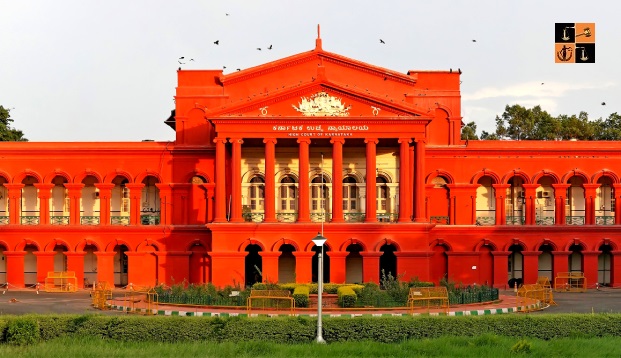
Recently, the Karnataka High Court quashed criminal proceedings initiated for the offence of bigamy under Section 494 of the Indian Penal Code, 1860 (IPC), holding that a live-in relationship, by itself, does not amount to a second marriage in the eye of law. The Court was dealing with a challenge to a trial court order taking cognisance on a wife’s private complaint against her husband, another woman, and their children, and emphasised that proof of a valid second marriage is indispensable to sustain a charge of bigamy.
Brief facts:
The dispute arose from a private complaint filed by a wife alleging that her 73-year-old husband was involved in multiple illicit relationships and was living with another woman, thereby committing bigamy. The complaint also arrayed the alleged partner and even the couple’s children as accused, alleging that they were aware of and complicit in the relationship. Acting on the complaint, a trial court in Mysuru took cognisance of offences under Section 494 read with Section 34 IPC. Challenging this, the husband, the alleged second woman, and the children approached the High Court, contending that the complaint failed to disclose the essential ingredients of the offence, particularly the existence of a valid second marriage.
Contentions of the Parties:
The Petitioners argued that the complaint was fundamentally defective as it did not contain any assertion or material to show that the husband had contracted a second marriage during the subsistence of the first. It was submitted that mere allegations of an illicit or live-in relationship do not attract Section 494 of the IPC, which specifically requires proof of a legally valid marriage. The Petitioners further contended that the inclusion of the children and the alleged partner was legally untenable, as the offence of bigamy is personal to the spouse and cannot be extended through abetment provisions in such circumstances.
The complainant, on the other hand, maintained that the husband’s relationship with another woman amounted to bigamy and that the conduct of the accused persons, including the children, justified their prosecution. The Counsel argued that the trial court had rightly taken cognisance based on the allegations disclosed in the complaint.
Observation of the Court:
The Court found a complete absence of any pleading or material indicating that the husband had solemnised a second marriage. The Court observed that “mere living in a relationship does not amount to a marriage and therefore, an offence under Section 494 of IPC was not made out.”
The Bench further noted that the complaint failed to disclose essential details such as the date, place, or manner of any alleged second marriage, thereby rendering the allegation legally unsustainable.
The Court also clarified the scope of Section 494 of the IPC, emphasising that the offence is attracted only when a valid second marriage is proved in accordance with law. Referring to precedent, it reiterated that liability under this provision is confined to the erring spouse alone and cannot be extended to others through abetment provisions.
The Bench found no legal basis to prosecute the alleged partner or the children, particularly in the absence of any legally recognisable marriage. It further held that the trial court had erred in taking cognisance without examining whether the foundational requirements of the offence were satisfied.
The Court reaffirmed that a live-in or illicit relationship, without proof of a legally valid marriage, cannot constitute bigamy, and that criminal liability under this provision cannot be invoked on mere allegations lacking foundational facts.
The decision of the Court:
In light of the foregoing discussion, the Court allowed the petition and quashed the criminal proceedings against all accused, holding that the complaint failed to establish the essential ingredient of a valid second marriage required under Section 494 of the IPC.
Case Title: A Vs. B
Case No.: Criminal Petition No.470 of 2019
Coram: Hon'ble Mr. Justice R. Nataraj
Advocate for the Petitioner: Senior Counsel C. R. Gopalaswamy, Adv. Bhargav G.
Advocate for the Respondent: Adv. K. Shrihari,
Read Judgment @Latestlaws.com