









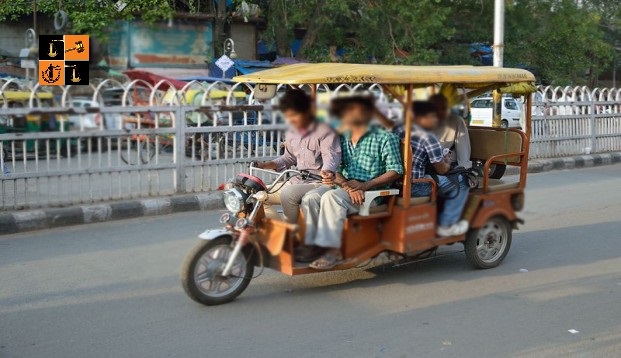
On Wednesday, the Delhi High Court took cognisance of concerns raised over the unchecked operation of e-rickshaws in the national capital, issuing notice on a Public Interest Litigation that alleges systemic failure in enforcing statutory safeguards governing such vehicles. The Court was moved in the aftermath of a tragic incident involving the death of an eight-year-old child, prompting judicial scrutiny into whether regulatory prescriptions under motor vehicle laws are being observed in practice.
The Division Bench comprising Chief Justice D.K. Upadhyaya and Justice Tejas Karia sought responses from the Delhi Government, its Transport Department, the Delhi Traffic Police and the Municipal Corporation of Delhi. The matter has been listed for further hearing on March 18.
The Petition has been filed by Manish Parashar, whose minor daughter lost her life after an e-rickshaw allegedly overturned due to reckless driving in the Jafrabad area of Delhi. According to the plea, the vehicle involved in the incident was unregistered, uninsured and structurally unfit, raising questions about regulatory oversight and enforcement at the ground level. Placing reliance on this incident, the petitioner has approached the High Court seeking strict enforcement of laws and rules governing the manufacture, registration and operation of e-rickshaws in the city.
The PIL contends that e-rickshaws are operating with reckless abandon across Delhi, in open violation of existing legal requirements. It asserts that such vehicles pose serious, life-threatening risks to commuters and pedestrians, leading to frequent accidents and fatalities.
Invoking constitutional protections, the plea characterises the prevailing situation as an intolerable situation that "ruthlessly tramples upon the inviolable Right to Life enshrined under Article 21 of the Constitution of India,” warranting immediate judicial intervention.
Drawing attention to the statutory regime, the petition points out that the Central Government has framed detailed norms through amendments to the Central Motor Vehicles Rules, 1989 and notifications issued under the Motor Vehicles Act, 1988. These norms mandate registration, fitness certification, valid driving licences, insurance coverage and adherence to prescribed safety standards for e-rickshaws and e-carts.
The Court issued notice to the concerned authorities to examine the grievances raised in the petition. The Bench sought responses from the Delhi Government, the Transport Department, Delhi Traffic Police and the Municipal Corporation of Delhi, indicating that the Court would examine whether the existing regulatory architecture is being implemented effectively on the ground.
The petition specifically alleges that despite the existence of “comprehensive guidelines regulating the manufacture, registration, and operation of e rickshaws and e-carts,” these requirements remain largely unimplemented, allowing unregistered and unregulated vehicles to ply in large numbers.
The Court has not passed any final directions at this stage. By issuing notice, the Court has called upon the concerned authorities to place their stand on record. The matter will be taken up for further consideration on March 18, when the Court is expected to assess the adequacy of enforcement measures and the issues raised concerning public safety.
Disclaimer: This news/ article includes information received via a syndicated news feed. The original rights remain with the respective publisher.
Picture Source :




















