









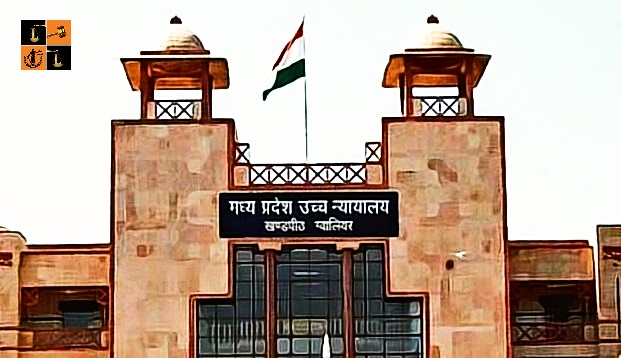
Recently, the Madhya Pradesh High Court quashed the suspension of a police officer who had conducted a gambling raid at a farmhouse linked to an IAS officer, holding that the action against the officer was prima facie arbitrary, vindictive and legally unsustainable. Setting aside the suspension order issued against the Station House Officer, the Court observed that if such actions are allowed to continue, “no officer would even dare to raid any premises due to fear of suspension.”
Brief facts:
The case stemmed from a writ petition filed under Article 226 of the Constitution, challenging the suspension of a Sub-Inspector posted as SHO of a police station in Indore Rural. The controversy arose after the officer conducted a late-night raid at a farmhouse where several persons were allegedly found involved in illegal gambling activities, leading to the seizure of cash, mobile phones, and vehicles. During the investigation, it emerged that the property allegedly belonged to a serving IAS officer.
The Petitioner contended that he subsequently faced pressure to suppress the FIR or alter the place of occurrence to conceal the identity of the property owner. According to the petition, after he refused to modify the official record and proceeded with registration of the FIR reflecting the actual location, he was suspended on allegations of negligence and failure to gather intelligence.
Contentions of the Petitioner:
The Petitioner argued that the suspension order was a classic example of an arbitrary and mala fide exercise of administrative power intended to victimise an honest officer for lawfully discharging his duties. The Counsel contended that the action violated Rule 9 of the M.P. Civil Services (Classification, Control and Appeal) Rules, 1966, since neither any departmental inquiry nor criminal investigation was pending against the officer on the date of suspension.
The Petitioner further highlighted glaring inconsistencies in the State’s action, including suspension of an Assistant Sub-Inspector who was admittedly on medical leave during the incident and the failure to suspend another SHO who had conducted a similar gambling raid under comparable circumstances. The Counsel argued that the suspension was directly linked to pressure exerted upon the petitioner to conceal the involvement of the IAS officer’s farmhouse in the alleged gambling operation.
Contentions of the Respondent:
On the other hand, the State defended the suspension by asserting that the petitioner had failed to comply with directions issued during crime review meetings regarding curbing illegal activities and strengthening intelligence gathering mechanisms. The Respondents maintained that the suspension was imposed in contemplation of a departmental inquiry and that preliminary inquiry materials prima facie disclosed negligence on the Petitioner’s part.
The State further argued that the writ petition itself was not maintainable due to the availability of an alternative statutory remedy of appeal under the 1966 Rules. The Respondent attempted to rely upon earlier disciplinary proceedings against the petitioner to dispute his claim of an unblemished service record.
Observation of the Court:
The Court observed that the power of suspension cannot be exercised as a routine administrative measure or as a retaliatory action against an officer performing official duties in accordance with law. The Bench reiterated that suspension is only a protective measure pending inquiry and not a punishment in itself. According to the Court, authorities must assess the gravity of misconduct, the available material, and the necessity of keeping the officer away from duty before invoking such power. It held that arbitrary suspension orders lacking prima facie material or reasonable justification amount to abuse of administrative authority and warrant interference under Article 226 of the Constitution.
The Bench held that the suspension order suffered from a complete lack of proportionality and factual foundation. The Court noted that the allegation against the petitioner was failure to gather intelligence regarding illegal gambling activities, whereas the successful raid itself demonstrated effective intelligence gathering and prompt police action. It found that the petitioner had acted upon secret information, secured a search warrant, mobilised police personnel, and conducted a raid resulting in the seizure of incriminating material. In such circumstances, the Court held that penalising the officer for carrying out his statutory duties could not constitute grave misconduct under disciplinary law.
The Court further observed that the circumstances surrounding the suspension indicated mala fide exercise of power and a retaliatory approach by the authorities. The Bench noted that the petitioner had specifically alleged pressure to suppress or alter the actual place of occurrence because the property belonged to a serving IAS officer, and significantly, these allegations were not specifically denied by the respondents. According to the Court, such evasive silence substantially strengthened the petitioner’s allegations and lent credence to his claim that the suspension followed his refusal to comply with unlawful directions.
The Bench also found “glaring non-application of mind” in the preliminary inquiry, noting that even an officer who was on sanctioned medical leave had been suspended along with the petitioner. The Court further highlighted discriminatory treatment by observing that another SHO who conducted a similar gambling raid was not subjected to suspension. Holding that the action reflected a pick and choose approach and arbitrary exercise of power, the Court concluded that the impugned suspension order was legally unsustainable and not a bona fide disciplinary measure.
The decision of the Court:
In light of the foregoing analysis, the Court allowed the writ petition and quashed the suspension order along with all consequential actions arising from it. While granting liberty to the State to proceed in accordance with law if genuinely required, the Court held that the impugned action suffered from gross legal infirmities, lack of prima facie material and clear signs of vindictive misuse of power.
Case Title: Lokendera Singh Hihore Vs. State of Madhya Pradesh through Principal Secretary Department of Home, Mantralaya, Vallabh Bhawan Bhopal and Others
Case No.: Writ Petition No. 10092 of 2026
Coram: Hon’ble Mr. Justice Jai Kumar Pillai
Advocate for the Appellant: Adv. Mini Ravindran
Advocate for the Respondent: Dy. A.G. Sudeep Bhargav, Dy. G.A Kushagra Singh
Read Judgment @Latestlaws.com
Picture Source :




















