









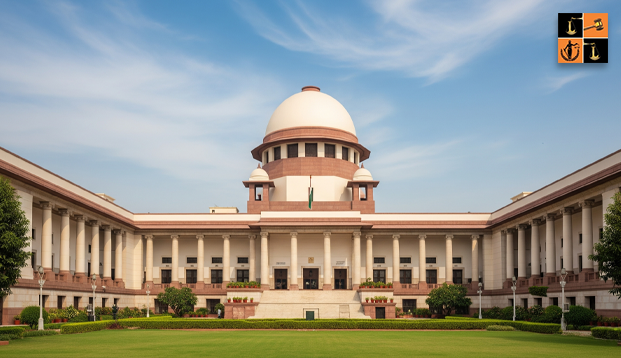
On Monday, the Supreme Court stepped in to examine whether a decree that already provided a mechanism for the sale of property upon failure of physical partition could still be treated as incapable of execution without a separate final decree. The Division Bench of Justice KV Viswanathan and Justice SVN Bhatti was dealing with a prolonged family property dispute from Madhya Pradesh, where the High Court had repeatedly stalled execution proceedings by insisting that a separate final decree was necessary before the property could be auctioned. The Apex Court closely scrutinised whether procedural technicalities could override a decree that had already determined the partie’s rights and the mode for working out their shares.
The controversy began when the Appellant filed a partition suit seeking division of a residential flat jointly purchased with her late husband. The Trial Court passed a preliminary decree in 2012 declaring that both parties were entitled to equal shares and directed an Advocate Commissioner to examine whether the flat could be divided by metes and bounds. The decree further stated that if physical division was not possible, the property could be sold and the sale proceeds distributed between the parties. After the Commissioner reported that the flat could not be practically partitioned, the Executing Court ordered a public auction.
However, the High Court interfered and held that the decree could not be executed without first drawing up a separate final decree. Counsel for the Appellant argued before the Top Court that once the Commissioner confirmed physical partition was impossible, the only surviving option under the decree itself was auction of the property, making any insistence on a fresh final decree purely academic and unnecessary.
The Apex Court observed that the High Court had focused merely on the nomenclature of the decree while ignoring its actual substance and operative clauses. The Bench noted that the decree had already determined the partie’s entitlement, possession rights, mesne profits, and even the mode of sale if physical partition failed. The Court said, “The direction to file a fresh application after the passing of a Final Decree is completely unwanted.”
The Court also remarked that the case reflected a “Comedy of Errors” and reiterated that execution proceedings could not be stalled merely because no separate final decree application had been filed. The Court held that, in the facts of the case, the decree carried the character of both a preliminary and final decree.
Consequently, the Apex Court set aside the High Court orders, restored the execution proceedings, and directed the trial court to proceed with auction of the property and apportionment of sale proceeds between the parties within two months.
Case Title: Jennifer Messias Vs. Leonard G Lobo
Case No.: Special Leave Petition (Civil) Nos. 8716-8717 of 2026
Coram: Hon’ble Mr. Justice S.V.N. Bhatti, Hon’ble Mr. Justice K.V. Viswanathan
Advocate for the Petitioner: AOR Abhishek Gulatee, Adv. Naveen Chaturvedi
Advocate for the Respondent: AOR Mrigank Prabhakar, Adv. Siddharth R. Gupta, Adv. Pramod Thakre, Adv. Rahul Rawat, Adv. Aman Agarwal, Adv. Shantanu Sharma, Adv. Surbhi Saxena, Adv. Uddaish Palya, Adv. Astha
Read Judgment @Latestlaws.com
Picture Source :




















