









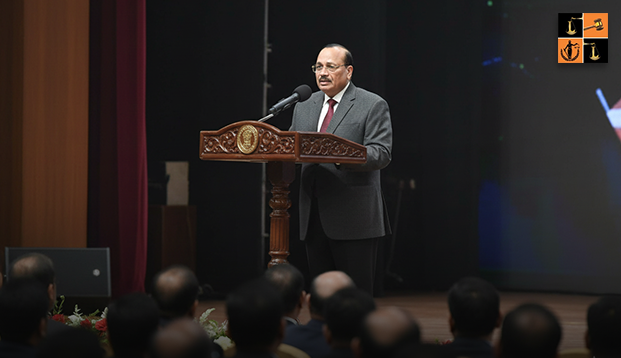
On Saturday, Chief Justice of India Surya Kant called for a major transformation in the justice delivery system, asserting that courts must evolve into round-the-clock institutions capable of providing immediate relief to citizens. Stressing the urgent need for stronger digital and AI-driven judicial infrastructure, the CJI said technology is now central to ensuring timely, affordable, and accessible justice, particularly at a time when rising pendency continues to burden the legal system.
At an event hosted by the Madhya Pradesh High Court on digital integration in the justice system, CJI Surya Kant lauded the judiciary’s ongoing technological reforms aimed at making courts more efficient, accessible, and responsive for litigants. He noted that digital platforms now enable litigants to track case progress and access court-related information more effectively. Reflecting on the COVID-19 period, he described the pandemic as the turning point that accelerated the judiciary’s reliance on technology.
He observed that despite uncertainty and logistical challenges, Indian courts continued functioning and ensured urgent judicial remedies remained available. The CJI also revealed that the Supreme Court has constituted a committee to explore the use of artificial intelligence for faster disposal of pending matters and improved judicial administration.
Calling technology a constitutional necessity rather than a mere administrative convenience, CJI Surya Kant observed, “The time has come for the judiciary to work like hospitals that provide 24×7 emergency services.” He further emphasised that technology is no longer merely an administrative tool but has become a constitutional necessity linked to the promise of equal and timely justice under Article 39A of the Constitution.
At the same time, the CJI cautioned that digital transformation must remain inclusive, particularly for people living in rural and tribal regions who may still find online systems inaccessible or unfamiliar. He stressed that greater investment in digital literacy and technological training would be essential to ensure that judicial modernisation benefits every section of society.
Disclaimer: This news/ article includes information received via a syndicated news feed. The original rights remain with the respective publisher.
Picture Source :




















