









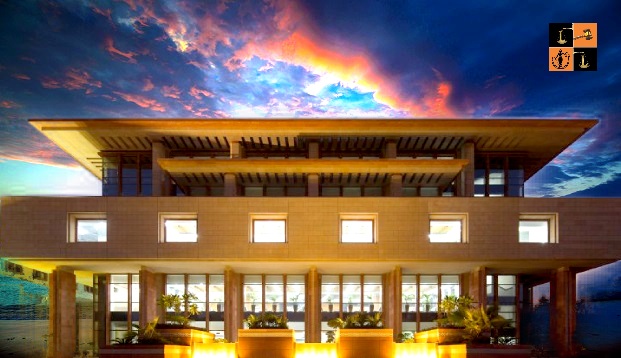
Today, the Delhi High Court expressed strong disapproval of a lawyer’s attempt to mobilise public participation around a pending petition challenging the Union Government’s empanelment of lawyers as panel counsel before the Supreme Court, cautioning that court proceedings cannot be converted into platforms for campaigning or public calls.
The case arose from a writ petition filed by the First-Generation Lawyers Association (FGLA), represented by its President, Advocate Rudra Vikram Singh, questioning the alleged arbitrariness and lack of transparency in the empanelment of lawyers as Union Government counsel before the Supreme Court.
When the matter came up before a Division Bench of the Delhi High Court, comprising Chief Justice DK Upadhyaya and Justice Tejas Karia, the Central Government opposed the petition at the threshold.
Appearing for the Union, Additional Solicitor General Chetan Sharma contended that the plea was motivated and was being used as a means to further the petitioner’s prospective candidature in the Delhi Bar Council elections. It was also pointed out that the petition did not disclose whether the association was registered under any statute.
Advocate Rudra Vikram Singh admitted that he was contemplating contesting the Bar Council elections but denied any intention to use the petition for electoral campaigning. The ASG, however, drew the Court’s attention to social media posts circulated by the association and allegedly shared by Singh, inviting other lawyers to “join” the virtual hearing. According to the Union, such conduct violated the Video Conferencing Rules of the High Court and undermined the discipline of court proceedings.
Taking serious exception to the social media outreach, the Bench observed that calling upon lawyers at large to join a live court proceeding was impermissible. Chief Justice Upadhyaya questioned the purpose behind circulating links to hearings and warned against any attempt to disrupt or sensationalise judicial proceedings. Justice Karia added that circulating such messages was prima facie contrary to the Video Conferencing Rules of the High Court, which restrict virtual access only to parties and their counsel. The Bench remarked that the conduct was not in good taste and risked diluting the sanctity of court proceedings.
In a cautionary note, the Chief Justice advised that while grievances within the system are understandable, they must be raised through lawful and dignified means. He emphasised that respect for institutional processes is essential to preserve the credibility of the judicial system. Following this, Singh assured the Court that all such social media posts would be deleted.
The Court ultimately disposed of the petition, taking note of an earlier order passed in December 2025 granting the Union Government time to frame guidelines for empanelment of its counsel, pursuant to a statement made by Solicitor General Tushar Mehta. Holding that a similar course should be adopted in the present case, the Bench directed that the petition be treated as a representation to the Union of India. The competent authority was asked to consider the grievances raised with respect to the existing empanelment and take a reasoned decision within eight weeks.
Disclaimer: This news/ article includes information received via a syndicated news feed. The original rights remain with the respective publisher.
Picture Source :




















