









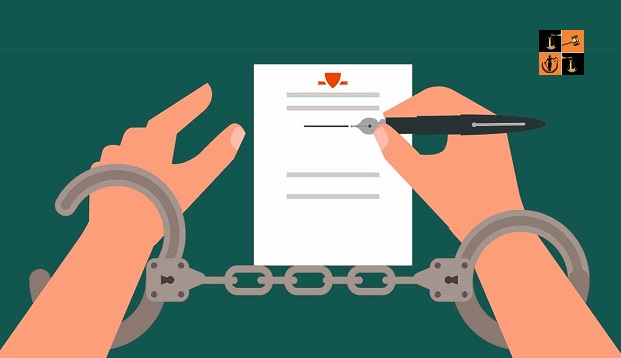
The Gauhati High Court answered the issue of whether in absence of any other evidence, can conviction happen solely on the basis of admission and unsigned confessional statement.
The Court expounded that on basis of unsigned and unproved confessional statement, no conviction can happen.
Brief Facts:
The present jail appeal has been filed against the conviction of the Appellant for the offence under Sections 302 and 376 of the Indian Penal Code, 1860.
Brief Background:
The Accused pled guilty for the charges levelled against him, however, the case proceeded for trial.
The convict did not prefer appeal against the Judgment and sentence. However, later on the convict has made a representation before the Government praying for pre-mature release. It was rejected on the ground that for committing rape, no pre-mature release is applicable.
Contentions of the Appellant:
It was argued that it was legally impossible to rape a woman who already died, hence the conviction was bad in law. Further, the Court did not consider the mental unsoundness of the Accused at the time of commission of the offence.
It was further contended that the conviction was solely based on the confessional statement given before the Trial Court at the time of framing charges, however, no confession was given before the Magistrate.
Observations of the Court:
The issue was whether in absence of any other evidence, can conviction happen solely on the basis of admission and unsigned confessional statement.
The Court noted that the prosecution has to prove their case beyond reasonable doubt against the alleged accused. In the instant case although the original records are not available, however, it is discernible from the available records that right from the beginning, the investigation of the case was not properly and adequately done. There is no record of the IO visiting the place of occurrence, drawing of sketch map of the crime scene, recovery or seizure of any other incriminating materials and weapon of offence.
In relation to the confessional statement, it was observed that there was no record of the confessional statement except the unsigned Xerox copy of the purported confessional statement containing the signature of the Police Court.
The Bench expounded that as per Section 164 of Cr.P.C. As per 164 (4), the confessional statement of the accused person shall be signed by the person making the confession, but in the present case, the accused did not sign the said confessional statement. Non-compliance with provision of section 164 Cr. P.C caused injury to the accused in his defence on merit and the same cannot be cured at the later stage.
Noting that the Appellant was convicted solely on basis of unsigned and unproved confessional statement, the Bench quashed the conviction.
The decision of the Court:
The Court accordingly released the Appellant and allowed the appeal.
Case Title: Shri. Kedukhoy v. State of Nagaland
Case No.: CRL.A(J)/10/2022
Coram: Hon’ble Justice Sanjay Kumar Medhi, Hon’ble Justice Budi Habung
Advocate for Appellant: Adv. Sentiyanger
Advocate for Respondent: Adv. Government Advocate NL
Read More @LatestLaws.com:
Picture Source :



















