









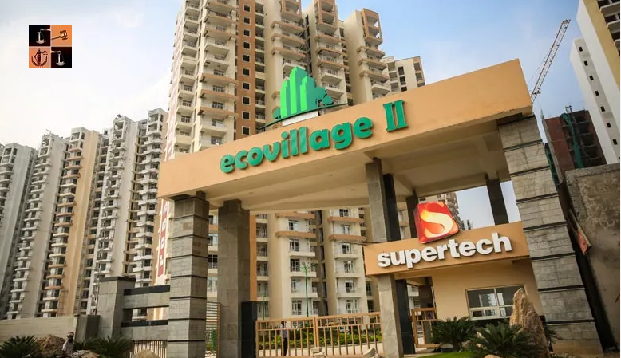
The Supreme Court bench comprising Justice Dinesh Maheshwari and Justice P.V. Sanjay Kumar upheld the implementation of the project-wise insolvency resolution process in the case of Supertech's Eco Village II project. The Apex Court’s decision to uphold the project-wise insolvency resolution process was primarily motivated by the need to balance convenience and prevent undue hardships to homebuyers.
Brief Facts of the Case:
A set of Civil Appeals were filed before the Supreme Court challenging the impugned order of the National Company Law Appellate Tribunal (hereinafter referred to as the “NCLAT”). The appeals were filed by Union Bank of India (hereinafter referred to as “UBI”) and Indiabulls Asset Reconstruction Company Ltd. (hereinafter referred to as “Indiabulls”) against corporate debtor Supertech Ltd. (hereinafter referred to as “Supertech”)
Brief Background of the Case:
The corporate debtor was a real estate company primarily operating in the National Capital Region. They obtained credit facilities from the Union Bank of India for the "Eco Village-II Project" through a sanction letter, amounting to Rs. 150 crores. Subsequently, Union Bank of India and Bank of Baroda agreed to provide additional credit facilities of Rs. 200 crores, with Union Bank of India's exposure being Rs. 100 crores, as sanctioned by a letter.
The credit facilities provided by Union Bank of India to the corporate debtor were secured through a mortgage, corporate guarantees, and personal guarantees. However, due to the corporate debtor's default on loan repayment, the account was declared a 'Non-Performing Asset'.
Procedural History:
Union Bank of India filed an application under Section 7 of the Insolvency and Bankruptcy Code (hereinafter referred to as “IBC”), claiming a total amount of Rs. 431,92,53,302, along with accrued interest. The National Company Law Tribunal (hereinafter referred to as “NCLT”), through its order, admitted the Section 7 application and initiated the Corporate Insolvency Resolution Process (hereinafter referred to as “CIRP”) for the corporate debtor. Mr. Hitesh Goel, respondent No. 3, was appointed as the Insolvency Resolution Professional (hereinafter referred to as “IRP”). Respondent No. 1, the promoter/suspended director of the corporate debtor, appealed against the NCLT's order to the NCLAT. The NCLAT issued an interim order stating that the Committee of Creditors (hereinafter referred to as “CoC”) should not be constituted until the next hearing. This order remained in effect until the issuance of the challenged order.
The NCLAT partially modified its previous order and issued interim directions. These directions included the constitution of the CoC specifically for the Eco Village Project-II, with the assistance of the former management, while allowing other projects, excluding Eco Village-II, to continue as ongoing projects. The financial creditors of the corporate debtor, dissatisfied with these interim directions, filed appeals before our Court. Their main challenge was against the adoption of a reverse CIRP by the NCLAT and the limitation of the CIRP and CoC constitution to only one project of the corporate debtor, namely, Eco Village-II.
Contentions of the Appellants (India bulls and UBI):
The appellants argued that the funding provided by financial institutions, including the appellant, was given to the corporate debtor as a whole entity, regardless of whether the funds were used for a single project or multiple projects. Therefore, the credit facility should not be considered as "project finance" and should not allow resolution through a project-based insolvency mechanism. According to the appellant, IBC envisions the CIRP for the entire corporate entity, which should be conducted through the CoC constituted for the entire corporate debtor and not just one of its projects. Moreover, allowing the former management, who was responsible for the project suspensions, to participate as a resolution applicant or receive funds from a third party would violate Section 29-A of the IBC and previous Court judgments. The appellant insisted that the ex-management should be excluded from the resolution process for the corporate debtor while welcoming investment from third parties on the condition that the ex-management is not involved.
The appellants contended that the impugned order, which limited the constitution of the CoC to Eco Village-II, should be modified to include the entire company. They emphasised that the promoter/erstwhile management of the corporate debtor should not be involved in the CIRP and that the status quo regarding the assets of the corporate debtor should be maintained.
Contentions of the Respondents:
On behalf of respondent No.1, the promoter, it was contended that the interim directions issued by the NCLAT should be modified to include Eco Village-II within the interim arrangement. They proposed that the ex-management of the corporate debtor be allowed to execute the interim funding and settlement plan under the supervision of the IRP, with monitoring by a designated Monitoring Committee. They further recommended that the IRP, ex-management, and the Monitoring Committee be required to submit quarterly progress reports to either the NCLAT or the Court. It was also requested that no coercive action be taken against the assets of the corporate debtor, its promoters, directors, and management, as it would cause delays in project completion.
The IRP argued in favour of maintaining the interim directions issued by the NCLAT, suggesting that construction could be monitored by a steering committee that would provide quarterly reports. They also proposed initiating efforts to secure interim financing for all projects of the corporate debtor, including both Eco Village-II and Non-Eco Village II projects. The home buyers of Eco Village-II requested that directions be given to complete the construction of the project similarly as envisioned for other home buyers, for whom no CoC had been constituted. They suggested that the IRP supervise the construction with the assistance of the ex-management.
Observations of the Court:
The Supreme Court analyzed that the element of a balance of convenience was considered significant. The NCLAT had previously adopted a specific course, suggesting project-wise resolution as a test for success. The directions in the challenged order stated that, except for the Eco Village-II project, all other projects of the corporate debtor should continue under the supervision of the IRP, along with the ex-management, employees, and workmen. Infusion of funds by the promoter in different projects was treated as interim finance, with the IRP responsible for maintaining the total account. If, at this stage, the CoC were to be constituted for the corporate debtor, it would likely affect ongoing projects and cause immense hardship to home buyers, throwing each project into uncertainty. On the other hand, the IRP was continuing the other projects and making efforts for fund infusion with the active assistance of the ex-management, without creating any additional rights for the ex-management. Passing an interim order to constitute the CoC for the entire corporate debtor was expected to cause greater inconvenience and irreparable harm to home buyers. Therefore, the directions in the impugned order regarding projects other than Eco Village-II were not altered.
Regarding the Eco Village-II project, since the NCLAT had ordered the constitution of the CoC in the impugned order, those directions were not interfered with. However, it was specified that no process beyond voting on the resolution plan should be undertaken without specific orders from the Court. Other propositions, such as the constitution of a monitoring committee, were kept open for later examination if necessary.
The impugned order was allowed to operate, subject to the final orders to be passed in the appeals, with the modification that any process beyond voting on the resolution plan for the Eco Village-II project would await further orders from the Court. The interim direction was modified to allow the NCLAT to deal with the received offers and make appropriate orders, but the entire process remained subject to the orders in these appeals.
The decision of the Court:
The Supreme Court did not interfere with the order of NCLAT, whereas the Apex Court directed the parties to not conduct the voting without specific directions from the concerned Court. The Court upheld the operative part of the impugned order although modification of the process would resume with orders from the Court.
Case Title: India bulls Asset Reconstruction Company Limited v Ram Kishore Arora & Ors
Case No.: Civil Appeal No. 1925 Of 2023
Citation: 2023 Latest Caselaw 465 SC
Coram: Hon’ble Mr. Justice Dinesh Maheshwari and Hon’ble Mr. Justice P.V. Sanjay Kumar
Advocates for Petitioner: Mr. Mahesh Agarwal, Adv. Mr. Ankur Saigal, Adv. Mr. Shashwat Singh, Adv. Ms. Geetika Sharma, Adv. Mr. Sumesh Dhawan, Adv. Mr. E. C. Agrawala, AOR Mr. Balaji Srinivasan, AOR Mr. Angad Varma, Adv. Mr. Toyesh Tiwari, Adv. Mr. Nikhil Mehndiratta, Adv. M/s. Dua Associates, AOR
Advocates for Respondent: Mr. Siddharth Bhatli, Adv. Mr. Dinesh Kumar Garg, AOR Mr. Abhishek Garg, Adv. Mr. Dhananjay Garg, Adv. Ms. Khyati Jain, Adv. Mr. Ishaan Tiwari, Adv. Mr. Nakul Dewan, Sr. Adv. Mr. R. Gopalakrishnan, AOR Mr. Somdutta Bhattacharyya, Adv. Ms. Niharika Sharma, Adv. Ms. Kiran Sharma, Adv. Mr. Sathvik Chandrasekar, Adv. Mr. R Sudhinder, Adv. Mr. R Gopalakrishnan, Adv. Mr. Viplan Acharya, Adv. Mr. N. B. V. Srinivasa Reddy, Adv. Mr. Akshat Srivastava, AOR Mr. Divyesh Pratap Singh, AOR Mr. Himanshu Shekhar, AOR Mr. M. L. Lahoty, Adv. Mr. Paban Kumar Sharma, Adv. Mr. Anchit Sripat, Adv. Mr. Pranab Kumar Nayak, Adv. Mr. Arvind Kumar, Adv. Mr. Nishant Verma, AOR Ms. Shisba Chawla, Adv. Mr. Sourav Singh, Adv. Mr. Ravi Prakash Mehrotra, Sr. Adv. Mr. Apoorv Srivastava, Adv. Mr. Jogy Scaria, AOR Mr. Somesh Dhawan, Sr. Adv. Mr. Mahesh Agarwal, Adv. Mr. Rishi Agrawala, Adv. Mr. Ankur Saigal, Adv. Ms. Geetika Sharma, Adv. Mr. Shivam Shukla, Adv. Mr. E. C. Agrawala, AOR
Read Judgement @LatestLaws.com
Picture Source :



















