









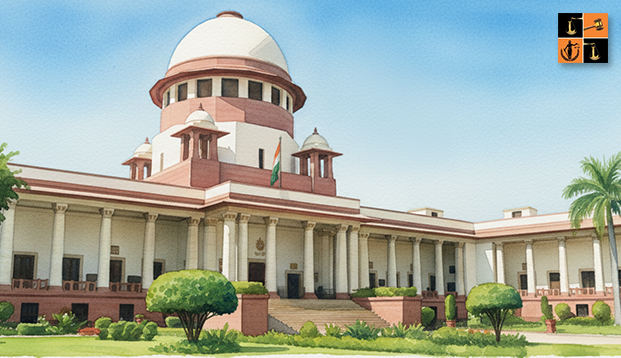
Recently, the Supreme Court in a criminal appeal addressed whether the trial of a sitting Member of Legislative Assembly (hereinafter referred to as “MLA”) could lawfully be segregated from that of the co-accused solely based on political position. The Trial Court had directed a separate charge sheet and segregated trial in connection with communal violence in a district of Haryana. The case raised critical issues of equality before the law, procedural fairness, and the limits of administrative expediency in criminal proceedings.
Brief Facts:
The case arose from two FIRs lodged at a local police station against a sitting MLA, alleging involvement in rioting, conspiracy, and destruction of property during communal disturbances. Multiple accused were charged, and joint proceedings commenced. The trial court later ordered a separate charge sheet for the MLA and segregated the trial from that of the co-accused. The appellant challenged these orders before the High Court, which dismissed the petitions, leading to the present appeal.
Contentions of the Appellant:
The Counsel for the appellant argued that the segregation was arbitrary and legally unsustainable, based solely on political status. Under Section 223(d) Cr.P.C., an accused involved in the same transaction must face a joint trial, and separate trials are only permissible in exceptional circumstances. The appellant further contended that a separate trial would expose them to multiple proceedings, risk double jeopardy (Article 20(2), and violate the right to a fair trial (Article 21). Judicial precedents emphasised that joint trials are mandatory when offences arise from the same incident. It was also argued that administrative expediency or prioritisation of legislators’ trials does not authorise deviation from statutory procedures.
Contentions of the Respondents:
The State defended segregation on the grounds of procedural efficiency, noting the large number of accused in the FIRs, which caused delays due to the non-appearance of some accused. They argued that Section 218 Cr.P.C. allows separate trials, while Section 223 Cr.P.C. provides for discretionary joint trials. Segregation, the State contended, ensured speedy trial in accordance with Article 21of the Constitution and did not prejudice the appellant.
Observations of the Court:
The Court observed that the Trial Court’s order segregating the appellant’s trial was “directed solely on account of the appellant’s status as an MLA, so as to facilitate a day-to-day trial in purported compliance with the directions of this Court in Ashwini Kumar Upadhyay (supra).” The Court criticised the fact that “no notice was issued to the appellant before passing of the segregation order, nor was there any application filed by the prosecution seeking such a course of action,” and therefore “the segregation was thus ordered suo motu, without affording the appellant an opportunity of hearing.”
Examining the statutory provisions under Sections 218 to 223 of the Cr.P.C., the Court emphasised that joint trials are generally required when offences arise from the same transaction, which “prevents multiplicity of proceedings, avoids the risk of conflicting judgments on the same evidence, and promotes judicial economy while ensuring fairness to the accused.”
The Court highlighted that “there is no allegation that the acts attributed to the appellant arise from a distinct transaction, or that a joint trial would prejudice the prosecution.” Instead, segregation was ordered “not on any legally recognised ground such as distinct facts, severable evidence, or demonstrated prejudice but solely on account of the appellant’s political office.”
On constitutional grounds, the Court reiterated that “At this juncture, we deem it necessary to reiterate the foundational constitutional principle enshrined in Article 14 of the Constitution, which guarantees that all persons are equal before the law and entitled to equal protection of the laws... While expeditious disposal of cases involving legislators is undoubtedly desirable, such administrative prioritisation cannot override the procedural safeguards guaranteed under the Cr.P.C. or the constitutional mandate of equality.”
Regarding procedural fairness, the Court stated that “Departure from established legal procedure, particularly without hearing the affected party, constitutes a serious constitutional infraction. The segregation order passed suo motu by the trial court falls short of these requirements.”
The Decision of the Court:
The Court overturned the trial court and High Court orders, holding that political status alone cannot justify a separate trial. The trial must proceed jointly with the co-accused, ensuring equality, fairness, and procedural safeguards. The Trial Court may manage the schedule for expeditious disposal, but fairness and natural justice must be maintained. The judgment reinforces the principle that administrative convenience or political status cannot override law, equality, and fair trial rights.
Case Title: Mamman Khan vs State of Haryana
Case No.: Criminal Appeal No. 4002 of 2025 (Arising out of SLP (Crl.) No. 1829 of 2025)
Citation: 2025 Latest Caselaw 872 SC
Coram: Hon’ble Mr Justice J. B. Pardiwala and Hon’ble Mr Justice R. Mahadevan
Counsel for the Appellant: Sr. Adv. Dr Muralidhar, AOR Prasanna S., Adv. Rupali Samuel, Adv. MA Karthik, Adv. Ninni Susan Thomas, Adv. Pallak Bhagat.
Counsel for the Respondents: A.A.G Deepak Thukral, AOR Akshay Amritanshu, Adv. Pragya Upadhyay, Adv. Drishti Saraf, Adv. Nikhil Goyal, Adv. Ravi Vashisht.
Read Judgement @Latestlaws.com
Picture Source :



















