









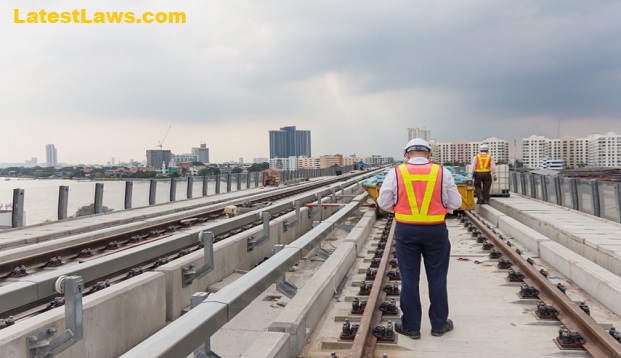
The Delhi High Court opined that Sections 20A and 41(ha) of the Specific Relief Act, 1963 aimed to prevent injunctions in infrastructure projects to avoid delays. The amendment intended to boost foreign investment and investor confidence in India's infrastructure sector.
Brief Facts:
Roadway Solutions India Infra Limited, a company incorporated under the Companies Act, 2013, participated in a bid issued by the National Highway Authority of India (hereinafter referred to as “NHAI”), an autonomous agency of the Government of India. The bid was for the strengthening/overlaying of a section of the Gurgaon-Kotputli-Jaipur highway and the construction of service roads in Rajasthan.
Being the lowest bidder, the petitioner was awarded the project in May 2022. On July 19, 2022, the petitioner and the respondent entered into a contract, formalizing the terms and conditions for carrying out the project. The petitioner submitted the required performance security and additional performance security to the respondent through bank guarantees. The project commenced on July 27, 2022, as declared by the respondent.
The petitioner submitted a proposal for using Reclaimed/Recycled Asphalt Pavement (hereinafter referred to as “RAP”) in the construction, but the respondent rejected it. The respondent also suspended Dense Bituminous Macadam (hereinafter referred to as “DBM”) work and requested a work program from the petitioner.
Dissatisfied with the rejection of the RAP material, the Petitioner issued mediation and dispute notices to the Respondent. Furthermore, the Petitioner requested an interim payment for the work done, but the Respondent released only 50% of the requested amount. The Respondent alleged defaults by the Petitioner under the contract and issued a termination notice. The Petitioner denied the allegations and responded to the notice. Disputes continued to escalate, leading the Petitioner to approach the Court to challenge the Respondent's actions.
Contentions of the petitioners:
It was argued that the Petitioner was not responsible for project delays and was willing to complete the work promptly. It was claimed that the delays were caused by the Respondent's actions and that the Respondent violated the Contract terms by not following the arbitral mechanism outlined in Clause 67 of the Contract.
It was also asserted that the Respondent acted arbitrarily and in violation of the Contract and applicable law.
Contentions of the Respondents:
It was asserted that the Contract in question was determinable, and thus, under the provisions of the Specific Relief Act, 1963 (hereinafter referred to as “SRA”), no injunction could be granted to specifically enforce the contract.
Observations of the Court:
It was opined that Sections 20A and 41(ha) of the SRA express the legislative intention to refrain from granting injunctions concerning infrastructure projects, as such injunctions could cause delays. The purpose of introducing this provision through an amendment was to encourage foreign investment and instill investor confidence in India's infrastructure sector. Public-private partnerships have long been affected by prolonged delays and cost overruns in the timely execution of infrastructure projects. The significance of infrastructure in a nation's growth and development, and its contribution to overall production and GDP, could not be denied.
The High Court determined that it cannot grant the requested reliefs. The petitioner sought a stay of the Notice Inviting Tender, but such a stay would essentially allow the petitioner to continue the project, which would be equivalent to granting final relief. However, the Court, under Section 9 of the Act, does not have the authority to grant such relief in the proceedings.
It was ruled that alternatively, if the Respondent's actions are eventually found to be wrongful, the Petitioner could seek suitable compensation in the form of damages. The Court also concluded that neither the balance of convenience nor the risk of irreparable loss favored the Petitioner if the requested reliefs were not granted.
The decision of the Court:
The Delhi High Court accordingly, dismissed the petition for interim injunction in the matter.
Case Title: Roadway Solutions India Infra Limited v National Highway Authority Of India
Case No.: Commercial Arbitration u/s 9 (O.M.P.(I) (COMM.)) 41 of 2023
Coram: Hon’ble Mr. Justice Chandra Dhari Singh
Advocates for Petitioner: Advs. Mr.Rajiv Nayar, Mr.Nirav Shah, Mr.Sourabh Seth, Ms.Prachi Garg, Mr.Varun Kalra and Mr.Krishan Kumar and Mr.Saurabh Seth
Advocates for Respondent: Advs. Mr.Parag P. Tripathi, Mr.Ankur Mittal, Mr.Abhay Gupta, Ms.Vasundhara and Mr.Raushal Kumar
Read Judgement @LatestLaws.com:
Picture Source :




















