









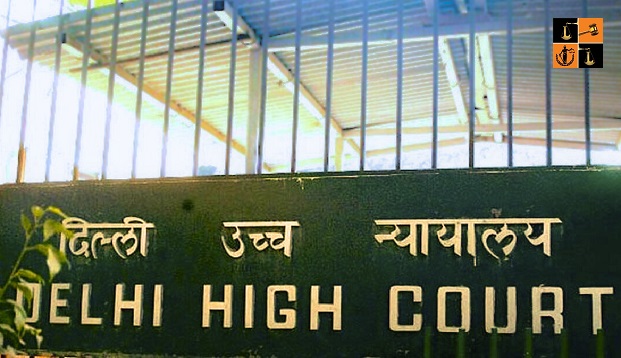
On Wednesday, in a significant arbitration dispute arising out of the flooring and cladding works at a major railway station-cum-commercial complex, the Delhi High Court was called upon to examine whether an arbitral award could withstand judicial scrutiny. At the heart of the controversy lay core issues of delay attribution, release of bank guarantees, compensation for alleged extra items, and the contractual bar on interest. The judgment delves into the fine contours of arbitral autonomy and the statutory limits of judicial intervention, setting the stage for a nuanced assessment of how far a court may go when faced with a challenge under Section 34 of the Arbitration and Conciliation Act, 1996. Read on to see how the Court navigated these intersecting issues and clarified the contours of its supervisory role.
Brief facts:
The case stemmed from construction works entrusted to the petitioner by a public sector undertaking, which the petitioner then subcontracted to the respondent for flooring and cladding at the Vashi Railway Station–cum–commercial complex project. The Petitioner acted as the principal contractor, while the respondent executed the assigned works as its subcontractor under a formal letter of award with a stipulated execution period of two years. Midway through the project, the petitioner terminated the subcontract. The Respondent invoked the arbitration clause and sought the appointment of an arbitrator. When the petitioner did not appoint one, the Respondent approached the court for the initiation of arbitration. Over time, the arbitral proceedings witnessed several changes in the constitution of the tribunal, ultimately leading to the appointment of a sole arbitrator by the Supreme Court to decide all claims and counterclaims.
The Arbitrator, after framing issues and considering the material on record, issued a final award allowing the Respondent’s monetary claims with interest and costs while rejecting the Petitioner’s counterclaims. The petitioner first attempted to challenge the award under the earlier arbitration law, but that challenge was rejected after the courts confirmed that the 1996 legislation governed the matter. The Petitioner thereafter filed the present challenge under the applicable statute, bringing the dispute before the High Court.
Contentions of the Petitioner:
The Petitioner contended that the Arbitrator erred in holding that the delay was not attributable to the respondent and confined its challenge to four grounds. First, it submitted that the direction to refund bank guarantees was contrary to the contractual requirement that such security could be released only upon issuance of a completion certificate, which never arose after termination, and that the claim was not part of the arbitral reference. Second, it argued that the award of Claim 1(b) for extra items violated contractual provisions since the work formed part of the original scope and no separate payment was permissible. Third, it asserted that the award of interest overlooked an express contractual bar, and once interest was prohibited on delayed or withheld payments, the Arbitrator lacked authority to grant it. Lastly, it contended that the counterclaims were wrongly rejected, as the respondent had executed less than 10% of the work despite repeated notices, making the termination justified and entitling the petitioner to damages. On this basis, the Petitioner sought to set aside the award.
Contentions of the Respondent:
The Respondent contended that the scope of interference under Section 34 of the Arbitration and Conciliation Act, 1996, was limited. It submitted that the delay stemmed from the civil contractor’s failure to complete preliminary works, which left the respondent without workable site access, as reflected in the award, noting minimal civil progress, delayed establishment of the site office, and timely completion of platform works despite constraints. The Respondent argued that the Arbitrator, therefore, correctly attributed the delay to the petitioner’s lack of coordination. On the refund of bank guarantees, it contended that multiple guarantees had been furnished, several were encashed after commencement of arbitration, and the Arbitrator rightly directed refund of the amount wrongfully retained while declining refund of the mobilisation-advance guarantee. Regarding Claim 1(b), it argued that the extra works, including upgraded granite cladding, were executed pursuant to the petitioner’s express and implied directions, supported by correspondence notifying variations and submitting rate analyses, and that the petitioner’s silence signified acquiescence, especially when its alleged denial letter was issued only after completion and never served. On pendente lite interest, it contended that Clause 26 was not an absolute bar, as it merely regulated payment timing and did not curtail the Arbitrator’s discretion under Section 31(7)(a) of the Arbitration and Conciliation Act, 1996. Lastly, it submitted that the counterclaims were rightly rejected for want of proof, as the civil contractor’s minimal progress, absence of quantifiable loss, and lack of contemporaneous correspondence justified their dismissal.
Observation of the Court:
The Court observed that the scope of interference under Section 34 of the Arbitration and Conciliation Act, 1996,, remains strictly limited. It emphasised that a court exercising such jurisdiction “does not sit as a Court of appeal over the findings of the learned Arbitrator” and cannot “re-appreciate the evidence, reassess the factual matrix, or embark upon a mini-trial as if it were hearing an appeal on facts.” Reaffirming that the Arbitrator is the master of the quantity and quality of evidence, the Court emphasised that an arbitral finding cannot be substituted merely because another view may also be possible.
The Court observed that the contemporaneous correspondence placed on record clearly established persistent hindrances that impeded the respondent’s performance. It noted that the respondent consistently highlighted that the site had not been properly handed over, essential drawings were delayed and repeatedly revised, and even basic utilities such as water and power were unavailable. These materials, the Court held, were rightly relied upon by the Arbitrator to conclude that the respondent could not proceed with the work due to circumstances attributable to the petitioner. Accordingly, the Court upheld the finding that the termination was invalid, noting that it was “valid, well-reasoned, and calls for no interference under Section 34.”
The Court reiterated that “the Claimant is entitled to the Bank Guarantee amount of Rs.19,01,480/- pertaining to the Security Deposit. Accordingly it is held that the Respondent is liable to refund an amount of Rs.19,01,480/- to the Claimant in regard to encashed Bank Guarantee regarding Security Deposit. It is ordered accordingly.” The Court held that the Arbitrator acted strictly within the four corners of the Contract, correctly distinguishing between mobilisation-advance guarantees and security-deposit guarantees. Once delay was held not attributable to the respondent, the petitioner could not insist on a completion certificate or retention of the deposit.
The Court further observed that the Arbitrator had categorically discredited the petitioner’s attempt to rely on the disputed denial letter, noting the clear and unequivocal finding that “this letter is a fabrication to cover up the default on the part of the Respondent ask for a different quality of the Granite and also direct the Claimant to go beyond agreed specifications.”
The Court further observed that the Arbitrator had rightly concluded that the petitioner’s own officers had instructed the contractor to use a different and costlier variety of granite, prompting the respondent to immediately register objections, including through the detailed correspondence placed, on record. The Arbitrator also emphasised the petitioner’s unexplained silence despite receiving clear intimation of additional charges, noting that “it was the duty of the Respondent to immediately react and point out that it was not going to pay anything extra for the work stated to be 'extra work' by the Claimant. Exhibit R-19, even if, it is held to have been issued by the Respondent was dated 25.05.1992, by which time the Claimant had already executed the work at the Platform and Booking Office which were to be inaugurated by the President of India on 09.05.1992.”
Accepting this line of reasoning, the Court concluded that the findings rested on a detailed and reasoned analysis of the materials and disclosed no perversity or patent illegality warranting interference. It also stressed that the petitioner had never invoked Clause 15(iii) before the Arbitrator, and such a plea could not be entertained for the first time in proceedings under Section 34.
Turning to the issue of interest, the Court began by setting out the framework under Section 31(7)(a) of the Arbitration and Conciliation Act, 1996. and reiterating the principle laid down in Union of India v. Bright Power Projects (India) (P) Ltd. that “where the parties had agreed that no interest shall be payable, the Arbitral Tribunal cannot award interest.” While examining Clause 26 of the contract, the Court emphasised its expansive prohibition, stating, “No claim for interest will be entertained by the corporation in respect of any balance payments or any deposit which may be held up with the corporation due to any dispute between the Corporation and sub-contractor or in respect of any delay on the part of the corporation in making monthly or final payments or otherwise.”
The Court noted that the breadth of the expression or otherwise aligned the clause with the wide-ranging prohibition considered in Sayeed Ahmed and Company v. State of Uttar Pradesh, where the Supreme Court had held that “The clause is comprehensive and bars interest under any head in clear and categorical terms.” Applying this principle, the Court held that the Arbitrator’s award of pre-reference and pendente lite interest was contrary to the contractual bar. It reproduced the Arbitrator’s conclusion that “interest @10% p.a. is awarded to the Claimant on the amounts held payable to the Claimant except on costs of Rs. 5 lacs from 22.09.1992, the date of the termination of the Contract, till payment thereof to the Claimant. It would take. care of pre-litigation, pendente lite as well as future Interest.”
Holding this to be impermissible, the Court set aside the award of interest for the pre-reference and pendente lite period. However, it clarified that the grant of post-award interest at 10% was consistent with Section 31(7)(b) of the Arbitration and Conciliation Act, 1996. and therefore required no interference.
Since the Arbitrator’s conclusion that the delay was attributable to the petitioner stood affirmed, the very basis of all counterclaims necessarily fell apart. The Court observed that the Arbitrator had already rejected the petitioner’s assertions regarding loss, cost of materials, water and power charges, and statutory deductions, noting that these claims were unsupported by any cogent evidence. Reiterating the settled principle that the Arbitrator is the “master of both the quantity and quality of evidence,” the Court found no perversity, infirmity, or legal error in the rejection of the counterclaims.
The decision of the Court:
In light of the foregoing discussion, the petition succeeds only to the limited extent of setting aside the award of pre-reference and pendente lite interest. The arbitral award is otherwise affirmed in full, and all remaining objections raised by the petitioner stand rejected. Consequently, the enforcement petition is allowed, and the Judgment Debtor is directed to release payment in accordance with the award, excluding the interest component now set aside, within the prescribed period.
Case Title: National Building Construction Corporation Vs. M/S Sharma Enterprises
Case No: O.M.P. (COMM) 215/2022
Coram: Hon’ble Justice Jasmeet Singh
Advocate for Appellant: Sr. Adv. Jay Savla, Adv. Shilpi Chowdhary
Advocate for Respondent: Advs. Anusuya Salwan, Alka Dwivedi, Bankim Garg, Rachit Wadhwa
Read Judgment @Latestlaws.com
Picture Source :



















