









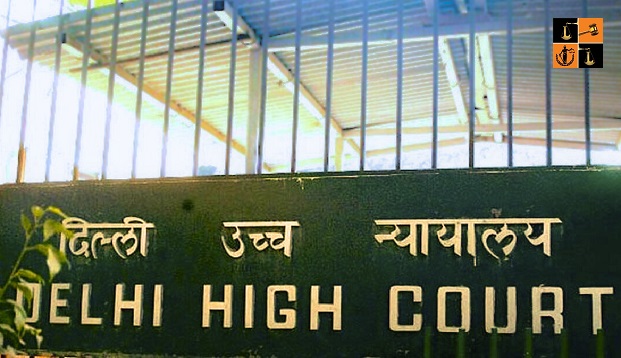
Recently, in a landmark ruling reinforcing the procedural sanctity of mutual consent divorce, the Delhi High Court set aside a Family Court decree that suo motu converted adversarial cross-petitions under Sections 13(1)(i) and 13(1)(ia) of the Hindu Marriage Act, 1955 (HMA) into a divorce under Section 13B, emphasizing that statutory requirements cannot be bypassed even in long-pending matrimonial disputes.
Brief facts:
The case arose from a matrimonial dispute between a husband and wife, married under Hindu rites and blessed with two children. Their relationship, once harmonious, began to break down when the wife alleged that the husband, a pilot, had an adulterous relationship, leading him to emotionally and physically distance himself. The husband proposed a divorce by mutual consent, which the wife rejected. He then filed a petition for divorce on the grounds of cruelty, while the wife filed a cross-petition alleging adultery and cruelty, naming the alleged third party. The Family Court framed issues and recorded evidence in both petitions, but instead of deciding the matters on their merits, it suo motu dissolved the marriage under Section 13B of the HMA, without any joint petition or mutual consent. Aggrieved, the wife approached the Delhi High Court, which treated her petition as a matrimonial appeal, bringing the matter before the present bench.
Contention of the Appellant:
The appellant contended that the Family Court committed a grave illegality by suo motu converting the divorce petitions filed under Section 13 of the HMA into a petition under Section 13B, which was impermissible. The appellant argued that a Section 13B divorce requires explicit, conscious, and simultaneous consent of both parties through a joint petition and subsequent motion, which was absent in this case, as the petitions were separate and adversarial, containing allegations of cruelty and adultery. There was no application to convert the proceedings, making the Family Court’s action null and void. The appellant further submitted that the Court failed to decide the issues framed on the pleadings and evidence, instead relying on Section 13B without legal basis. Finally, the reliance on Sections 9 and 10 of the Family Courts Act was misplaced, as Section 9 only mandates reconciliation attempts, and Section 10(3) cannot override substantive provisions of the HMA.
Contention of Respondent:
The respondent contended that the Family Court correctly applied Section 13B, as the conduct of the parties over the years indicated a clear mutual agreement to divorce, even without a joint petition. It was submitted that the procedural requirement of a joint petition was not mandatory in the circumstances and that the Court’s discretion under Sections 10(3) and 20 of the Family Courts Act allowed it to adopt a flexible, non-adversarial approach. The respondent argued that, given the cross-petitions had been pending for over five years and both parties consistently sought divorce, the Family Court rightly exercised its discretion to grant a decree under Section 13B, advancing the true spirit of the HMA and the Family Court Act.
Observation of the Court:
The Court emphasised the legislative intent behind the introduction of Section 13-B of the Hindu Marriage Act, 1955, noting that “Section 13-B of the HMA, 1955 was introduced in India to provide a legal framework for divorce by mutual consent. This was introduced to simplify and expedite the divorce process for couples who wish to part ways amicably, reducing the time, expense and emotional stress associated with traditional divorce proceedings.”
The Bench observed that “the express language of Section 13B of the HMA demonstrates that divorce by mutual consent is founded on a voluntary agreement of both parties reached prior to the presentation of the petition.” It further clarified that “mutual consent‖ is not a mere procedural formality but a substantive statutory requirement for the grant of divorce.”
Criticizing the approach of the lower court, the Bench noted that “the learned Family Court overlooked the most fundamental requirement of Section 13B, the element of ‘mutual consent’. That consent cannot be inferred solely from the three factors listed above; it must be established as an unequivocal meeting of minds between the spouses while instituting the divorce petition.”
The Court reiterated that “the learned Family Court has no statutory authority to alter or expand the substantive scheme of the HMA so as to dispense with requirements that the Legislature has imposed. The express requirement that a petition for divorce by mutual consent be presented ‘together’ by both parties is deliberate, as it reflects legislative recognition that the momentous step of dissolving a marriage should be taken only where there is a genuine, contemporaneous agreement between the spouses.”
Dealing with the procedural irregularity, the Court observed that “the manner in which two independent, fault-based petitions under Section 13 were clubbed together and thereafter treated as a single petition under Section 13B is legally impermissible.” Referring to Smruti Pahariya v. Sanjay Pahariya and Sureshta Devi v. Om Prakash, the Court reaffirmed that “the element of consent must exist both at the time of presentation of the petition and continue until the decree is finally granted.” It also took note of the 71st Report of the Law Commission of India (1978) chaired by Justice H.R. Khanna, which recognized “irretrievable breakdown of marriage as a ground of divorce.”
The Court reiterated that “the element of consent is pivotal in relation to any petition presented under Section 13B of the HMA.” It stressed that “a prior meeting of minds, a genuine and common intention between the spouses to dissolve the marriage on agreed terms, is the fundamental requirement of Section 13B.”
Lastly, the Bench held that “the learned Family Court’s reliance on Sections 9 and 10 of the Family Court Act to bypass the form required under Section 13B of the HMA is legally flawed.”
The decision of the Court:
Under the light of the foregoing discussion, the High Court set aside the decree passed by the Family Court and remanded the matter for fresh consideration of the respective petitions on their individual merits, directing that the proceedings be concluded expeditiously, preferably within six months.
Case Title: UKM vs. CTSM
Case No.: MAT.APP.(F.C.) 136/2025 & CM APPL. 76632/2024
Coram: Justice Anil Kshetarpal, Justice Harish Vaidyanathan Shankar
Advocate for Appellant: Advs. Nandini Sen, Basab Sengupta
Advocate for Respondent: Advs. Gauri Gupta, Rishabh Kumar Jain
Picture Source :




















