The creator of the Rubik’s Cube, Rubik's Brand, has lost its 3D EU trademark after a General Court appeal declared it invalid.
The decision, published earlier today, October 24, by the General Court, concerned a three-dimensional, black and white trademark for a Rubik’s Cube.
"Given that the essential characteristics of that shape are necessary to obtain the technical result consisting of the rotating capability of that product, that shape could not be registered as an EU trademark," the General Court said.
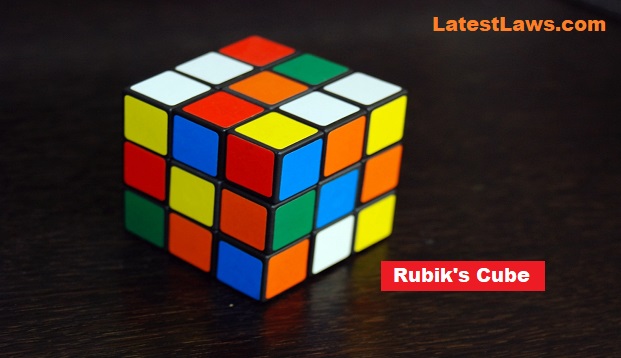
The mark was first registered by toymaker Seven Towns in 1996 but was later acquired by Rubik’s Brand in 2014. It depicts three sides of the cube, with each side divided up by nine smaller squares. Two of the sides depict squares with black white hatching, while one side shows white squares.
On 15 November 2006, competitor Simba Toys filed an application for a declaration of invalidity of the trademark.
Although this was initially rejected by the Cancellation Division in 2008, in 2017 the European Union Intellectual Property Office (EUIPO) allowed an appeal from Simba Toys and declared the trademark invalid.
The EUIPO’s Board of Appeal found that in its original application, Seven Towns had qualified the sign as “three-dimensional and had not claimed any particular colours or provided any description”.
‘Hatching’ arguments
Rubik’s had argued that each black and white side of the trademark showed hatching in different directions, indicating a difference in colour on each face of the cube.
But, the EUIPO agreed with Simba Toys’ argument that the black lines that appear, horizontally and vertically, on each of the faces of the cube, “reveal the rotation functionality of the product”, rather than an indication of colour.
In the latest decision, the General Court agreed, ruling that it could not be asserted, by the graphic representation of the trademark, that each face of the cube, other than the one that is divided into small white squares, is differently hatched.
“Only two types of hatching, in the present case vertical and diagonal hatching, are visible in that graphic representation,” the court said.
It said that “in the absence of a description and a colours claim in the application for the trademark, it cannot be held that an observer will conclude that the hatchings, which can hardly be differentiated from each other at all, suggest different colours”.
Additionally, it said the application to register the trademark made no mention of any colour, and that Seven Towns never claimed that the trademark contains a decorative or imaginative element consisting of colours.
“As the applicant explained … the presence of hatching on the faces of the cube is primarily intended to allow a graphically clear and intelligible two-dimensional representation of the three-dimensional shape”, the court said.
It said it should be emphasised that “all parties agreed that the differences in colour on the six faces of the cube did not constitute an essential characteristic” of the trademark.
“It should be noted that those characteristics represent the elements constituting the shape itself, as opposed to any other characteristic,” the court said.
Irfan Baluch, partner at Cripps Pemberton Greenish, said a decision in favour of Rubik’s could have “resulted in a potentially perpetual monopoly over a wide class of products”.
“Clearly, this would not have been in the public interest. The judgment clarifies the limitations of what can realistically be achieved by trademark registrations and that protection using other IP rights may be more appropriate," he said
In a statement to WIPR, Rubik’s said it will be reviewing the court’s decision before deciding its next action.
“In any case, the overall, distinctive appearance of the Rubik’s Cube puzzles remains protected by numerous other 3D and 2D figurative trademarks,” the company said.
Source Link