









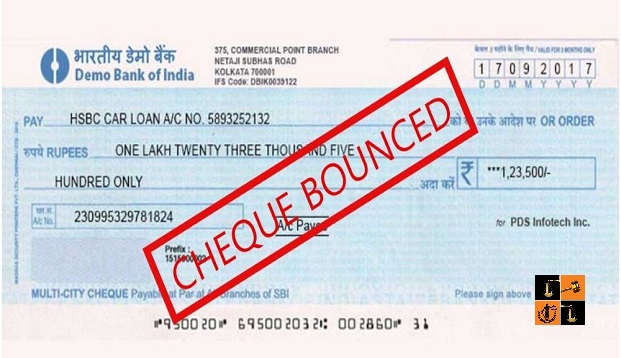
The Supreme Court allowed an appeal arising from a conviction under Section 138 of the Negotiable Instruments Act, 1881, and quashed the sentence imposed on the appellant. The Court held that once parties voluntarily enter into a compromise, the conviction cannot stand, observing that the offence of cheque dishonour is primarily civil in nature and compoundable at any stage.
The case originated from a complaint filed by the payee alleging dishonour of a cheque issued by the appellant towards repayment of a loan. The trial court convicted the appellant and sentenced him to six months’ simple imprisonment along with a fine. The conviction was upheld by both the appellate court and the High Court.
Subsequently, the complainant and the appellant entered into a settlement, wherein the complainant accepted payment through demand drafts and post-dated cheques in full and final satisfaction of his claim. The complainant also filed an affidavit recording his consent. However, the High Court declined to modify its earlier order, leading the appellant to approach the Supreme Court.
Counsel for the appellant argued that in light of the compromise, the conviction should be set aside, since Section 147 of the Negotiable Instruments Act specifically makes the offence compoundable. It was further urged that continuing the conviction despite a full settlement would defeat the very purpose of compounding.
No appearance was entered on behalf of the State, given that the matter stood resolved between the complainant and the accused.
The Supreme Court reiterated settled principles that the offence under Section 138 is primarily a civil wrong clothed in criminal consequences. Referring to earlier rulings in Meters and Instruments Pvt. Ltd. v. Kanchan Mehta, P. Mohanraj v. Shah Brothers Ispat, the Court emphasised that the legislature has consciously made cheque dishonour compoundable to preserve the credibility of business transactions while allowing parties to amicably resolve disputes.
The Bench remarked, “Once parties voluntarily entered into such an agreement and agree to abide by the consequence of non-compliance of the settlement agreement, they cannot be allowed to reverse the effects of the agreement by pursuing both the original complaint and the subsequent complaint arising from such non-compliance".
The Court noted that the complainant had, by way of demand drafts and cheques, accepted the settlement voluntarily and without coercion. In such circumstances, it held that the concurrent findings of conviction could not be sustained.
Allowing the appeal, the Supreme Court quashed the conviction and sentence imposed on the appellant under Section 138 of the Negotiable Instruments Act. The Court concluded that once the complainant had received the settlement amount and recorded his consent, the conviction lost its legal basis.
Pending applications were disposed of with no order as to costs.
Case Title: Gian Chand Garg vs. Harpal Singh & Anr
Case No.: Special Leave Petition (Criminal) No. 8050 of 2025
Coram: Justice Aravind Kumar, Justice Sandeep Mehta
Advocate for Petitioner: Adv. Aftab Ali Khan, Arna Das, Naresh Kumar (AOR)
Advocate for Respondent: Adv. Jay Kishor Singh (AOR), Dr. Rishi Pal Singh Garttan
Read Judgment @LatestLaws.com
Picture Source :



















