









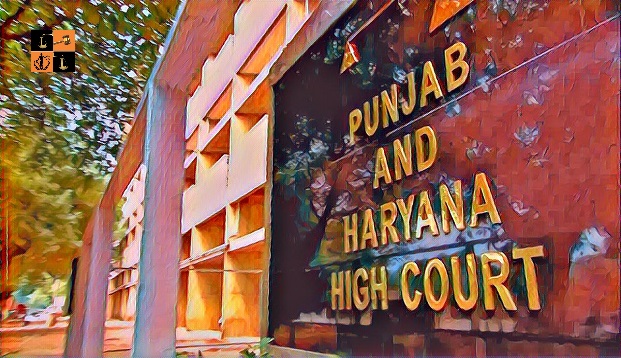
Recently, the Punjab and Haryana High Court examined whether newspapers could report a judgment that had been dictated in open court but had not yet been signed by the judge. The case arose from contempt proceedings initiated against leading newspapers and their journalists over reports concerning a high-profile trial transfer order, bringing into focus the legal status of a judgment immediately after its pronouncement in court.
The controversy began when a Single Judge initiated suo motu criminal contempt proceedings against the Editors-in-Chief, editors, and Reporters of The Tribune, Hindustan Times, and The Times of India. The proceedings stemmed from news reports published on April 10, 2026, stating that the High Court had transferred the trial of two FIRs from Faridkot to Chandigarh. The reports appeared a day after the order had been dictated in open court, but before it was formally signed. The Single Judge was of the prima facie view that publication of the reports before signing of the order appeared to be an attempt to overreach the Court and interfere with the administration of justice. However, when the matter came before the Division Bench, it examined both the published reports and the underlying judgment and found that the newspapers had accurately reported the transfer of the trials from Faridkot to Chandigarh.
The Division Bench of Justice Jasgurpreet Singh Puri and Justice Amarjot Bhatti noted that the news reports published by The Tribune, Hindustan Times, and The Times of India accurately reflected the substance of the order dictated in open court on April 9, 2026. The Bench found no falsehood or distortion in the reporting, upon examining both the newspaper reports and the underlying judgment. The Court observed that the trials in question had in fact been transferred from Faridkot to Chandigarh and, therefore, the publications could not be characterised as incorrect or misleading.
The Bench then examined whether publication of a judgment after its pronouncement but before its formal signing could amount to criminal contempt. Referring to Section 4 of the Contempt of Courts Act, 1971, the Court observed that a person cannot be held guilty of contempt for publishing a fair and accurate report of a judicial proceeding. The Court noted that since the reports faithfully conveyed what had transpired in court, the statutory protection under the Act was clearly attracted.
The Court further relied on multiple Supreme Court decisions to explain the legal effect of a judgment pronounced in open court. The Bench observed that a judgment becomes operative upon its formal pronouncement and does not await signing for its existence or validity. The Court noted that “as soon as the judgment is delivered, that becomes the operative pronouncement of the Court.” It emphasised that signing and authentication are procedural requirements intended to secure certainty of the record, but they do not alter the legal reality that the judgment has already come into operation upon pronouncement.
The Bench observed that the order transferring the trials had been dictated in open court on April 9, 2026, and was therefore already in operation when the newspapers reported it the following day. Since the reports accurately stated that the trials had been transferred from Faridkot to Chandigarh, the Court found no basis to infer any attempt to overreach the judiciary or interfere with the administration of justice. The Bench held, “Considering the law laid by Hon’ble Supreme Court in the aforesaid judgments to the effect that once there is a formal ‘pronouncement’ in open Court, it becomes a judgment in operation, we are therefore of the considered view that the action on the part of the aforesaid newspapers/Editors-in-Chief/Editors/Reporters cannot be termed as criminal contempt.”
Consequently, the Court concluded that no case of criminal contempt was made out against the newspapers or their journalists and dismissed the contempt proceedings.
Case Title: Court On Its Own Motion Vs. Jyoti Malhotra and Ors
Case No.: CROCP-6-2026
Coram: Hon'ble Justice Jasgurpreet Singh Puri, Hon'ble Justice Amarjot Bhatti
Advocate for the Petitioner: None
Advocate for the Respondent: None
Read Judgment @Latestlaws.com
Picture Source :



















