









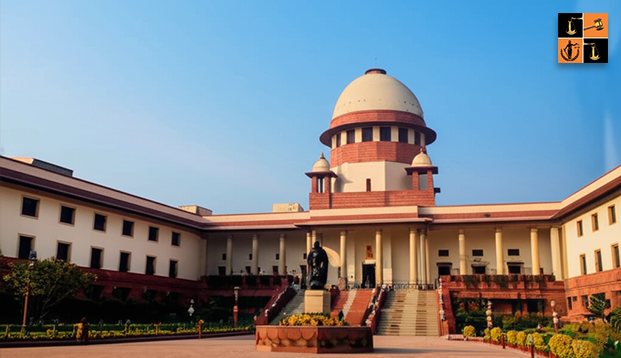
Recently, the Supreme Court found itself faced with an unusual clash between caste verification procedures and the fate of a fully completed medical degree. The matter stemmed from a student who secured admission to an MBBS course under the Scheduled Tribe quota, only for his tribe claim to be invalidated years later, after he had already finished the entire programme. The case raised a significant question about what should happen to a professional qualification when the very basis of entry is rejected long after the education is complete?
The factual background revealed that the Petitioner was admitted to Respondent, a medical college, against a seat reserved for Scheduled Tribe candidates based on his assertion that he belonged to the ‘Mannervarlu’ community. While the Scrutiny Committee continued to examine his caste claim, the Petitioner pursued the MBBS course and ultimately completed his education. It was only during this ongoing process that the Committee eventually rejected his ST certificate and confiscated it. The Bombay High Court upheld this decision, prompting the petitioner to approach the Supreme Court. It was also placed on record that the petitioner had paid the fees applicable to an open-category student throughout his course.
Before the Supreme Court, the Petitioner argued that he had undergone the entire medical programme while his claim was pending, and that nullifying his degree at this stage would render years of academic effort futile. The counsel stressed that he had not financially benefited from the reserved category seat, as he had paid full general-category fees. It was also submitted that the seat he occupied could not now be allotted to any other candidate, making retrospective cancellation unworkable. The Respondents, however, contended that once the caste certificate had been declared invalid, the petitioner could not retain any advantage flowing from it. The counsel maintained that the Scrutiny Committee’s finding was conclusive and that the petitioner’s admission, having been obtained through a claim later disproven, could not be insulated from legal consequences.
The Bench noted that the case presented “peculiar facts,” particularly because the petitioner had completed his entire MBBS education during the pendency of the verification proceedings. The Court observed that the seat could not be re-allocated at this stage and acknowledged the submission regarding the payment of general-category fees. Emphasising the nature of professional education, the Court remarked that the medical degree represented “precious education” which would be entirely wasted if not protected. It also recorded that this situation was not one where the petitioner had derived ongoing or future benefits from a fraudulent claim, but rather one where the timing of administrative processes created an exceptional predicament.
In these circumstances, the Court held that the MBBS education already undertaken by the petitioner deserved protection. At the same time, the Court made it unequivocally clear that the petitioner would not be entitled to claim any benefit in the future based on Scheduled Tribe status. With this clarification, the petition and all pending applications were disposed of.
Case Title: Vedkumar V. The State Of Maharashtra & Ors.
Case No.: Special Leave to Appeal (C) No(s). 26461/2024
Coram: Hon’ble Mr Chief Justice B.R Gavai and Hon’ble Mr .Justice Vijay Bishnoi
Counsel for the Petitioner: Sr. Adv. Sudhanshu S Choudhari; Adv. R.K. Mendadkar; AOR Vatsalya Vigya; Adv. Pranjal Chapalgaonkar; Adv. Gautam Yadav; Adv. Yash Singhania
Counsel for the Respondent: Adv. Adarsh Dubey; Adv. Siddharth Dharmadhikari; AOR Aaditya Aniruddha Pande; Adv. Shrirang B. Varma; Adv. Suhaskumar Kadam; AOR Black & White Solicitors
Read Judgement @LatestLaws.com
Picture Source :




















