









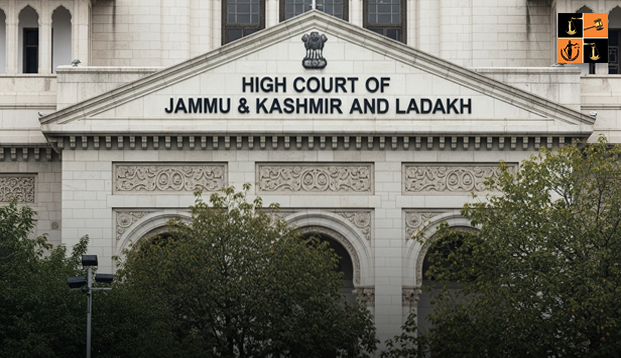
Recently, the High Court of Jammu & Kashmir and Ladakh granted bail to an accused booked under the NDPS Act in a cross-border heroin smuggling case, observing that mere disclosure statements of co-accused and phone call records cannot by themselves establish criminal conspiracy. Justice M. A. Chowdhary held that the stringent bar under Section 37 of the NDPS Act would not apply where no contraband was recovered from the accused and the prosecution lacked substantive evidence connecting him to drug trafficking activities.
The case arose from FIR registered at Police Station Rajbagh, Srinagar, where police allegedly recovered 11 kilograms of heroin and cash amounting to over Rs. 11 lakh from a rented accommodation in Kursoo Bund, Rajbagh. The prosecution claimed that the narcotics had been smuggled from Pakistan-occupied Kashmir and transported to Srinagar through a criminal conspiracy involving multiple accused persons.
Counsel for the petitioner argued that no recovery had been effected from him and that the prosecution case rested solely on disclosure statements made by co-accused persons and call detail records. It was further contended that there were no voice recordings, transcripts, or any independent evidence to establish the petitioner’s involvement in the alleged conspiracy. The petitioner also relied upon his prolonged incarceration of nearly three years.
Opposing the bail plea, the Union Territory submitted that the accused was part of a larger cross-border narcotics network and that photographs, mobile phone records, and witness statements connected him to the conspiracy. The prosecution further argued that releasing the accused on bail could adversely affect society given the growing menace of drug trafficking in the region.
While analysing the evidence, the High Court noted that no commercial quantity of contraband had been recovered from the petitioner. The Court observed that the only material against him consisted of disclosure statements of co-accused and call logs, which by themselves were insufficient to establish a nexus with drug trafficking. The Court specifically held that “call logs alone cannot prove a criminal conspiracy of sale or transportation of drugs.”
The Court relied upon the Supreme Court judgment in Tofan Singh v. State of Tamil Nadu and also referred to the Delhi High Court decision in Vinay Dua v. State Government of NCT of Delhi to reiterate that disclosure statements and WhatsApp chats or phone calls alone cannot justify denial of bail under the NDPS Act.
Accordingly, the High Court allowed the bail application and directed the release of the Petitioner on furnishing bail bonds of Rs. 50,000 with surety. The Court also imposed several conditions, including surrender of passport, sharing of active mobile number and daily Google pin location with the concerned SHO, and a direction not to influence witnesses or tamper with evidence.
Case Title: Abdul Rashid Kohli v. Union Territory of Jammu & Kashmir
Case No.: Bail App No. 194/2025
Coram: Hon’ble Mr. Justice M. A. Chowdhary
Advocate for the Appellant: Mr S. T. Hussain, Senior Advocate with Ms Nida Nazir, Advocate
Advocate for the Respondent: Mr Faheem Nisar Shah, Government Advocate vice Mr Mohsin-ul-Showkat Qadri, Sr. AAG
Read Judgment @Latestlaws.com
Picture Source :




















