









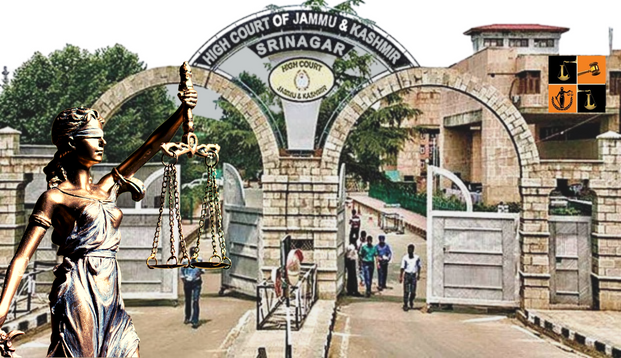
Recently, the High Court of Jammu & Kashmir and Ladakh stepped in to examine whether a GST assessee could directly invoke Article 226 of the Constitution to challenge demand proceedings despite the availability of a statutory appellate remedy under the GST law. The Court scrutinised allegations of violation of natural justice and lack of jurisdiction raised against the tax authorities, while also examining the limits of judicial interference where a complete appeal mechanism already exists under the Central Goods and Services Tax Act, 2017 (hereinafter referred to as ‘CGST’).
The controversy began when the Petitioner challenged a show cause notice, reminder notice and a demand order issued by the State Taxes Officer under Section 73 of the J&K GST Act relating to alleged tax liabilities for the financial year 2022-23. The Petitioner argued that although a GST audit had earlier been conducted under Section 65 of the CGST Act and discrepancies pointed out therein had already been addressed, fresh proceedings were initiated without jurisdiction. The Counsel for the petitioner further argued that the demand order was passed ex parte in violation of principles of natural justice since the proprietor was allegedly out of station and could not attend the scheduled hearing, while the extended hearing date allegedly fell on the Eid-ul-Fitr holiday. The tax authorities, however, maintained that adequate opportunities had been granted to submit a reply and participate in the proceedings.
The Division Bench of Justice Sanjeev Kumar and Justice Wasim Sadiq Nargal rejected the petitioner’s challenge after holding that the case did not fall within the recognised exceptions permitting direct interference under Article 226 of the Constitution, despite the availability of an alternative statutory remedy. The Court observed that the petitioner had been granted sufficient opportunity to respond to the show cause notice and had failed to place any substantive material establishing a denial of natural justice.
The Bench stated that “where a right or liability is created by a statute which itself prescribes the remedy or procedure for enforcing such right or liability, resort must be had to that particular statutory remedy before invoking the discretionary remedy under Article 226 of the Constitution.” The Court further clarified that Section 65(7) of the CGST Act expressly permits initiation of proceedings under Sections 73 or 74 of the J&K GST Act even after completion of audit proceedings.
Consequently, the writ petition was dismissed as not maintainable, while granting liberty to the petitioner to avail the statutory appellate remedy under Section 107 of the CGST and J&K GST Act.
Case Title: M/S Ess Ess Enterprises Vs. Union of India and others
Case No.: WP(C ) No. 1020/2026
Coram: Hon’ble Mr. Justice Sanjeev Kumar, Hon’ble Mr Justice Wasim Sadiq Nargal
Advocate for the Petitioner: Adv. Azhar ul Amin, Adv. Noman Shafi
Advocate for the Respondent: DSGI. T.M.Shamsi, Adv. Bisma Ali
Read Judgment @Latestlaws.com
Picture Source :




















