









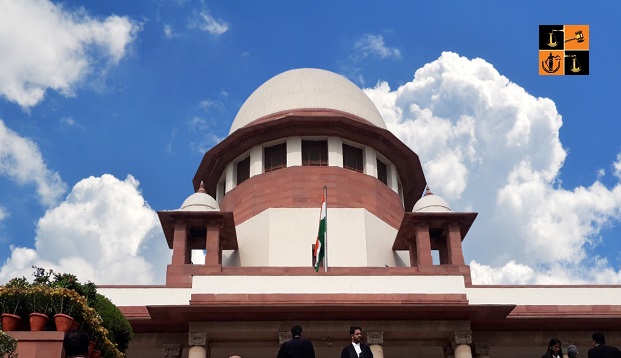
The Supreme Court is scheduled to take up, on November 11, a set of petitions contesting the Chief Election Commissioner and Other Election Commissioners Act, 2023, which excludes the Chief Justice of India from the panel responsible for appointing Election Commissioners.
The matter was listed before a Bench of Justice Surya Kant and Justice Joymalya Bagchi, but could not be heard due to time constraints. On being mentioned by Advocate Prashant Bhushan, appearing for one of the petitioners, the Court agreed to list the case for detailed hearing.
Advocate Bhushan submitted that despite repeated listings, the matter has not been taken up for arguments and requested that the Court allocate three to four hours, assuring that the petitioners would conclude their submissions within two hours. Justice Kant suggested that the plea be mentioned again on the morning of November 11 so that non-urgent matters may be deferred to make room for the hearing.
Earlier, the Supreme Court had indicated willingness to consider the challenge before the appointment of Gyanesh Kumar as Chief Election Commissioner, following the retirement of Rajiv Kumar. Though the matter was initially posted for February 12, it was later shifted to February 19, by which time Gyanesh Kumar had already assumed office.
The petitioners have repeatedly urged priority listing, contending that recent appointments were made contrary to the spirit of the Court’s ruling in Anoop Baranwal v. Union of India, which envisaged judicial participation in the selection process to ensure institutional independence. The Court, however, noted in March 2024 that it had previously declined to stay the operation of the Act.
The petitions assail the constitutional validity of the 2023 Act, which legislatively replaced the interim mechanism laid down by the Supreme Court in 2023. Under the Court’s earlier directions, the appointment panel was to comprise the Prime Minister, the Leader of Opposition, and the Chief Justice of India, until a law was enacted.
The new statute, passed by Parliament in December 2023, replaces the Chief Justice of India with a Union Cabinet Minister, thereby vesting the selection primarily within the executive branch. The petitioners argue that this structure undermines electoral independence and violates the constitutional mandate of a free and fair Election Commission.
The Act has been challenged by various parties, including Congress leader Jaya Thakur and the Association for Democratic Reforms (ADR), who assert that the independence of the Election Commission cannot be preserved if appointments are left to exclusive executive discretion.
The Top Court is now set to determine whether the new law withstands constitutional scrutiny and whether judicial participation in the selection process is essential to safeguard democratic integrity.
Disclaimer: This news/ article includes information received via a syndicated news feed. The original rights remain with the respective publisher.
Picture Source :



















