









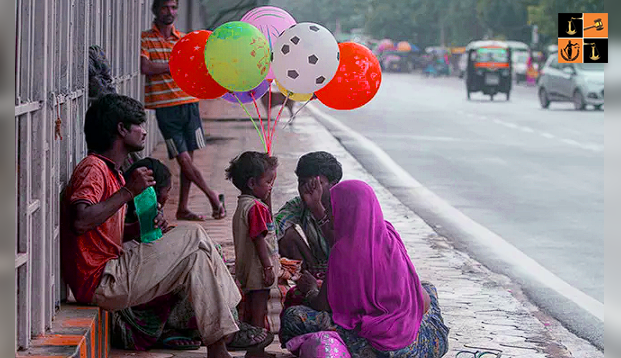
The Supreme Court underscored the gravity of rehabilitating homeless persons with psychosocial disabilities, emphasizing that the Central Government must treat the matter with utmost urgency and seriousness. The observations were made while hearing a public interest litigation seeking policy intervention for the welfare of such individuals. The Court also noted the inadequacy of mere statutory references without proper implementation.
The matter stems from a plea filed by Advocate Gaurav Kumar Bansal, urging the Court to issue directions for the formulation and execution of a national framework aimed at the protection and rehabilitation of homeless individuals suffering from psychosocial disabilities. The petitioner argued that despite the existence of legal provisions like the Mental Healthcare Act, 2017, and the National Mental Health Policy, 2014, the State machinery has failed to translate them into ground-level action.
During the hearing, the counsel for the Union of India informed a Bench comprising Justice Vikram Nath and Justice Sandeep Mehta that deliberations were underway, with interdepartmental meetings already in progress. Seeking additional time, the Centre requested eight weeks to file a detailed status report on the measures being undertaken.
In response, the Bench cautioned the government, remarking, “You need to take it very seriously and as less time as possible.” The Court noted that while relevant laws exist, what remains missing is their implementation and compliance. It questioned the effectiveness of legal frameworks without actual execution, pointing out the disconnect between legislative intent and administrative action.
The petitioner submitted that the homeless with psychosocial challenges are often rendered voiceless, subjected to systemic neglect and, in many cases, exposed to social alienation, abuse, and apathy from law enforcement agencies. He highlighted that women in such situations are particularly vulnerable due to the absence of gender-sensitive rehabilitation structures.
He further contended that the lack of a well-structured, unified national policy for the mentally ill homeless population has led to institutional chaos, leaving thousands without access to essential health services, dignified shelter, or basic civil entitlements. "The homeless have effectively become a 'football' between agencies, with no department taking concrete responsibility," the petitioner stated.
Referring to the Mental Healthcare Act, 2017, the government counsel attempted to assure the Bench that a legal basis for intervention exists. However, the Court responded pointedly, “Acts are there. Where is the execution, where is the compliance?”
The Bench, while taking note of the submissions, granted eight weeks' time to the Centre to submit its progress and scheduled the matter for further hearing on September 22. It also assured that the Court would continue monitoring the matter closely to ensure the issue reaches a "logical end."
The plea specifically seeks directions for drafting Standard Operating Procedures (SOPs) for key stakeholders such as law enforcement, medical authorities, and social welfare departments to ensure a humane, coordinated, and rights-based approach to rehabilitating persons with psychosocial disabilities who are homeless.
Picture Source :



















