









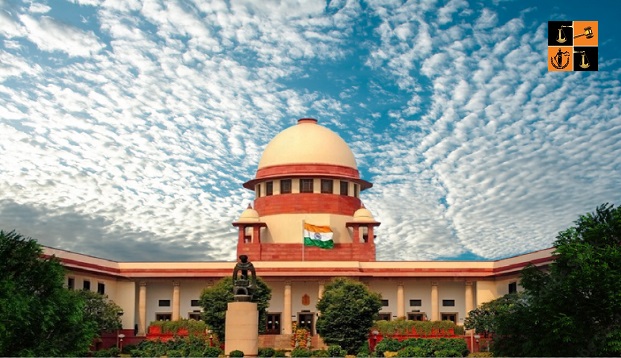
Recently, the Supreme Court directed State Governments to establish State Environment Impact Assessment Authorities (SEIAA) within six weeks where absent. Addressing a civil appeal against a National Green Tribunal (NGT) order, the Court extended the deadline to March 31, 2025, for re-appraisal of Environment Clearances (ECs) granted by District Environment Impact Assessment Authorities (DEIAA) from January 2016 to September 2018. The Court highlighted that the NGT's directions align with sustainable development principles and its ruling in Deepak Kumar v. State of Haryana, reinforcing a stricter regulatory framework for environmental protection.
The matter arose from a challenge by the Union against the NGT’s order dated September 13, 2018. The NGT had disapproved the grant of ECs for mining leases in areas from 0 to 25 hectares by DEIAA instead of SEIAA. It directed the Ministry of Environment, Forest and Climate Change (MoEF&CC) to revise its 2016 notifications, which diluted the regulatory procedures for environmental clearance by categorizing such leases under ‘B-2 category projects’ exempting Public Consultation, Environment Impact Assessment (EIA), and Environment Management Plan (EMP). The notifications under challenge dates January 15, 2016, January 20, 2016, and July 1, 2016, contravened the Supreme Court’s ruling in Deepak Kumar v. State of Haryana & Ors, where it was held that all mining leases, irrespective of size, must undergo environmental clearance under a strict regulatory framework.
The counsel for the petitioner contended that the NGT erred in invalidating the notifications, which were aimed at streamlining the EC process for smaller mining leases. It argued that DEIAA was a competent authority for granting ECs under the 2016 framework for the B-2 category project. Whereas, the Counsel for the respondent emphasized that the 2016 notifications diluted environmental safeguards and bypassed the principles set forth in Deepak Kumar. It was argued that transferring EC authority to SEIAA was necessary for a uniform regulatory approach.
The Apex Court affirmed the NGT's stance that the 2016 notifications, which exempted mining leases from critical environmental checks, were inconsistent with its decision in Deepak Kumar v. State of Haryana & Ors. The Court observed that such exemptions diluted environmental safeguards by excluding Public Consultation, Environmental Impact Assessment (EIA), and Environmental Management Plan (EMP) for leases categorized under B-2 projects. It emphasized that the regulatory framework must align with the principles of sustainable development and environmental protection.
The bench stressed that attempts to split mining leases to circumvent the regulatory regime would be deemed serious violations. It upheld the NGT's observation that compliance with the Deepak Kumar judgment would uphold the Precautionary Principle and the Principle of Sustainable Development under Section 20 of the National Green Tribunal Act, 2010. The Court directed the re-appraisal of ECs granted by DEIAA between January 15, 2016, and September 13, 2018, by SEIAA, extending the deadline for this process to March 31, 2025. It clarified that the directive applies only to valid ECs, stating, “We extend the time for completion of re-appraisal by the State Environment Impact Assessment Authorities till 31.03.2025. This direction will apply in cases where the Environment Clearance is valid, as mining activity can only continue during the period of validity of the EC”.
Additionally, the Court mandated that State Governments constitute SEIAAs within six weeks to ensure uniform compliance with environmental regulations. It also provided a three-week period for parties who had not yet applied for re-appraisal to do so. These measures aim to enhance the efficacy of environmental oversight and bring regulatory practices in line with judicial precedents. The matter is scheduled for further consideration in January 2025.
~Siddharth Raghuvanshi
Picture Source :



















