









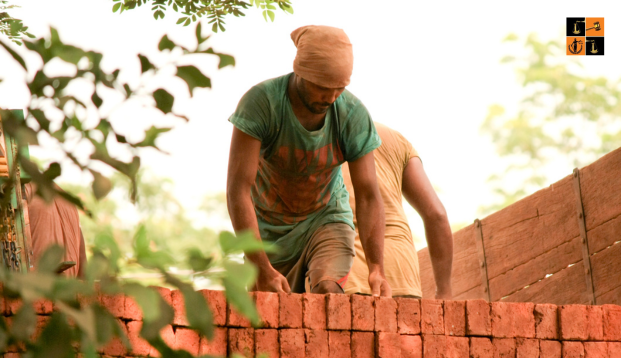
On Monday, the Supreme Court expressed strong disapproval of the failure of National Capital Region (NCR) states to compensate construction workers affected by the suspension of activities due to severe air pollution. A bench comprising Justice Abhay S Oka and Justice Augustine George Masih noted the absence of proof of compensation payments and summoned the Chief Secretaries of Delhi, Haryana, Uttar Pradesh, Punjab, and Rajasthan to appear via video conference. The Court emphasized that meaningful action often occurs only when top officials are summoned and directed the states to provide verifiable proof of compensation disbursal.
The case revolved around the obligations of NCR states to provide financial relief to construction workers impacted by pollution-related construction bans under the Graded Response Action Plan (GRAP). Despite the Supreme Court's prior directive to compensate the workers, no evidence of compliance was submitted. The bench observed that even basic verification of eligible workers had not been effectively conducted. While the counsel representing Delhi assured that payments for verified workers would commence soon, other states provided vague or incomplete responses. The Court found this inaction deeply concerning, given the significant livelihood disruptions caused by pollution control measures. In addition to worker compensation, the Court addressed broader governance challenges, highlighting poor coordination among agencies like the Delhi Pollution Control Committee (DPCC), Municipal Corporation of Delhi (MCD), and the Commission for Air Quality Management (CAQM). The bench also noted alarming reports of intimidation faced by court-appointed commissioners monitoring compliance with pollution curbs, emphasizing the urgent need for adequate protection for these individuals.
The Court remarked that none of the states had shown proof of compensation payments and lamented the absence of concrete action. It ordered Chief Secretaries to provide detailed records demonstrating compliance and reiterated that accountability often necessitates summoning top officials. The bench directed the Delhi Police to ensure adequate protection for court commissioners facing threats, including armed security if requested. Furthermore, the Court criticized the lack of coordination among NCR authorities, tasking the CAQM with ensuring effective collaboration for implementing GRAP Stage IV measures. While acknowledging the significant disruption caused by these restrictions, the bench stated that relaxation would only be considered if the Air Quality Index (AQI) showed a sustained downward trend.
In its concluding remarks, the Court underscored the need for long-term solutions to mitigate pollution, including addressing major contributors like stubble burning. The Amicus Curiae was requested to compile a comprehensive report on potential measures, signalling the Court's commitment to finding sustainable resolutions to the air quality crisis.
Picture Source :



















