









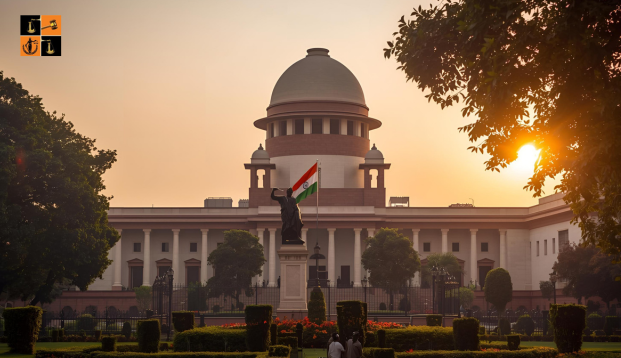
On Monday, the Supreme Court sought the Central government’s response on a petition urging the immediate implementation of the Women’s Reservation Act, which mandates one-third reservation for women in the Lok Sabha, State Legislative Assemblies, and the Delhi Assembly. The plea, filed by Congress leader Dr. Jaya Thakur, challenges the deferment of the law’s enforcement until the completion of a fresh delimitation exercise.
The Division Bench of Justice B.V. Nagarathna and Justice R. Mahadevan issued notice on the public interest litigation and made noteworthy oral remarks on women’s political representation. Observing that gender equality lies at the core of the Constitution’s promise, Justice Nagarathna remarked, “Preamble (to the Constitution of India) says (all citizens are entitled to) political and social equality. Who is the largest minority in this country? It is the woman... almost 48 percent. This is about the political equality of the woman.”
The Bench noted that while the Court’s power to direct implementation of legislative measures is limited, the issue raised concerns fundamental aspects of political inclusion and representative democracy. The Court stated, “When is the delimitation exercise there? Serve it to government... Enforcement of law is up to the executive and we cannot issue a mandamus. Issue notice to respondents. Let the central agency be served.”
Appearing for the petitioner, Senior Advocate Shobha Gupta argued that after 75 years of independence, women should not have to approach courts seeking representation that Parliament has already recognised. She submitted, “After 75 years (of India’s independence from British colonial rule), it is unfortunate that we (women) have to move court for the representation... They have to reserve only one third of total seats. They have decided to grant the reservation based on some data.”
The plea points out that while the Women’s Reservation Bill, 2024 was enacted after being passed by both Houses of Parliament and receiving Presidential assent in September 2023, the insertion of Article 334A of the Constitution of India effectively delays its enforcement. The Article provides that reservation for women will take effect only after a fresh delimitation exercise, to be conducted following the first census undertaken after the constitutional amendment.
Challenging this condition, Dr. Thakur has sought a declaration that the words “after an exercise of delimitation is undertaken for this purpose after the relevant figures for the first census” inArticle 334A of the Constitution of India are void ab initio, contending that they render the legislative promise of representation illusory.
Originally filed in 2023 with the prayer to implement women’s reservations ahead of the 2024 General Elections, the petition was re-filed in 2025 and came up for hearing in open court for the first time today.
The matter will now be listed after the Union government files its response.
Disclaimer: This news/ article includes information received via a syndicated news feed. The original rights remain with the respective publisher.
Picture Source :




















