









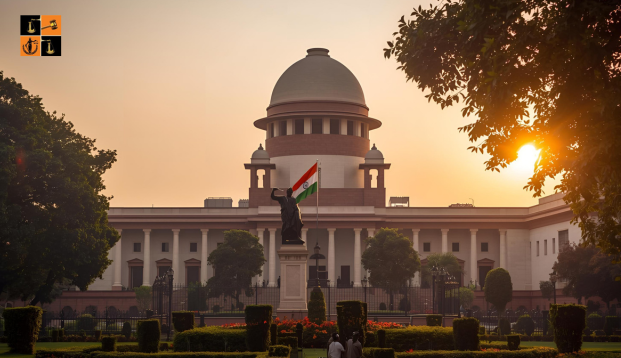
On Monday, the Supreme Court sought responses from two major nationalised banks after a Petitioner complained that his CIBIL score had been wrongly shown as negative for several years, severely affecting his ability to obtain financial facilities. The Court took note of the claim that the adverse credit rating was not due to any loan or default on the petitioner’s part, but arose from mistakes linked to the duplication of his identity details.
The Petitioner approached the Supreme Court after his credit score began reflecting a negative and high-risk status since 2020 despite his assertion that he has never taken any loan nor defaulted on any repayment. He claimed that his identity details were simultaneously held by two other individuals with the same name, and that defaults attributed to them were being wrongly mapped onto his CIBIL profile. Although the Income Tax Department later corrected his records and issued a fresh identification number, his credit report allegedly continued to reflect adverse entries because the new details remained linked to the older, incorrectly assigned ones.
Attempts before the High Court did not resolve the matter. His first contempt petition was closed after CIBIL stated it had taken a decision on his representation, and a second contempt plea was dismissed on the ground that the issue had already been addressed. He therefore approached the Supreme Court challenging the High Court’s refusal to enforce its earlier direction.
The Petitioner argued that despite a prior order of the Supreme Court directing the High Court to examine his grievance, the negative credit score issue remained unaddressed. He contended that any adverse entries in his CIBIL record stem from erroneous data reporting linked to mistaken identity and that even after correction by the tax authorities, the problem persists because the updated identification continues to be tied to the earlier erroneous details. He maintained that CIBIL merely reproduces the information supplied by banks, and the error originated from the banks’ records rather than any act or omission on his part.
The Supreme Court noted that CIBIL functions only as a collating agency and does not independently verify the material sent by banks. Since the accuracy of the petitioner’s credit history depends entirely on what is reported by the concerned financial institutions, the Court observed that their versions were essential to resolve the dispute. The Bench also recorded the petitioner’s core grievance that his credit score reflected negative entries despite his assertion of having no borrowing history and no default whatsoever.
The Court directed the two banks involved to file affidavits clarifying whether the petitioner has ever held any loan account with them and whether any default is attributable to him. It issued notice, dispensed with the need for personal appearance of the respondents, and listed the matter for further hearing on January 9, 2026. The Court also condoned the delay and allowed the application for impleadment, directing the amendment of the cause title accordingly.
Case Title: Rajendra Singh Panwar V. Jay Prakash & Anr.
Case No.: Special Leave Petition (Civil) Diary No. 59436/2025
Coram: Hon’ble Mr Justice K.V. Viswanathan and Hon’ble Mr Justice S.V.N. Bhatti
Counsel for the Appellant: Sr. Adv. P.S. Patwalia, AOR Manish Paliwal, Adv. Trupti Das, Adv. Kapila Bishnoi
Counsel for the Respondent: Not mentioned
Read Judgement @Latestlaws.Com
Picture Source :




















