









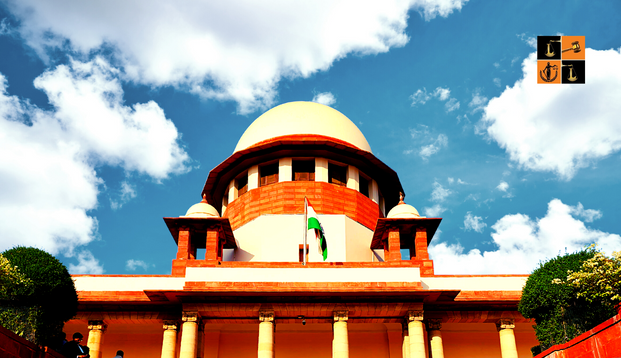
On Tuesday, the Supreme Court declined to entertain two public interest litigation (PIL) petitions challenging the constitutional validity of three newly enacted criminal statutes that have replaced the Indian Penal Code (IPC), the Code of Criminal Procedure (CrPC), and the Indian Evidence Act. The petitions were filed by Anjale Patel and Chhaya and Vinod Kumar Boinapply.
A division bench, comprising Justice Surya Kant and Justice Ujjal Bhuyan, criticized the petition’s drafting and advised the petitioners to conduct more thorough legal research if they intend to resubmit their challenges. Justice Surya Kant remarked, “This is a matter of significant gravity. The petitions lack the requisite rigour and clarity. The court cannot interfere in parliamentary matters without substantial legal research, particularly when challenging the constitutionality of new legislation”.
The Court permitted the withdrawal of the petitions, granting the petitioners the liberty to refile with a more comprehensive and properly drafted submission.
The petitions contested the Bhartiya Nyaya Sanhita, Bhartiya Nagarik Suraksha Sanhita, and Bharitaya Sakshya Adhniyam. The first petition sought the establishment of an expert committee to evaluate the new laws and criticized their titles as ambiguous. The second petition, filed by Bharat Rashtra Samithi leader Vinod Kumar Boinapally, alleged that the new laws were essentially a rebranding of old legislation and were enacted without adequate consultation with stakeholders. It also challenged specific provisions of the new laws as unconstitutional.
Previously, on May 20, a bench of Justice Bela M. Trivedi and Pankaj Mithal dismissed a similar petition, noting that the laws were not yet in force. Additionally, in February, a Bench comprising Chief Justice D.Y. Chandrachud and Justice J.B. Pardiwala and Justice Manoj Misra had also dismissed a related petition.
Picture Source :



















