









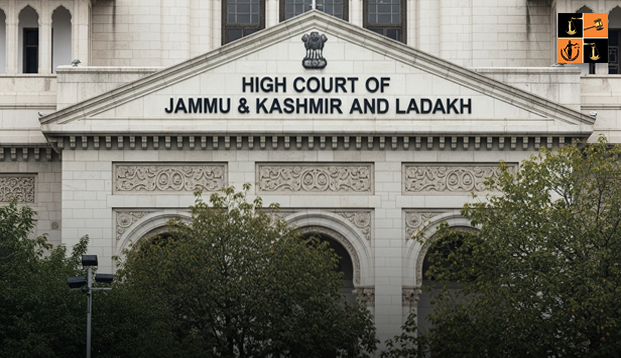
Recently, the Jammu & Kashmir and Ladakh High Court dismissed a challenge to a preventive detention order issued under the J&K Public Safety Act, holding that the detaining authority’s satisfaction was supported by relevant material, including the petitioner’s Facebook activity. Justice Sanjay Dhar observed that the posts, screenshots, and accompanying inputs placed before the authority reflected conduct “prejudicial to the security of the State,” and that interference was unwarranted where subjective satisfaction was based on a tangible record and due process was followed.
The case stemmed from a petition assailing a preventive custody order issued by the District Magistrate, under Section 8 of the J&K Public Safety Act, 1978. The Petitioner alleged a violation of constitutional safeguards under Article 22(5) of the Constitution of India, arguing that the detention order lacked material particulars, was issued mechanically, and that relevant documents relied upon by the authority had not been supplied to him, thereby impairing his statutory right to make an effective representation. It was further contended that ordinary criminal law remedies were bypassed without justification.
The Counsel for the Petitioner submitted that the detention was unconstitutional as the grounds were vague and merely reproduced the police dossier. It was asserted that not all relied-upon documents were furnished, thereby breaching procedural safeguards, and that the detention could not be sustained when no criminal proceedings or FIR existed against the petitioner. The Petitioner also argued that the authority should have invoked regular criminal law rather than extraordinary preventive detention measures.
On the other side, the State argued that all statutory requirements under the Public Safety Act had been complied with and that the petitioner had received copies of the warrant, grounds of detention, dossier, complaints under Section 107/151 CrPC, screenshots of Facebook posts, and Urdu translations. It was submitted that the detaining authority acted upon reports from security agencies indicating online conduct capable of radicalising youth, thereby justifying preventive action based on apprehended threat rather than prior prosecution.
The Court noted that the petitioner had been supplied with “a total of 23 leaves,” including screenshots of the Facebook content relied upon. Rejecting the allegation of mechanical exercise of power, the Court observed that “it is not a case where the detaining authority has mechanically copied the contents of the police dossier,” but one where the authority “has applied its mind to the police dossier and the material annexed thereto.”
The Court recorded that “It is on the basis of these anti-national videos/photos/posts/chats which were uploaded by the petitioner on his Facebook account that the detaining authority was satisfied that it is necessary to detain the petitioner in order to prevent him from indulging in the activities which are prejudicial to the security to the State.”
Ultimately, the Bench concluded that the detention complied with the legal and constitutional standards governing preventive custody and that no procedural lapse had been established. Finding no basis to intervene, the Court dismissed the petition.
Case Title: Waseem Ahmad Dar v. UT of J&K & Ors.
Case No.: HCP No. 73/2024
Coram: Hon’ble Mr. Justice Sanjay Dhar
Advocate for the Petitioner: Adv. Altamash Rashid
Advocate for the Respondent: GA Faheem Nisar Shah
Read Judgment @Latestlaws.com
Picture Source :




















