









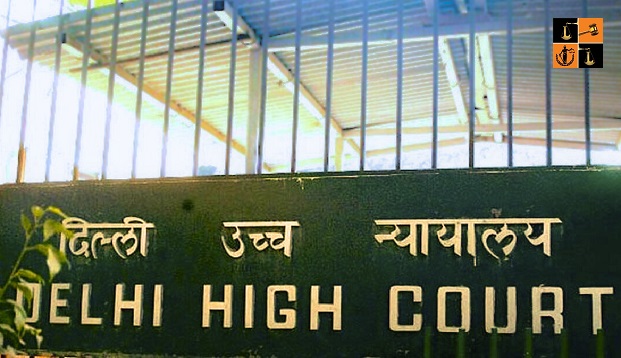
Recently, the Delhi High Court examined a disciplinary matter that turned on a critical issue, whether an employee could be removed from service when the most serious allegation of corruption itself rested on uncertain and inconsistent findings. The case highlighted the limits of departmental discretion, especially where different authorities appeared to proceed on varying assumptions about the gravity of misconduct.
Brief Facts :
The Petitioner, serving as a Warehouse Manager, was subjected to disciplinary proceedings on three charges relating to operational irregularity, misconduct during duty hours, and alleged illegal gratification. A departmental inquiry was conducted in which witnesses and documents were examined. The inquiry report held the first two charges proved, while the corruption allegation was only partly proved. Despite this qualified finding, the disciplinary authority imposed the penalty of removal from service, treating the misconduct as serious. The petitioner’s appeal was also rejected, leading him to approach the High Court.
Contentions of Petitioner:
The counsel for the Petitioner contended that the charges were exaggerated and did not carry equal seriousness, yet were collectively treated as grave misconduct. He argued that the inquiry was unfair as the defence evidence and explanations were not properly considered. It was submitted that the first charge reflected, at most, an operational lapse due to staff shortage, while the second charge was misinterpreted, as he was only resting due to medical issues and had applied for leave. The primary challenge was to the corruption allegation, which, according to him, lacked any direct evidence of demand or quid pro quo. He further pointed out internal inconsistencies in the inquiry report itself, undermining the finding of bribery.
Contentions of Respondent:
The counsel for the Respondents argued that the scope of judicial review is limited and does not permit reappreciation of evidence. They maintained that the inquiry was conducted in accordance with law, with full opportunity given to the petitioner. It was contended that the charges stood proved on the basis of material on record, including witness testimony and financial transactions. The Petitioner, being in a responsible position, could not justify unauthorised conduct or receipt of money from a third party. The authorities had rightly treated the misconduct as serious, and the penalty of removal was proportionate. The counsel further submitted that the appellate authority had duly considered the matter and found no reason to interfere.
Observation of the Court:
The Court closely scrutinised the foundation of the disciplinary action and found that the most serious allegation of corruption was not supported by a coherent or reliable evidentiary basis. While the inquiry report referred to a monetary transfer, it simultaneously acknowledged that there was no material evidence of illegal gratification, sharing of margin, or any vigilance angle. Despite this, the authorities treated the charge as fully proved, which the Court found legally unsustainable. It emphasised that even in departmental proceedings, there must be a rational connection between the evidence and the conclusion, and suspicion alone cannot justify a finding of bribery.
“The path from the proved fact of transfer to the conclusion of bribery remains unexplained. Even on preponderance of probabilities, an unexplained or insufficiently explained transfer does partake the colour of bribe unless there is some rational evidentiary link between the receipt and the unlawful favour alleged in the charge. The report does not identify that link.”
The Court further noted that both the disciplinary and appellate authorities failed to engage with these inconsistencies and instead proceeded on an assumption that acceptance of gratification stood established. This approach, according to the Court, amounted to elevating a doubtful or partially proved finding into a grave charge without proper reasoning, thereby undermining the entire basis of the punishment.
“What remains is the transfer of money. That, by itself, is too slender a foundation to sustain a finding that the charge of bribery stood proved.”
Decision of the Court :
The Court allowed the writ petition and set aside both the removal order and the appellate decision. It directed reinstatement of the petitioner with continuity of service, while leaving the issue of back wages open. At the same time, liberty was granted to the authorities to reconsider the question of penalty, limited only to the surviving minor lapses, thereby disposing of the matter.
Case Title: Rajesh Choudhary v. Union of India & Ors.
Case No.: W.P.(C) 14348/2023
Coram: Hon’ble Mr. Justice Sanjeev Narula
Advocate for the Petitioner: Ms. Prity Sharma and Mr. Ashwini Kaushik
Advocate for the Respondent: Mr. Balendu Shekhar, CGSC with team; Mr. Prabhas Bajaj with team
Read Judgment @Latestlaws.com
Picture Source :




















