









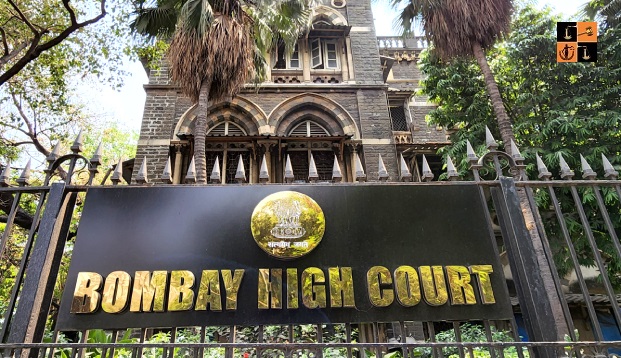
In a sharp intervention in a bitter redevelopment dispute involving Mumbai’s Kamla Bhuvan building, the Bombay High Court came down heavily on an attempt to bring a new developer into an ongoing tenants’ petition, warning that courts cannot be converted into pressure chambers for commercial negotiations. The Bench was confronted with allegations that tenants feared being left without Permanent Alternate Accommodation during the stalled redevelopment process, even as a proposed developer, M/s. BS Lifespace, allegedly began participating in meetings, groundwork and project coordination despite the absence of any formal agreement with the landlords. What followed was a judicial examination of whether litigants can use procedural applications to indirectly force recognition of commercial rights that do not legally exist.
The controversy began when tenants of Kamla Bhuvan, a redevelopment project situated at Ghatkopar West on L.B.S. Marg, moved an interim application seeking to implead M/s. BS Lifespace as a respondent in their pending petition concerning redevelopment under Regulation 33(7)(A) of DCPR-2034. Counsel for the applicants argued that the redevelopment had suffered prolonged delays and that tenants feared the landlords would ultimately deny them Permanent Alternate Accommodation obligations. According to the tenants, the proposed developer had already become deeply involved in the project by obtaining approvals, coordinating with tenants, participating in settlement discussions and even conducting inauguration ceremonies.
It was also claimed that 62 tenants had executed consent-cum-declarations in favour of the proposed developer. However, counsel appearing for the landlords strongly opposed the move, contending that no binding contract existed with BS Lifespace and accusing the tenants of attempting to use the proceedings as leverage to compel the landlords into a commercial arrangement. The landlords maintained that the original developers continued to remain on the project and warned that impleading a third party with no contractual relationship would only deepen the dispute.
The High Court accepted the landlords’ objections in emphatic terms. Observing that there was admittedly “no privity of contract” between the landlords and the proposed developer, the Bench held that permitting impleadment would unnecessarily “enlarge the issue and complicate it.” The Court then delivered a stinging rebuke after noting that the applicants themselves admitted no binding agreement existed between BS Lifespace and the landlords. Calling the application “a sheer abuse of process of law,” the Bench remarked that it was “nothing else but an elite form of coercion and extortion.” The Court further observed that the application appeared to be “a pressure tactic employed by the proposed Respondent in the guise of an application by the Petitioners (tenants).”
In one of the strongest observations in the order, the Bench warned that “Courts are not meant to be tools in the hands of unscrupulous litigants to coerce or pressurize a party in any manner or form.” Holding that the proposed developer was attempting a “back-door entry” to crystallize unenforceable rights, the Court refused to entertain the move and consequently dismissed the application with costs of Rs.5 lakh payable to the Bar Council of Maharashtra and Goa’s Advocate Academy and Research Center.
Picture Source :




















