









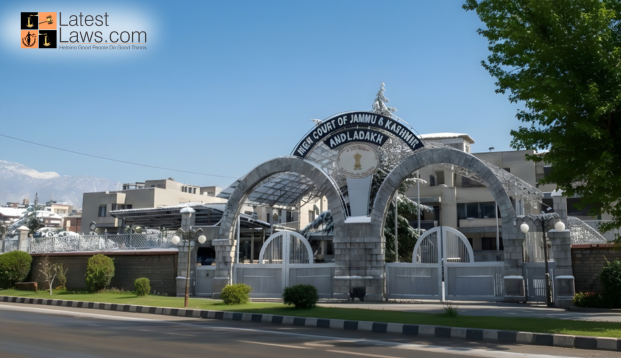
In a sharp rebuke to a Central Reserve Police Force officer who spent over two decades making representations rather than pursuing timely legal remedies, the High Court of Jammu & Kashmir and Ladakh at Srinagar has taken a hard look at whether the judiciary can rescue a litigant from his own prolonged inaction, and the answer it delivered sends a clear, unambiguous signal to every government servant tempted to let grievances fester.
The controversy began in 1997, when the petitioner cleared the competitive examination for the post of Assistant Commandant in the CRPF, earning selection in the prestigious 30th Batch of CPOs. What followed was a cascade of bureaucratic delays, a tardy police verification report, a missed training window, a mother's illness requiring a six month extension, that ultimately landed him in the 33rd Batch rather than the 30th. His seniority, fixed accordingly in January 2002, became the wound he could never stop picking at. For years, the officer fired off representation after representation to the department, convinced his placement was unjust and that he deserved to be ranked with his original batchmates.
The respondents pushed back firmly, insisting that his seniority had been correctly fixed under Rule 8(b)(ii) of the CRPF Rules, 1955, and formally rejecting his representation in September 2009. The officer then filed a writ petition before the Jharkhand High Court in 2011, only to withdraw it, before arriving at the J&K High Court in 2017, by which point his seniority had been settled for fifteen years. When the Writ Court dismissed his petition for delay and laches in December 2020, he sought a review, arguing that the earlier court had erred in overlooking his 2011 Jharkhand filing and that perpetual inaction by the department gave him a perpetual cause of action.
The Court, however, was having none of it. Examining the review petition, the judge observed that the petitioner had been acutely aware of his seniority position as far back as January 2002, a fact betrayed by his own representation of May 2009, which openly referenced earlier complaints dating to December 2002, November 2003, and February 2006. Even generously accepting that the officer had acted promptly after the 2009 rejection and filed before the Jharkhand court in 2011, the Court noted he was still approaching the writ jurisdiction a full nine years after his seniority was fixed, a delay it described as "grossly belated." Leaning on a trio of Supreme Court authorities, the judge reiterated the settled position that "filing of representations alone would not save the period of limitation" and that "replies to such representations cannot furnish a fresh cause of action or revive a stale or dead claim."
The Court was equally pointed on the practical stakes, by the time the petitioner knocked on the court's door, the seniority rights of officers ranked above him had long crystallised, and he had not even bothered to implead those officers as parties. Finding no error apparent on the face of the record, the sole gateway for review jurisdiction, the court concluded that the Writ Court had rightly declined to exercise its discretionary powers under Article 226.
Consequently, the review petition was dismissed as bereft of merit.
Case Title: Manish Kumar Bharti Vs. Union of India &Ors.
Case No.: SWP No.1283/2017
Coram: Hon’ble Mr. Justice Sanjay Dhar
Advocate for the Petitioner: Adv. Danish Majeed
Advocate for the Respondent: Dy. AG Hakim Aman Ali
Read Judgment @Latestlaws.com
Picture Source :




















