









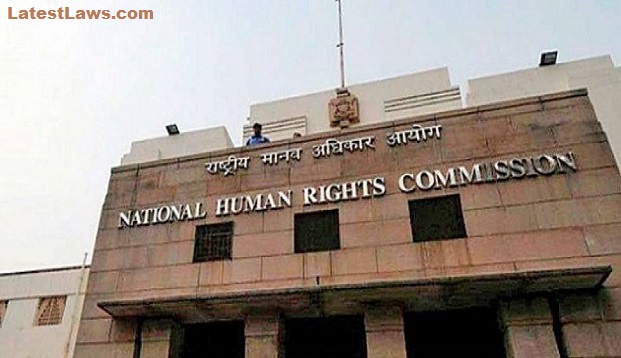
The NHRC has directed all the states & union territories to consider expanding the categories of prisoners who could be released in the wake of the Coronavirus pandemic, as social distancing is difficult to observe inside the prisons, & hiring medical officers at a “war-footing”. It has also asked police departments not to arrest persons accused of minor & bailable offences so as to keep public interaction minimum.
On Monday, the National Human Rights Commission issued an advisory to all the States/Union Territories (UTs) & the Centre on the rights of prisoners & police personnel based on an impact assessment by a Committee of Experts formed by it to look into the human rights & future response.
The Apex Court had, in March this year, asked the chief secretaries of all the states/UTs to release a certain category of prisoners to avoid overcrowding in the jails in the wake of the Coronavirus outbreak. A large number of under-trial inmates has been released by states in the past 5-6 months.
In its communication, the rights body has said that all inmates should be provided with soaps, sanitisers, masks & their regular use must be mandated.
It has also asked the jail authorities to fill up vacancies of medical officers & paramedical staff on a “war-footing”—preferably within the next 6 months. “In the meantime, where there are only visiting doctors available, efforts may be made to explore collaboration with local private doctors as the pressure on public health care system would be immense,” states the advisory.
The NHRC has suggested that jails can also collaborate with local & specialist hospitals so that inmates & jail staff can be provided appropriate testing & treatment quickly.
Sufficient stocks of medicines like paracetamol, Vitamin E, Zinc & others should be maintained in all jails, for which extra budget should be given to prison authorities, NHRC said.
NHRC also issued an advisory for the police, asking them to not arrest persons accused of minor, bailable offences.
In its advisory related to the rights of police officers, who are most vulnerable to contracting Covid-19 due to the nature of their job, NHRC said, “Arrests & remand to be undertaken only in serious [cases]. In non-bailable offences, the accused be produced before the court at the earliest if he or she is no longer required for investigation.”
Police departments have also been asked to have a worst-case scenario business continuity plan—ensuring the continuity of core functions of police services, while supporting the public health services & general governance of the state.
For managing big crowds or protests, NHRC has said that police should use proportionate force only when necessary.
The NHRC said that law enforcement officers are likely more heavily impacted as they are one of the “essential workers” that must continue to work & respond to calls for service while others shelter at home.
It also said that police departments should use a single spokesperson as a source of authoritative information for the public.
Police stations have been asked to prepare detailed SOPs (standard operating protocols) for the overall sanitisation of the reception area, lock-up, waiting areas, toilets, & interview rooms while dealing with public work.
The SHOs of police stations have been told to form a WhatsApp group of all personnel in their jurisdiction for sharing important information.
As of Sept 28, 124,000 police personnel have already tested positive for COVID-19 across the country, of which 674 have died.
Source Link
Picture Source :




















