









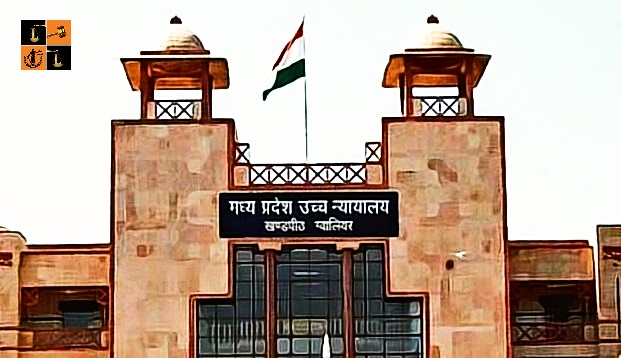
Recently, the Madhya Pradesh High Court ruled that a father-in-law is not legally obligated to provide maintenance to his widowed daughter-in-law under the Protection of Women from Domestic Violence Act, 2005, or Muslim personal law. The Court, presided by Justice Hirdesh, allowed the father’s plea against a lower court directive, which had orderd him to pay Rs.3,000 per month as maintenance to his deceased son’s window. The Court noted that such a requirement does not align with the provisions under Muslim personal law or the DV Act.
The case arose after the petitioner's daughter-in-law, who married his son in 2011, was widowed in 2015 following her husband's passing. In the years following her husband’s death, she filed a domestic violence complaint against her in-laws and sought ₹40,000 in monthly maintenance, claiming financial need. The petitioner, her father-in-law, challenged her application, arguing that he was not legally required to support her. Despite his objections, a trial court ordered him to pay ₹3,000 monthly to support his daughter-in-law, a decision that was later upheld by a sessions court.
The petitioner’s counsel contended that, under Muslim personal law, a father-in-law is not required to support a widowed daughter-in-law. Emphasising the petitioner’s advanced age and his limited means, the counsel argued that no obligation exists under the Mahomedan law for such maintenance, nor does the Domestic Violence Act impose such a duty. Reference was made to ruling from other High Courts, including the Calcutta High Court’s decision in Shabnam Parveen v. State of West Bengal, to support this argument. The petitioner’s counsel also highlighted that the widowed daughter-in-law had been residing separately even during her husband’s lifetime, further suggesting that no financial support was expected from the father-in-law.
The High Court clarified that under Muslim personal law, there is no obligation for a father-in-law to provide financial support to his widowed daughter-in-law. Justice Hirdesh noted that this principle is supported by established legal norms within Muslim law, which do not impose any duty on in-laws to maintain widowed family members, emphasising that this responsibility traditionally does not extend to the husband's family after his death. Further, the Court addressed the applicability of the Protection of Women from Domestic Violence Act, 2005 (DV Act), observing that the Act's provisions do not impose an obligation on a father-in-law to support a widowed daughter-in-law financially. The Domestic Violence Act, 2005, primarily aims to protect women from acts of domestic violence within the household, but it does not create a financial dependency or maintenance duty on extended family members, particularly after the husband’s passing. The Court indicated that while the DV Act offers several protections, it does not alter or override personal laws, including those governing maintenance rights and obligations under Muslim law.
Justice Hirdesh underscored that the trial court had erred by mandating maintenance payments from the father-in-law without properly assessing these legal boundaries. The High Court further acknowledged that compelling a father-in-law to provide such maintenance, especially in the absence of statutory duty, would not only misapply the law but could lead to unnecessary financial strain on individuals who do not bear this responsibility under personal law.
Additionally, the Court recognized the unique family circumstances, noting that the daughter-in-law had been living separately from her in-laws even when her husband was alive. This separation suggested a degree of independence, further supporting the view that maintenance responsibility should not automatically extend to the petitioner. Based on these considerations, the High Court set aside the trial court's maintenance order, reaffirming that maintenance obligations in such cases must align with established legal frameworks and should not impose undue burden where no legal duty exists.
Picture Source :




















